Formula details
Product Details
Overview
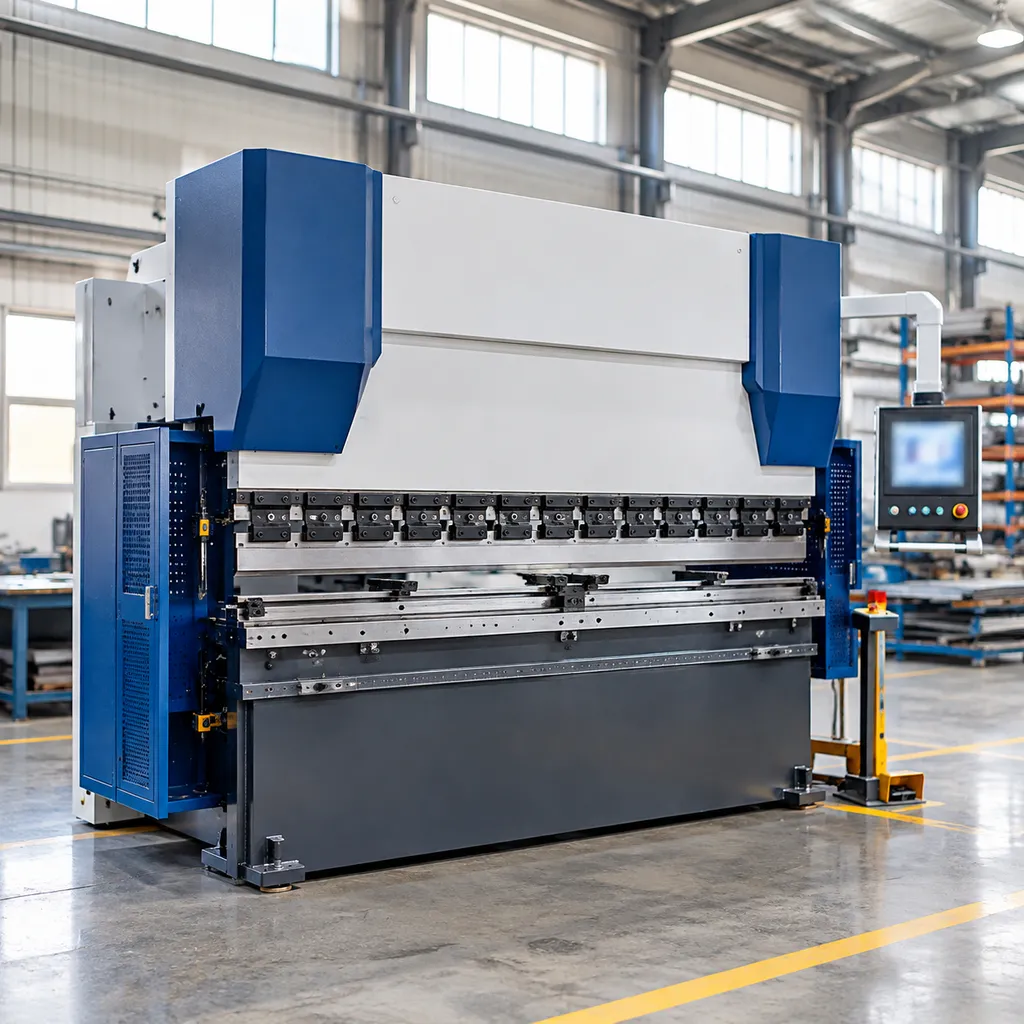
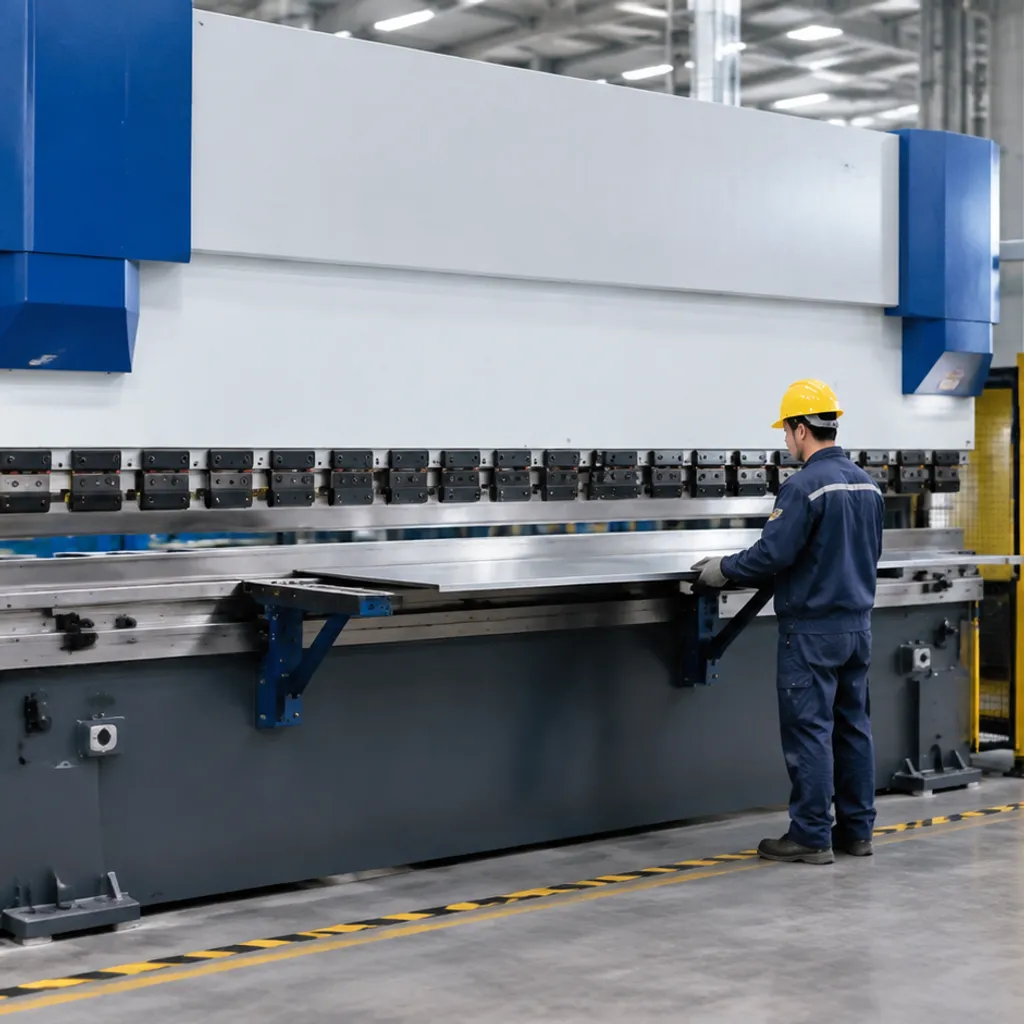
Core Specifications of a 400 Ton Press Brake
Rated Bending Force and Plate Thickness
With 400 tons (approximately 4,000 kN) of nominal bending pressure, these machines process high-strength materials across broad spans:
-
- Mild Steel: Bends 12 mm to 16 mm plate easily across full bed lengths; thicker sections (up to 20 mm or more) are formed over shorter segments using wider V-openings.
- Hardox and High-Yield Alloys: Delivers the required yield-point tonnage while resisting springback and premature ram wear.
- Precision Air Bending: Maintains tonnage control along the entire bend line to prevent edge flare and uneven angles.
Standard Machine Geometry and Clearance
Frame geometry determines what size profiles your shop can produce without hitting the machine body or side frames:
-
- Working Lengths: Standard configurations span from 3,200 mm (10 ft) up to 6,000 mm (20 ft).
- Distance Between Side Housings: Typically set between 2,600 mm and 5,100 mm, leaving ample room to clear deep side flanges.
- Stroke Length and Open Height (Daylight): A standard stroke of 250 mm to 350 mm paired with 550 mm to 650 mm of open height allows the use of tall punch tools and deep four-sided box forming.
- Throat Depth: Ranging from 400 mm to 600 mm, this side clearance lets operators make continuous edge bends on plates that exceed the machine’s overall length.
Speed Profiles: Approach, Pressing, and Return
High-tonnage bending requires smooth hydraulic transitions to maintain cycle speeds while avoiding dangerous sheet flick-up:
| Specification Parameter | Standard Range (400T Baseline) | Shop Floor Impact |
|---|---|---|
| Nominal Force | 400 Tons / 4000 kN | Processes plate up to 16 mm over standard beds |
| Bed Length Options | 3,200 mm – 6,000 mm | Accommodates short, thick parts or long structural sections |
| Stroke Length | 250 mm – 320 mm | Clears deep parts during the final retract cycle |
| Open Height (Daylight) | 550 mm – 650 mm | Accommodates multi-V dies and tall punches |
| Throat Depth | 400 mm – 500 mm | Allows edge flanges to extend past side frames |
| Rapid Approach Speed | 100 – 140 mm/s | Minimizes non-productive cycle time |
| Working Bending Speed | 7 – 10 mm/s | Delivers smooth metal flow and protects operator control |
| Return Speed | 90 – 130 mm/s | Rapidly resets the ram for the next cycle |
400 Ton Press Brake Drive Systems: Electro-Hydraulic, Hybrid, and Tandem
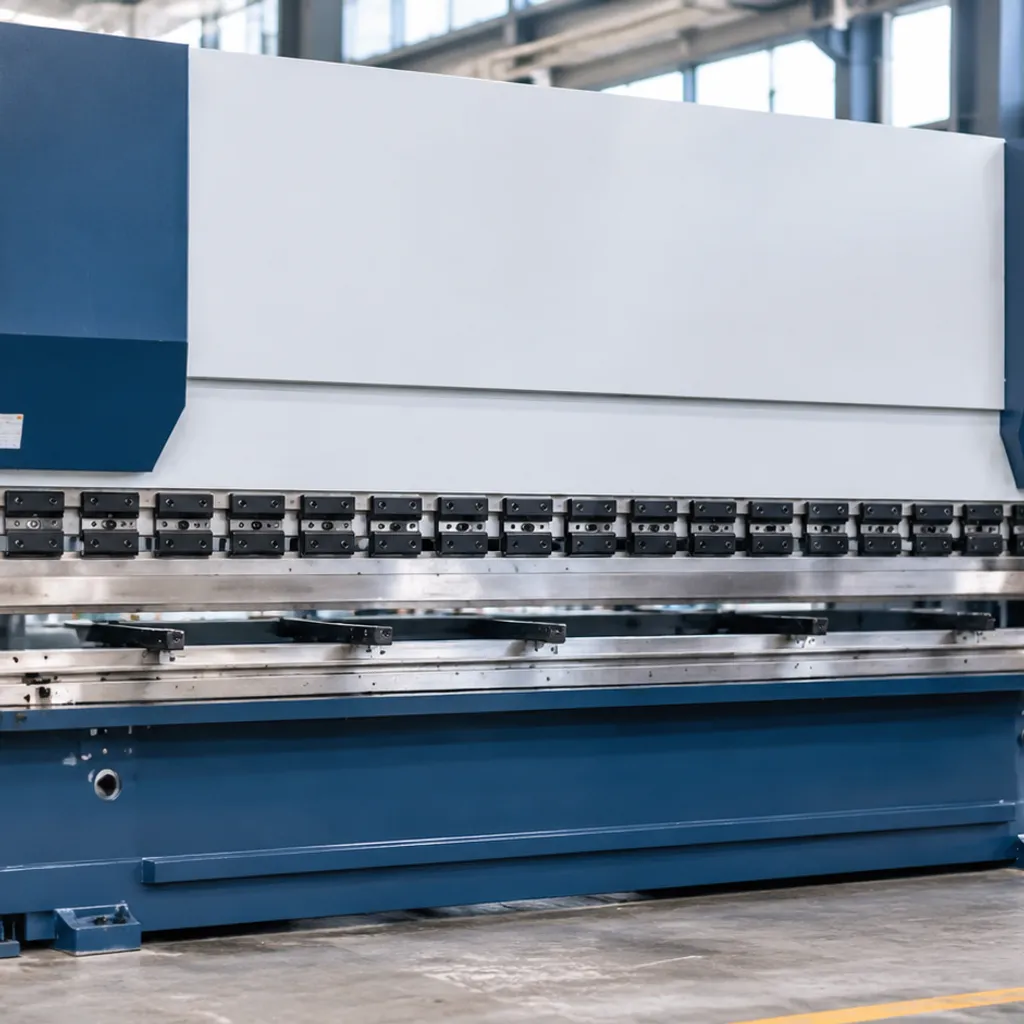
Choosing the right drive architecture determines your shop's daily output, cycle speed, and energy footprint. When handling high-tonnage sheet metal bending, your drive must maintain tonnage consistency across every millimeter of stroke.
Synchronized Electro-Hydraulic Dual Cylinder (Y1/Y2)
On our heavy-duty lines, the ram movement relies on a closed-loop electro-hydraulic synchro design:
-
- Independent Axis Control: High-response proportional valves feed the Y1 and Y2 cylinders independently.
- Direct Position Feedback: High-resolution optical linear encoders mounted directly onto decoupled C-frames measure bed-to-ram distance, completely bypassing side-frame deflection under load.
- Off-Center Bending Security: The system instantly recalculates hydraulic fluid distribution if an off-center tool setup induces uneven resistance, holding ram parallelism within ±0.01 mm.
For fabricators looking to pair deep-box production with multi-stage forming, a modern CNC press brake forming machine utilizes this synchronized hydraulic system to eliminate part twisting on high-yield materials.
Servo-Hybrid Drive Systems for Energy Reduction
Standard hydraulic power packs run pumps constantly, dumping heat into the reservoir. A servo-hybrid system changes that dynamic:
-
- On-Demand Power: High-torque servo motors run bidirectional variable-speed pumps strictly when the ram moves, dropping standby electrical consumption to near zero.
- Lower Operating Temperatures: Less oil churn reduces hydraulic fluid temperatures, cutting oil degradation and eliminating the need for bulky external chillers.
- Faster Response: Direct servo-driven oil transfer speeds up ram transitions between rapid approach, bending speed, and decompression return strokes.
Tandem Configuration for Extra-Long Plate Bending
When your product mix includes 20-foot to 40-foot utility poles, crane booms, or structural channels, a single bed hits logistical and manufacturing limits. We configure two matching units into a tandem system:
-
- Synchronized or Independent: Run both machines under a unified CNC controller as an 800-ton bending cell, or decouple them via software in minutes to run two distinct 400-ton jobs simultaneously.
- Seamless Axis Tracking: Tandem multi-axis sync monitors all four cylinders (Y1, Y2, Y3, Y4) simultaneously to keep long punch lengths aligned across the split beds.
Rigid Welded Steel Frame Construction and Stress Relief
A 400-ton load will exploit any structural weakness in the chassis. We build frames using high-tensile Q235B/Q355B solid steel plates:
-
- Thermal Stress Relieving: Every welded frame undergoes complete annealing in a large-scale furnace to eliminate internal weld stresses before machining.
- Single-Setup Machining: Critical surfaces, guide ways, and cylinder mounts are milled on a single large floor-type boring mill to guarantee throat and bed squareness.
- Deep Throat Clearance: Generous side throat cutouts allow wide return flanges to pass through without hitting the frame housings, maintaining structural safety margins under peak loads.
CNC Automation, Crownings, and Gauging Systems
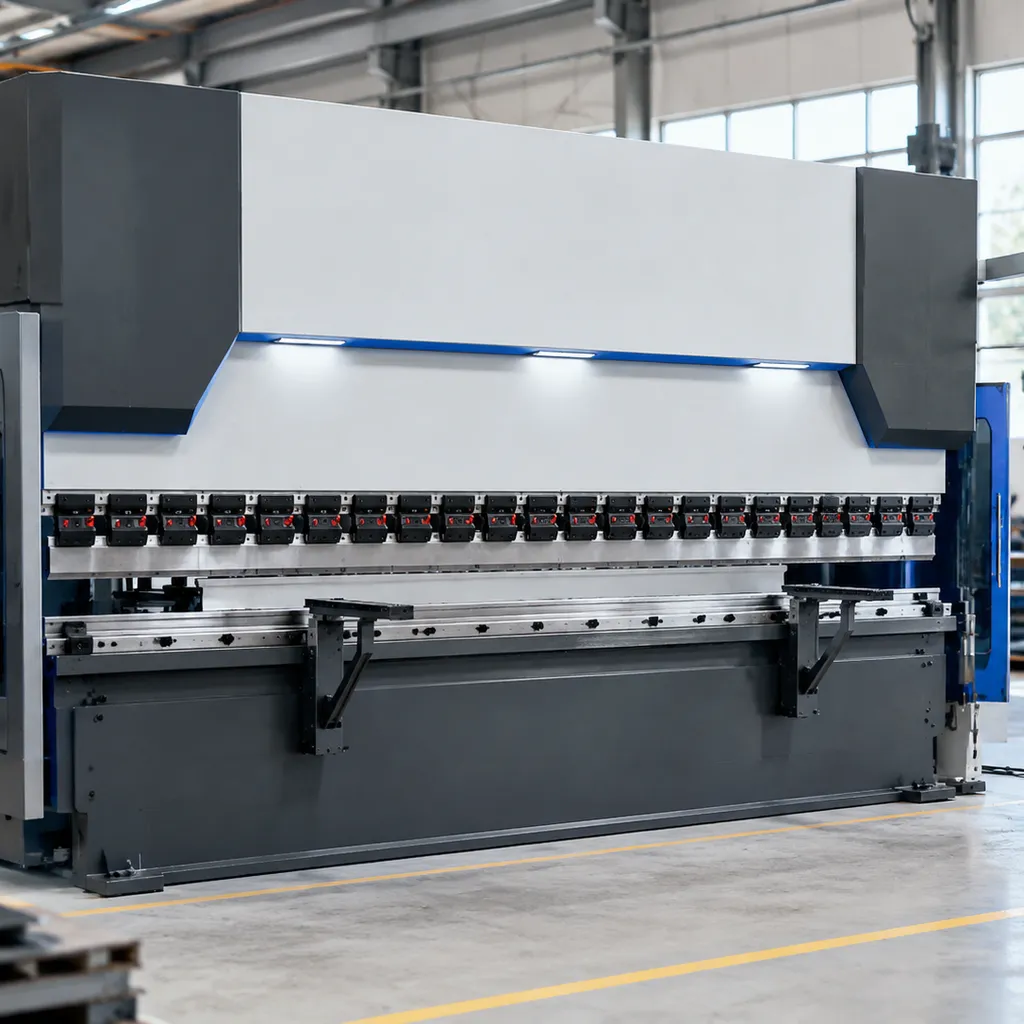
Controlling a 400 ton press brake requires precise control over massive hydraulic forces. When bending heavy plate, tiny deviations turn into costly scrap. We rely on smart automation, active deflection control, and high-precision backgauging to keep every bend angle consistent from end to end across our CNC hydraulic press brakes.
Popular CNC Controllers (Delem, Cybelec, ESA)
Modern high-tonnage fabrication demands intuitive visual controls and robust processing power:
-
- Delem (DA-66S / DA-69S): The industry standard for heavy bending. Offers 3D graphical programming, real-time collision detection, and automated bend sequencing for complex profiles.
- ESA (S 660 / S 675): Renowned for open architecture, smooth CAD/CAM importing, and seamless tandem integration.
- Cybelec (CybTouch / ModEva Series): Delivers clean numeric and 2D/3D visual workflows, simplifying setups for heavy plate operators.
Motorized Mechanical and Hydraulic Crowning Compensation
Under 400 tons of load, both the bed and ram naturally deflect, creating a "canoe effect" where the center of the bend opens up wider than the ends. To maintain exact straightness:
-
- Mechanical CNC Crowning: Uses motorized opposing-wave wedges along the lower bed to dynamically offset ram deflection, ensuring consistent depth across the entire working length.
- Hydraulic Dynamic Crowning: Utilizes hydraulic cylinders embedded in the lower bed, automatically adjusting counter-pressure in real time based on the active bend tonnage and plate properties.
Multi-Axis Backgauge Selection (X, R, Z1, Z2, Delta X)
Positioning heavy, thick sheet metal calls for rigid backgauging built to absorb shock without losing zero:
| Axis Configuration | Movement Profile | Primary Shop Benefit |
|---|---|---|
| X / R | Depth (forward/back) and Height (up/down) | Essential for standard plate step bends and varying die heights |
| Z1 / Z2 | Lateral (left/right individual finger movement) | Automatic positioning for variable plate widths and asymmetric bends |
| Delta X (X1/X2) | Independent gauge depth for skewed plates | Accurate gauge referencing for tapered or conical parts |
Real-Time Laser Angle Measurement and Correction
Thick plate often suffers from batch-to-batch variations in tensile strength, grain direction, and springback. Non-contact optical laser angle sensors track the bend angle live during the stroke:
-
- Real-time feedback: Measures the material angle during forming and immediately transmits data to the CNC controller.
- Automatic depth correction: The controller adjusts the Y1/Y2 stroke depth on the fly before releasing hydraulic pressure.
- Elimination of test bends: Cuts scrap rates on high-grade alloys, delivering the exact target angle on the very first strike.
Heavy-Duty Tooling and Clamping for a 400 Ton Press Brake
High-Load Punches and Multi-V or Adjustable Die Blocks
Concentrating 400 tons of bending force demands specialized punches and dies rated for heavy tonnages per meter:
Deep-profile punches: Heavy-duty gooseneck and straight punches with large tip radii prevent material cracking on high-tonnage bends.
Multi-V die blocks: Solid four-way or multi-opening dies provide standard V-openings for varying sheet thicknesses without swapping the entire lower bed.
CNC adjustable dies: For frequent thickness transitions, motorized variable V-dies automatically adjust the opening width from the control screen, eliminating dangerous crane-assisted die swaps.
Tool Steel Grades for High-Yield Plate
Bending abrasive, high-strength materials like Hardox, Weldox, or structural steel quickly ruins low-grade tooling. To ensure long tool life and consistent bend geometry:
Premium tool steel: We rely on premium chrome-moly alloys such as 42CrMo, vacuum-hardened to withstand extreme compressive stresses.
Deep induction hardening: Working surfaces require case hardening up to 56–60 HRC to resist friction, galling, and wear when air-bending high-tensile plates.
Material preparation: Feeding stress-relieved, flat blanks directly from leveling and cut-to-length lines ensures uniform contact along the punch tip and eliminates uneven tonnage spikes across the bed.
Hydraulic Quick-Clamping Systems
Manual bolt clamping on a 400 ton machine is slow, labor-intensive, and poses seating risks. Hydraulic clamping systems secure heavy tooling segments instantly:
Push-button locking: Hydraulic lines power hardened clamping pins that seat and align punches uniformly along the entire upper beam within seconds.
Safety seating grooves: Tool shanks feature mechanical drop-stops that prevent heavy punches from falling during setup changes or pressure drops.
Heavy-load distribution: Engineered clamp bars distribute clamping force evenly, protecting the machine ram from localized indentation under full 400-ton loads.
Sheet Followers and Heavy-Duty Front Support Arms
Handling thick, wide plates through the bend cycle requires automated support to protect both the operator and the workpiece:
CNC sheet followers: Synchronized with the Y-axis ram speed, motorized follower arms support heavy plate from below, matching the bend angle in real time to prevent plate back-break and whip.
Heavy-duty front supports: Adjustable sliding front arms equipped with heavy-duty steel rollers or synthetic ball transfers allow a single operator to position multi-hundred-pound plates smoothly.
Tonnage and safety protection: Eliminating manual plate lifting prevents operator fatigue and stops dynamic reverse loads from throwing off machine deflection calculations.
Typical Industry Applications and Material Handling
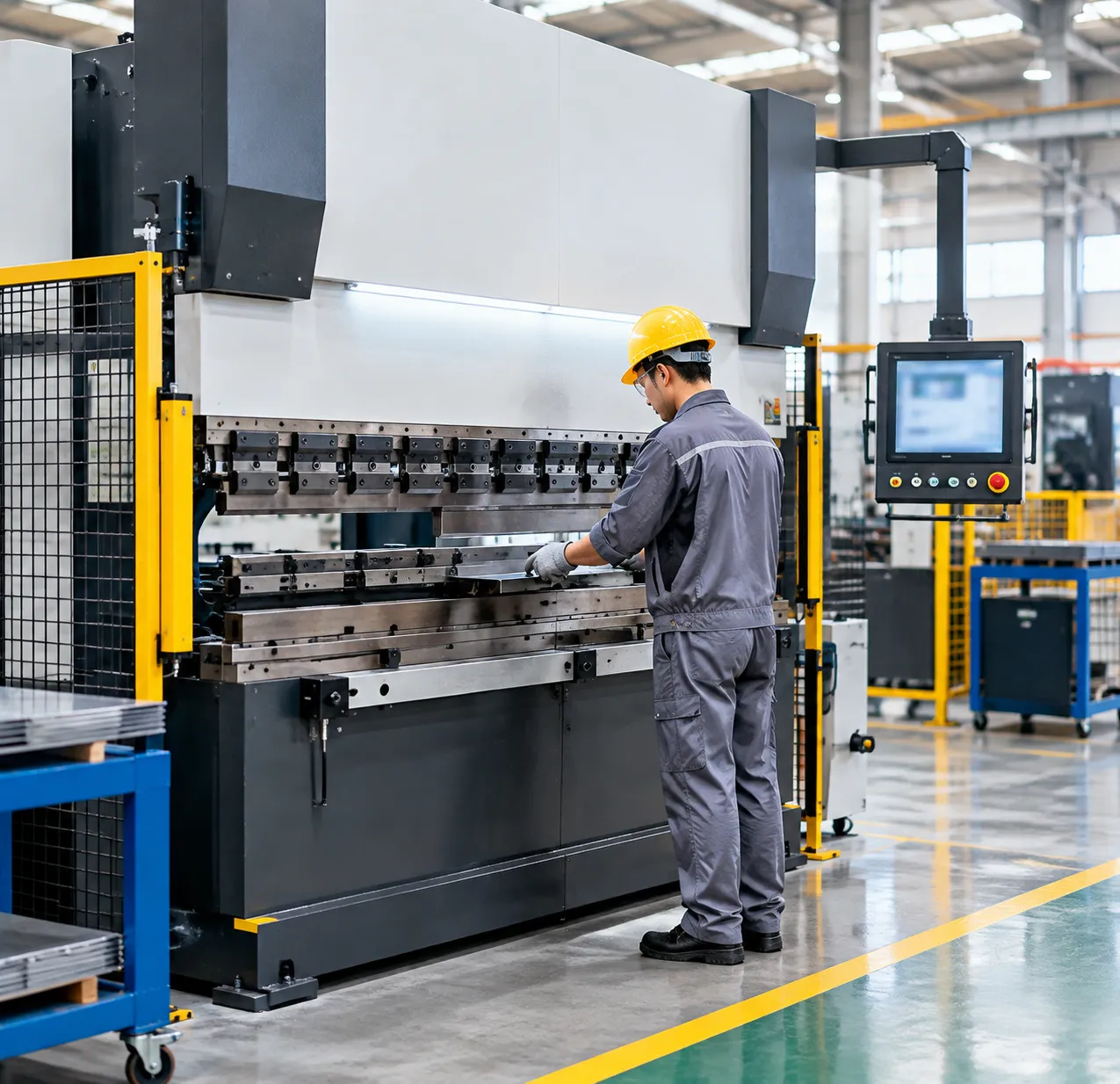
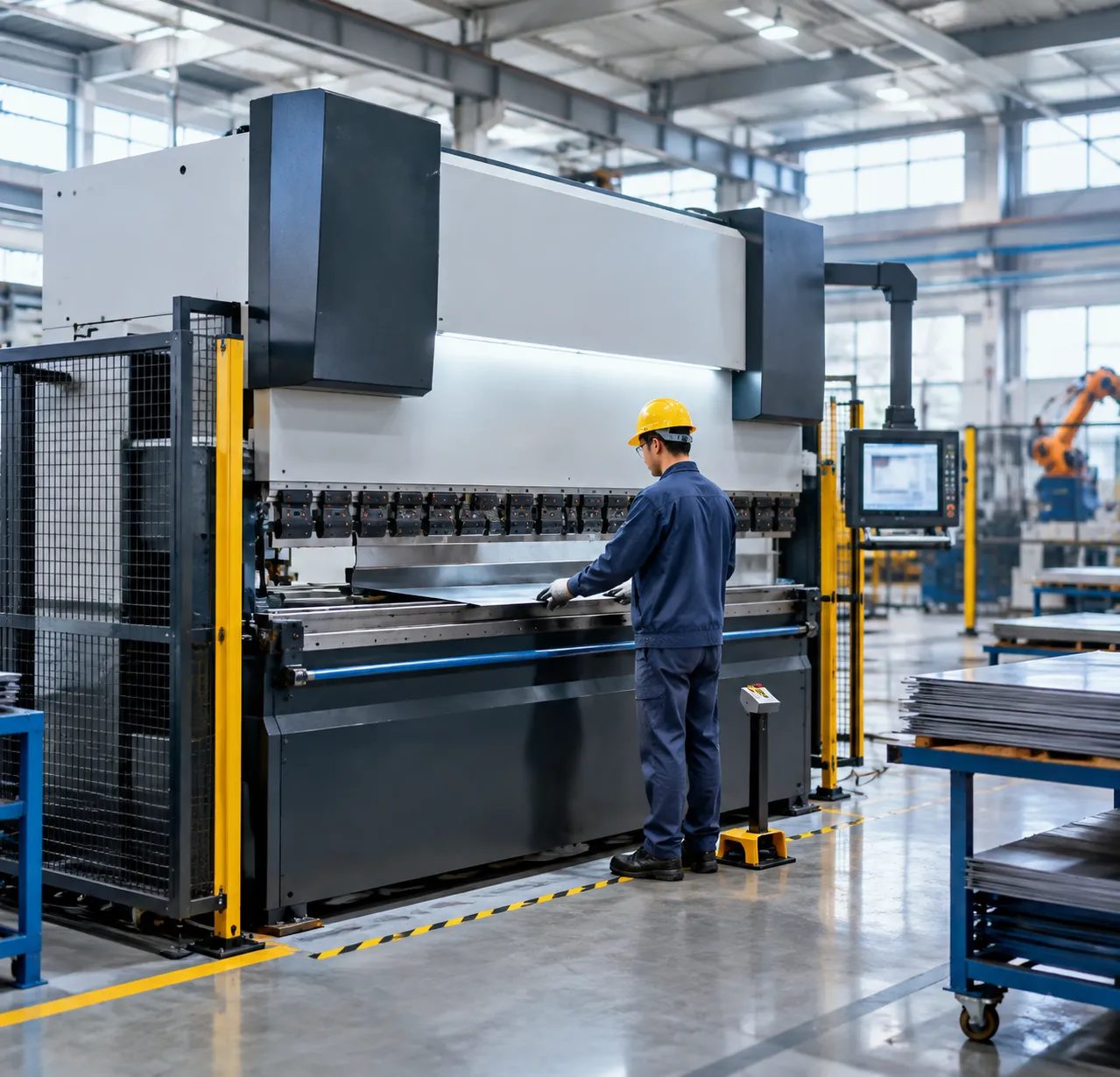
When we put a 400 ton press brake on the shop floor, we build it to tackle thick, high-tensile plate without frame twist or cycle delays. Bending heavy stock requires balanced tonnage, deep throat clearance, and smooth material flow. Across global manufacturing hubs, these workhorse machines drive several critical sectors.
Heavy Structural Steel and Building Frames
Heavy commercial builds and civil infrastructure rely on thick connection plates, stiffeners, and oversized channel sections. Our heavy-duty bending setups provide the force and throat clearance needed to process structural gussets and base plates, delivering dependable accuracy for construction and architecture fabrication without mid-bed angular deflection.
Chassis, Trailers, and Earthmoving Machinery Parts
Equipment destined for mining, quarrying, and transport takes brutal punishment. A 400-ton bending capacity gives fabricators the leverage needed to form high-strength steels:
Chassis rails and crossmembers: Forming long, high-tensile frame rails up to 12mm and 16mm thick with consistent flange dimensions.
Excavator and loader buckets: Air-bending wear-resistant materials like Hardox to create durable bucket shells, cutting edge stiffeners, and side plates.
Tipper bodies and trailer beds: Producing ribbed sidewalls and high-capacity floor sections in single, full-length setups.
Pressure Vessels, Storage Tanks, and Industrial Ductwork
Fabricating round shells and tank segments usually leaves flat zones on plate edges if unaddressed. In operations dedicated to energy and pressure vessels manufacturing, a 400 ton press brake handles the pre-bending of thick plate edges prior to rolling, while easily forming square-to-round transitions, conical segments, and heavy vessel support saddles.
Light Pole, Crane Boom, and Transmission Tower Fabrication
High-tonnage bending across wide spans is essential for tall, multi-sided structural poles:
Tapered light poles and high masts: Step-forming 8-sided, 12-sided, and 16-sided tube sections using deep-throat tooling.
Telescopic crane booms: Bending ultra-high-strength steel shells that require tight inside radius control and zero angular variation across the bend.
Transmission and utility towers: Forming structural angle profiles, heavy splice plates, and climbing brackets designed for high-stress wind loads.
Integrated Heavy Material Handling
Forming 200 kg to 500 kg plates creates heavy whip-up forces that can ruin bend accuracy and strain operators. To manage heavy plate fabrication smoothly, we pair the 400 ton press brake with mechanical front support brackets and synchronized CNC sheet followers. These tracking units move at the exact speed of the bending ram, eliminating back-bending defects and keeping cycle times fast and predictable.
How to Calculate Tonnage and Tool Sizing for a 400 Ton Press Brake
Running heavy plate through a 400 ton press brake leaves zero room for guesswork. Sizing mistakes will ruin tooling, blow hydraulic seals, or permanently bow the ram. We use standard shop formulas to calculate tonnage demands before cycling a single part.
Air Bending Force Formula for Heavy Plate
For standard air bending on thick plate, we rely on the industry-standard tonnage formula:
-
- Formula: P = (650 x S² x L) / V
- P: Required bending force (in kilonewtons; divide by 9.8 to get metric tons)
- S: Plate thickness (mm)
- L: Bending length (m)
- V: V-die opening width (mm)
While lighter production jobs rely on smaller machines like an electric press brake 40 ton for precise metal bending, structural forming on a heavy-tonnage brake demands strict die-to-thickness ratios to stay within the rated 400-ton load.
Selecting the Correct V-Die Opening
Thick plate requires larger die openings to manage tonnage and avoid cracking the outer bend radius:
-
- Under 6 mm plate: 6x to 8x material thickness
- 6 mm to 12 mm plate: 8x to 10x material thickness
- 12 mm to 20 mm plate: 10x to 12x material thickness
- Over 20 mm high-tensile plate: 12x to 14x material thickness
Widening the V-opening reduces required tonnage significantly, but it increases the inside bend radius and minimum flange length.
Material Multipliers: Mild Steel vs. Hardox vs. Stainless
The standard air bend formula assumes mild carbon steel with a tensile strength around 450 N/mm². Higher-strength alloys multiply that baseline:
| Material Type | Typical Tensile Strength | Tonnage Multiplier |
|---|---|---|
| Mild Steel (A36 / Q235) | ~400–450 N/mm² | 1.0x |
| Stainless Steel (304 / 316) | ~600–700 N/mm² | 1.4x to 1.5x |
| Hardox 400 / 450 | ~1200–1400 N/mm² | 2.5x to 3.0x |
| Weldox / High-Strength (S700) | ~800–900 N/mm² | 1.8x to 2.0x |
Bending a 10 mm Hardox 450 plate demands nearly three times the force required for mild steel of the same thickness.
Deflection and Cylinder Safety Limits
We never run a 400 ton press brake continuously at 100% capacity. Safe operation requires:
-
- A 20% Tonnage Safety Buffer: Cap everyday jobs at 320 to 340 tons to protect hydraulic pumps and proportional valves from sustained peak pressure.
- Tonnage-Per-Foot Limits: Avoid concentrating 300+ tons across a short working width (under 1 meter). Concentrated loads crush tool tangs and induce localized frame deflection.
- Tooling Load Limits: Verify punch and die ratings match the calculated bend pressure. High-tonnage punches must handle the line load without deforming.
Buying Guide: 400 Ton Press Brake Pricing, Maintenance, and ROI
Investing in a 400 ton press brake requires balancing upfront machine configurations against long-term operational productivity. In our experience on the shop floor, choosing the right specifications from day one prevents costly retrofits and maximizes throughput on heavy plate runs. For a broader breakdown of capital equipment evaluations, explore our industrial machinery buying guides to help frame your procurement strategy.
Base Machine Pricing Factors
The initial investment for a 400-ton bending setup scales significantly based on structural dimensions and control automation:
-
- Bed Length and Throat Depth: Standard 3,000 mm to 4,000 mm beds serve as the pricing baseline. Extending bed length to 6,000 mm or expanding throat depth for deep box bending requires heavier side frames and larger cylinders, raising the base machinery cost.
- Backgauge Axis Complexity: Moving from a standard 4-axis gauge (X, R, Z1, Z2) to 5-axis or 6-axis setups with independent finger control (Delta X) adds to upfront expense but eliminates manual gauging bottlenecks on multi-stage parts.
- Controller Level: High-end CNC packages with full 3D simulation and offline programming capabilities represent a premium over standard 2D graphic touchscreens.
Hydraulic System Maintenance and Filtration
Heavy bending puts relentless pressure on hydraulic circuits. Keeping a 400-ton system running at peak accuracy demands disciplined fluid management:
-
- Oil Cleanliness: Hydraulic proportional valves require fluid maintained to ISO 4406 standards. Micro-particle contamination can cause valve spool stickiness and uneven cylinder tracking between Y1 and Y2.
- Filtration Intervals: Replace return-line filters and offline kidney-loop filtration elements every 1,500 to 2,000 operating hours.
- Thermal Control: High-tonnage cycling generates heat quickly. An integrated air-cooled or water-cooled oil chiller is essential to prevent fluid degradation and seal wear under sustained production loads.
Operator Safety Systems
Bending large, thick steel plates presents distinct operator risks. Modern high-capacity brakes rely on multi-tier active guarding:
-
- Optical Laser Guards: Ram-mounted optical laser systems travel directly beneath the punch tip. They monitor the bending zone dynamically, allowing high-speed ram approach down to a minimal mute point without risking crush injuries.
- Rear and Side Perimeter Interlocks: Dual-circuit optical light curtains and physical interlocked side gates stop ram movement immediately if an operator enters the backgauge travel envelope during automated cycles.
Calculating ROI Through Cycle Time Cuts
The real financial return of a modern 400-ton press brake comes from streamlining heavy-part fabrication:
-
- Eliminating Test Bends: Integrated CNC dynamic crowning and automated angle measurement systems deliver accurate parts on the first stroke, eliminating costly scrap on expensive high-yield alloys.
- Labor Reduction via Sheet Followers: Adding CNC sheet followers allows a single operator to manage heavy, long plates without needing two or three assistants or an overhead crane to hold the material during the upstroke.
- Faster Changeovers: Hydraulic quick-clamping cuts heavy punch and die changeover times from forty minutes down to under five, keeping the machine active and generating revenue across small-batch, high-mix contracts.
Frequently Asked Questions About 400 Ton Press Brakes
What is the maximum plate thickness a 400-ton brake can bend?
Material thickness depends directly on your bend length, material yield strength, and V-die opening. On a standard 10-foot to 12-foot bed, a 400 ton press brake typically handles:
Mild Steel: 1/2-inch (12 mm) to 5/8-inch (16 mm) over full bed length using an 8x to 10x V-die.
Shorter Sections: Up to 3/4-inch (20 mm) or 1-inch (25 mm) when working over narrower tool widths.
High-Yield Alloys (e.g., Hardox): Reduced thickness limits due to higher tensile resistance, requiring wider dies and higher forming tonnage per foot.
How much foundation prep is needed for a 400-ton machine?
A standard factory slab is not sufficient for a machine in this class. A 400-ton machine typically weighs between 30 and 50 metric tons, requiring:
Dedicated Concrete Pit: A reinforced concrete pad engineered to depth specifications (usually 12 to 24 inches or 300 to 600 mm), isolated from the surrounding building floor.
Vibration Isolation: Perimeter expansion joints to absorb heavy shock loads and prevent deflection transfer to neighboring equipment.
Precision Leveling: Heavy anchor plates to maintain zero-twist bed alignment over decades of heavy cycling.
Why is dynamic crowning necessary on high-tonnage brakes?
Under 400 tons of bending pressure, both the upper ram and lower bed naturally deflect under load. Without compensation, your parts suffer from the "canoe effect"—angles are tighter near the side frames and open up in the center. A dynamic CNC crowning system uses hydraulic cylinders or motorized mechanical wedges to actively push back against the bed in real time, delivering a uniform bend angle across the entire working length.
Can a single 400-ton press brake be converted to a tandem setup later?
Yes, as long as the base unit is built with tandem readiness in mind. We build our heavy frames with tandem-compatible hydraulic sync manifolds, CNC interlink protocols, and removable side throat guards. This architecture allows you to run a single machine now, then pair it with a second synchronized unit later to form an 800-ton mega-bed line when handling extended structural work. You can explore our full range of heavy fabrication solutions across our press brakes line to match your current floor capacity with future expansions.