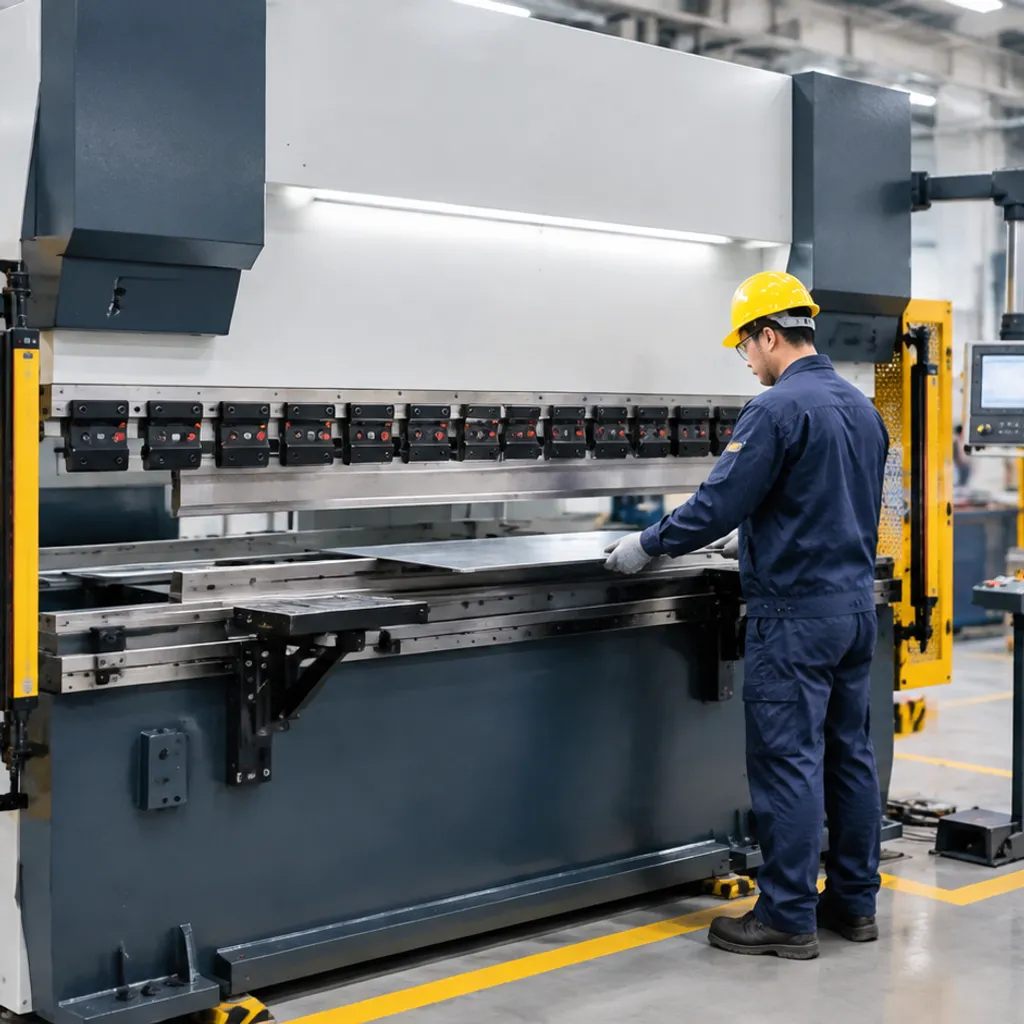
Formula details
Product Details
Overview
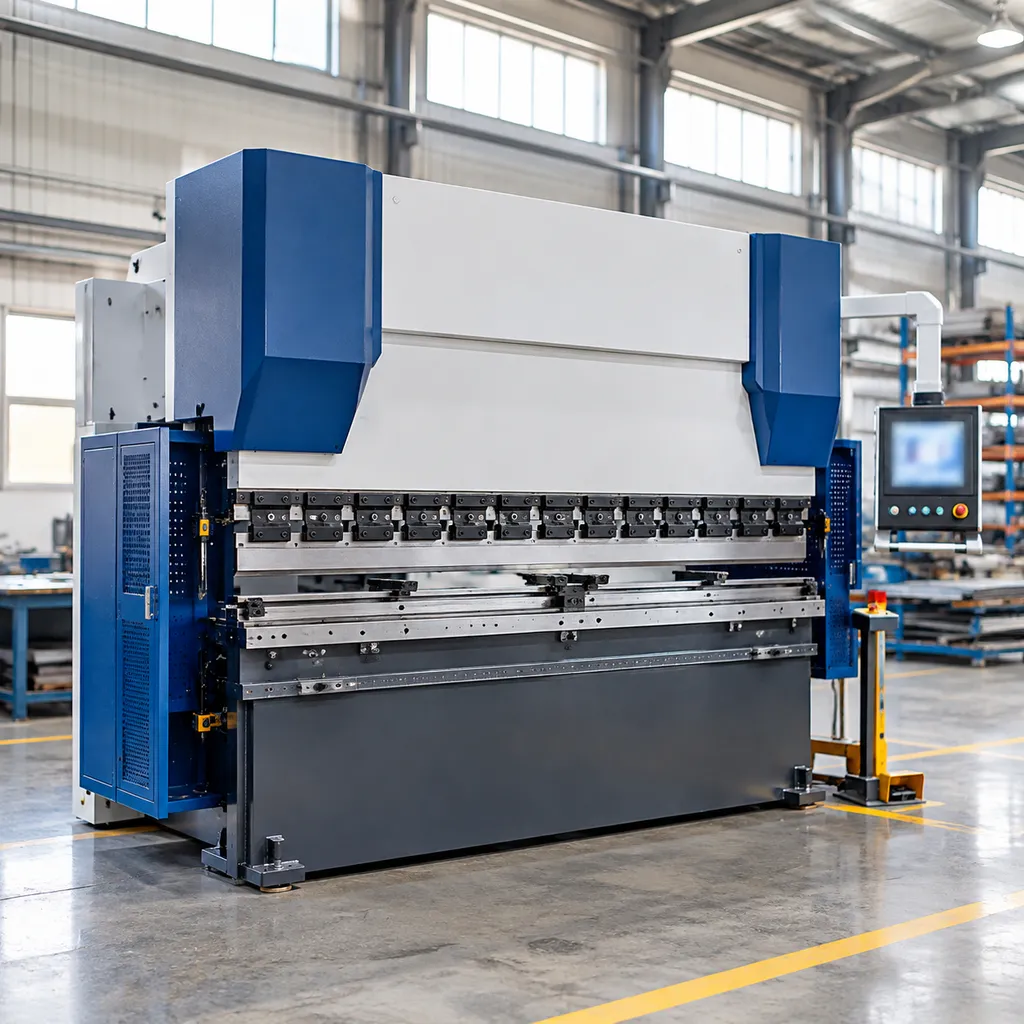
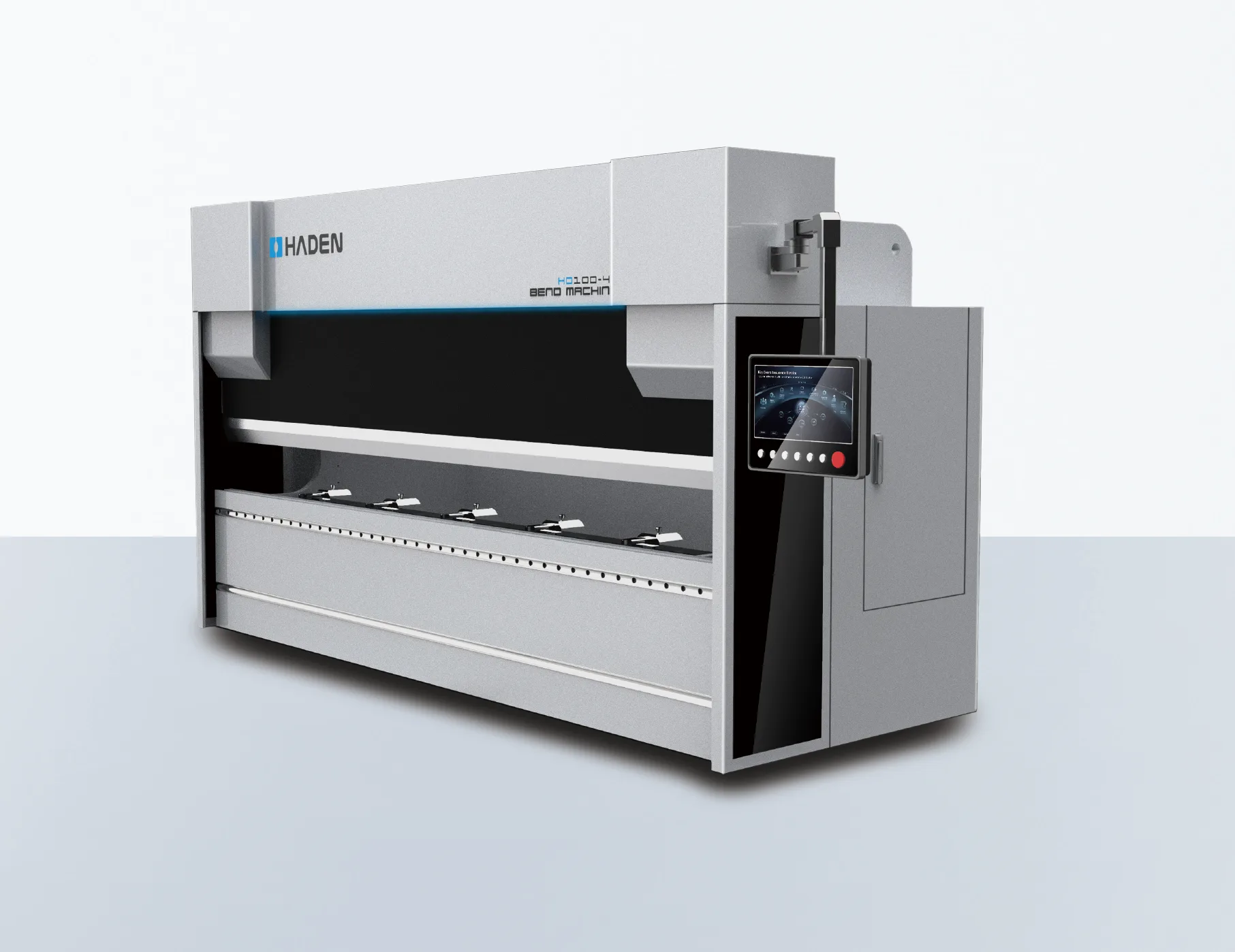
Technical Specifications & Capacity Matrix for the 40-Ton Electric Press Brake
Standard Working Envelope and Bending Force Parameters
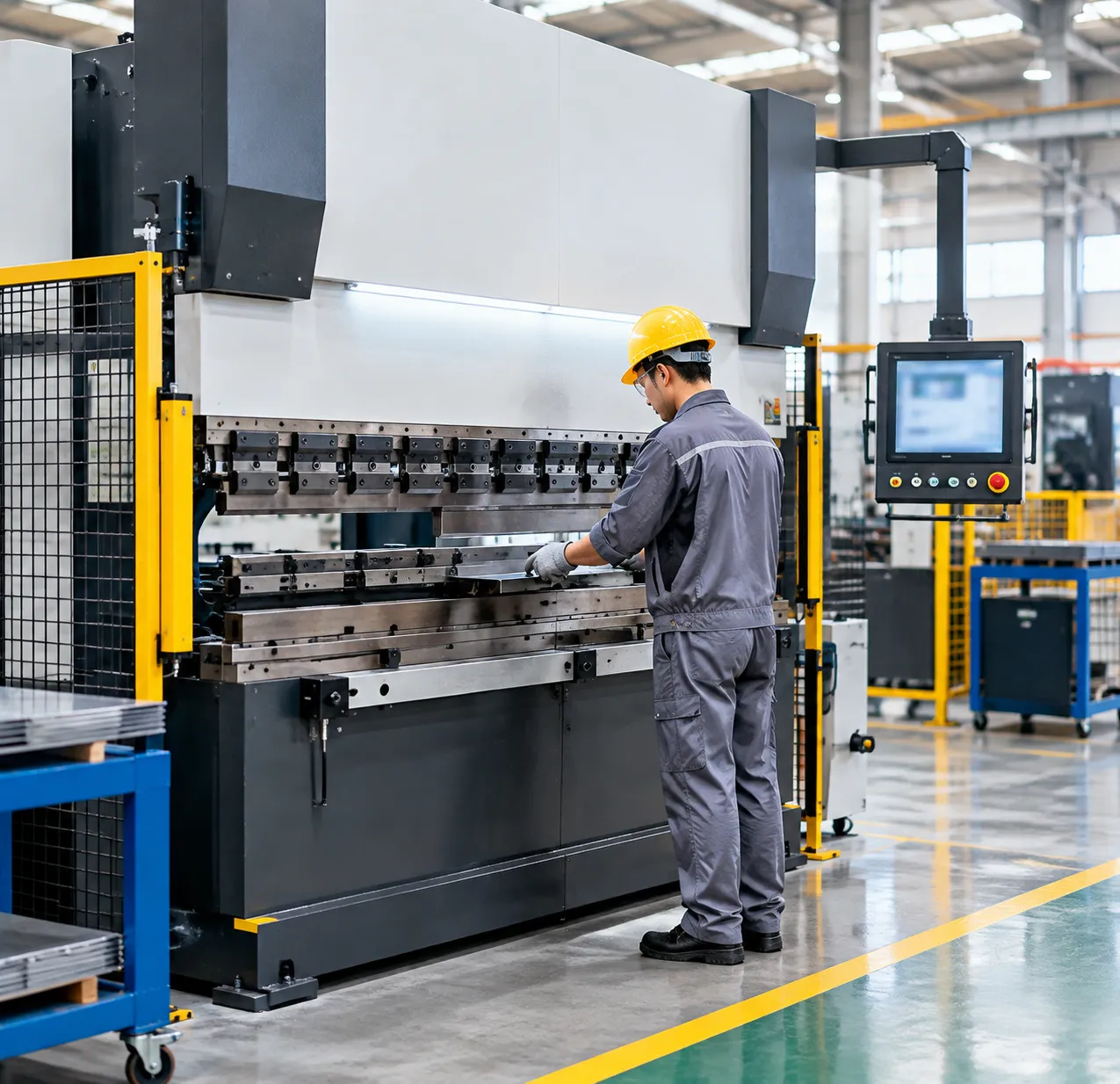
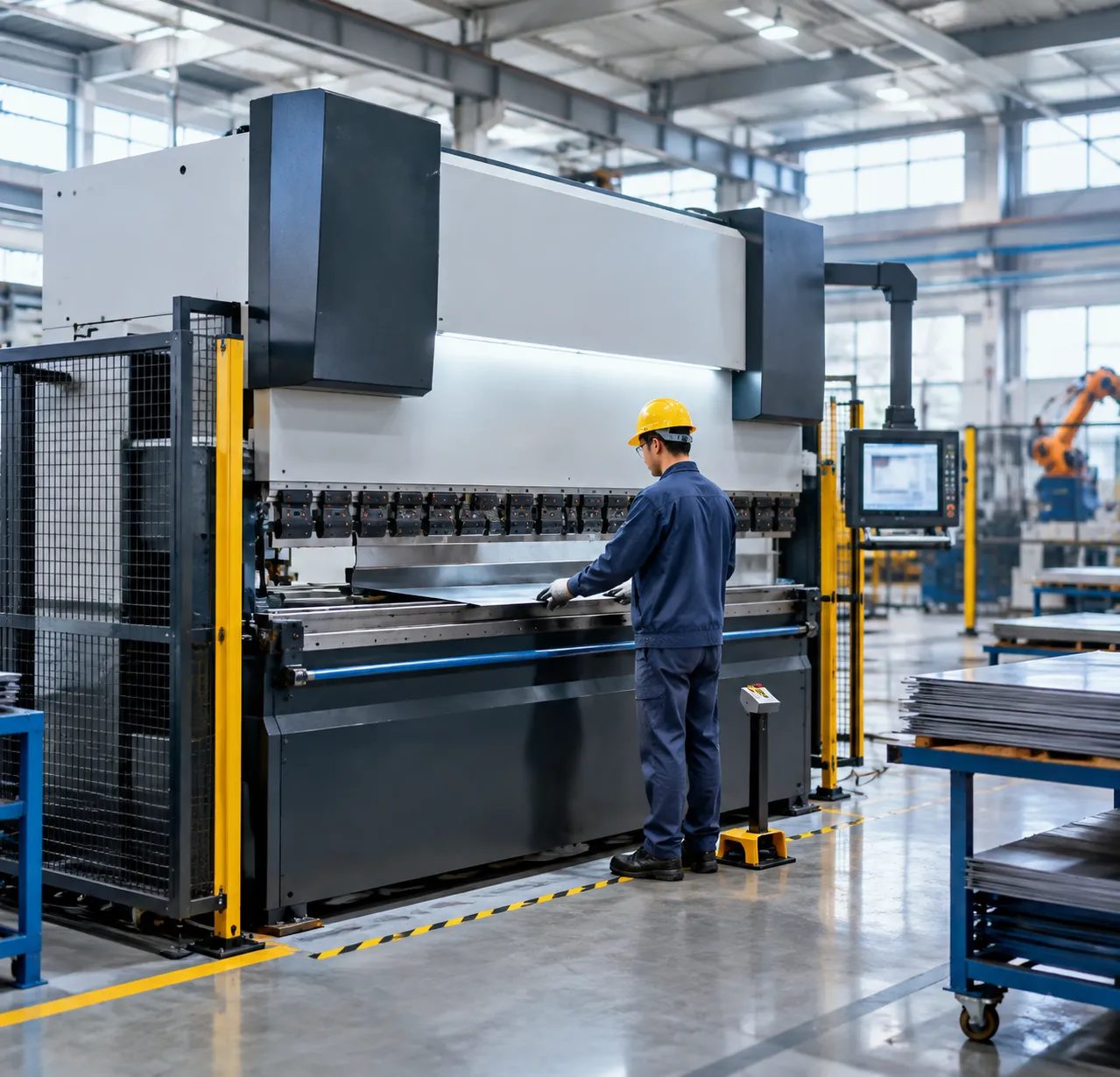
The standard configuration of our electric press brake 40 ton platform is engineered for compact, fast-paced production cells handling small to mid-sized parts.
| Technical Parameter | Metric Specification | Imperial Specification |
|---|---|---|
| Nominal Bending Force | 400 kN | 40 US Tons |
| Bending Length | 1,000 mm – 1,300 mm | 39.4 in – 51.2 in |
| Distance Between Frames | 900 mm – 1,150 mm | 35.4 in – 45.3 in |
| Ram Stroke (Y-Axis) | 150 mm – 200 mm | 5.9 in – 7.8 in |
| Maximum Open Height | 380 mm – 450 mm | 14.9 in – 17.7 in |
| Throat Depth | 150 mm – 250 mm | 5.9 in – 9.8 in |
| Connected Electrical Load | 5.5 kW – 7.5 kW | 7.4 hp – 10.0 hp |
Ram Speeds and Axis Positioning Tolerances
Direct-drive electric servo systems provide instant mechanical torque without the valve latency or pressure build-up typical of hydraulic cylinders.
-
- Approach Speed: Up to 200 mm/s (7.87 in/s) for ultra-fast cycle initiation.
- Bending Speed: Fully variable from 0.1 mm/s to 20 mm/s (0.004 to 0.787 in/s) for controlled deformation without part whip.
- Return Speed: Up to 200 mm/s (7.87 in/s) for fast retraction and short part-to-part cycle times.
- Y1 / Y2 Positioning Accuracy: ±0.005 mm (±0.0002 in) via independent linear glass encoders.
- Ram Repeatability: ±0.002 mm (±0.00008 in), eliminating angle deviation across multiple shifts regardless of ambient shop temperatures.
Multi-Axis CNC Backgauge Specifications
A high speed electric press brake requires an equally responsive gauging system. Our multi-axis CNC backgauge utilizes high-pitch ballscrews and AC servo motors mounted on a rigid, stress-relieved crossbeam to support complex stepped flanges and multi-bend sequencing.
| Backgauge Axis | Stroke Range | Rapid Traverse Speed | Positioning Repeatability |
|---|---|---|---|
| X-Axis (Depth) | 400 mm – 600 mm (15.7 – 23.6 in) | 500 mm/s (1,180 ipm) | ±0.01 mm (±0.0004 in) |
| R-Axis (Height) | 150 mm – 200 mm (5.9 – 7.8 in) | 250 mm/s (590 ipm) | ±0.02 mm (±0.0008 in) |
| Z1 / Z2 Axes (Lateral) | Full clear span between frames | 600 mm/s (1,417 ipm) | ±0.05 mm (±0.0020 in) |
-
- Standard Configuration: 4-axis control (Y1, Y2, X, R) standard; expandable to 5-axis or 6-axis configurations (adding independent Z1, Z2, or delta-X fingers).
- Gauging Fingers: Hardened mechanical gauge fingers with dual-stop steps, flip-up stops, and micrometer-adjustable contact faces for handling intricate sheet geometries.
- Collision Protection: Built-in mechanical and software travel limits to protect fingers, tooling, and workpieces during high-speed moves.
Core Drive Advantages of the Electric Press Brake 40 Ton
Direct Dual-Servo Drive System and Frame Rigidity
Our servo-electric press brakes eliminate the standard hydraulic tank, valves, and seals completely.
-
- Direct-Drive Precision: Dual AC servo motors drive heavy-duty ball screws and timing belts independently at both ends of the ram, giving you true dynamic leveling across the entire bed.
- Zero Thermal Drift: Because there is no hydraulic fluid heating up over an eight-hour shift, your target bend angle stays consistent from the first part in the morning to the last run at night.
- O-Frame Structural Rigidity: We utilize an integrated, stress-relieved solid side-frame design that minimizes side-housing deflection under full 40-ton tonnage, protecting precision tool sets.
Energy Efficiency and Operating Cost Comparison
A standard hydraulic system runs its pump motor continuously, burning kilowatts even when the machine sits idle between sheet loads. Our pure 40 ton servo electric press brake only draws significant power when the ram moves downward during the bending phase.
| Performance Metric | Standard 40T Hydraulic Press Brake | 40-Ton All-Electric Press Brake |
|---|---|---|
| Idle Power Draw | Continuous 3.5 kW – 5.5 kW | Near 0 kW (Standby only) |
| Active Power Consumption | High baseline continuous load | Power on-demand (only during stroke) |
| Oil Changes & Disposal | 100–150 Liters every 2,000–4,000 hrs | Zero hydraulic oil required |
| Warm-Up Time Needed | 15–30 minutes in cold shops | Instant start (0 minutes) |
| Seal & Valve Replacements | Periodic maintenance cycles | Minimal mechanical wear components |
For long-term shop budgeting and operational payback periods, see our breakdown in the electric press brake cost and price guide.
Cycle Speed Gains in High-Mix Sheet Metal Production
Small-bracket fabrication and electronic chassis enclosures demand rapid changes in part geometries. In a high-mix environment, seconds shaved from approach, bend, and return profiles deliver significant throughput gains across daily production shifts.
-
- Snappy Acceleration: High-torque servo drives jump instantly from idle to maximum approach speeds, cutting open-close transit times in half compared to sluggish fluid valves.
- Micro-Step Retract Control: The ram stops and reverses on a dime, opening only far enough to clear your part profile rather than returning to an arbitrary top dead center.
- Rapid Operator Rhythm: Smooth, quiet down-acting strokes reduce operator fatigue and rhythm interruptions, translating to higher part counts per hour on thin-gauge aluminum, mild steel, and stainless workpieces.
Intelligent CNC Software and Programming Capabilities
Multi-Touch CNC Controllers and Graphical Bending
Our multi-touch interface acts like a modern shop tablet, letting operators visualize every bend sequence in 2D and 3D before the ram ever moves:
-
- Direct Angle Input: Operators enter angles and flange dimensions directly; the control automatically computes bend allowances and punch penetration depth.
- Collision Detection: The interface visualizes the entire tooling profile, backgauge fingers, and workpiece geometry to spot mechanical interferences in advance.
- Tool Library Management: Built-in profiles for punches, dies, and multi-v blocks shorten switchover intervals on high-mix runs.
- Step-by-Step Guidance: 3D graphics rotate and orient with the operator, reducing orientation mistakes during complex, multi-stage small part forming.
Utilizing our dedicated CNC press brake forming machine for precise metal bending controls ensures seamless operation, steady angle repeatability, and faster ramp-up times for novice operators.
Offline CAD/CAM Programming and Industry 4.0 Integration
Keeping programmers away from the shop floor keeps the machine running without interruptions. We optimize machine uptime through flexible network integration and offline workflows:
-
- Direct File Import: Import 3D CAD models (STEP, IGES, DXF) straight into the offline suite to automatically unfold parts and generate optimized bend sequences.
- Network Job Queues: Transfer verified bending files directly to the machine via Ethernet or Wi-Fi, eliminating manual input errors at the console.
- Smart Factory Integration: OPC UA and standard industrial protocols send real-time production stats, stroke cycles, and maintenance alerts directly to your factory MES or ERP network.
- Zero Idle Time: While the 40 ton servo electric press brake forms active batches, technicians engineer upcoming jobs offline to sustain continuous throughput.
Tooling Systems and Precision Deflection Control on the Electric Press Brake 40 Ton
Tooling flexibility and mechanical stability determine whether a small-tonnage bender keeps up with fast-paced production. On our electric press brake 40 ton, we design the upper beam, clamping interfaces, and lower bed to eliminate setup delays and prevent angle variation across every bend.
Quick-Clamp Tooling Styles and Setup Speed
Frequent changeovers kill output when running small parts and high-mix batches. We integrate flexible clamping arrangements that slash setup times down to seconds:
-
- Pneumatic or Hydraulic Rapid Clamping: Secure or release punches instantly with a single switch, cutting changeover times by up to 70% compared to manual bolted clamps.
- Tooling Compatibility: Accommodates standard European/Promecam, American, or Wila/Trumpf-style small electric press brake tooling, making it easy to swap existing punches and dies without dedicated adapters.
- Vertical Tool Loading: Punches click in vertically from the front, preventing the operator from sliding heavy segment tools in from the side of the machine.
- Precision Segmented Sections: Standard punch and die kits come precision ground to ±0.01 mm, maintaining alignment across segmented sets for boxed or flanged workpieces.
| Clamping Option | Changeover Time | Clamping Method | Best Suited For |
|---|---|---|---|
| Manual Quick-Lever | ~2 minutes | Mechanical Cam-Lock | Low-to-medium batch changes |
| Pneumatic Auto-Clamp | < 15 seconds | Push-button Air Circuit | High-mix, dynamic daily setups |
| Precision Hydraulic | < 10 seconds | Integrated Hydraulic Bar | Continuous production runs |
Bed Rigidity and Deflection Compensation
Even on a compact 400kN electric bending machine, frame deflection under load causes angle inconsistencies between the center and the sides of a part. We eliminate this issue at the engineering stage through structural rigidity and targeted compensation:
-
- O-Frame Solid Construction: Fabricated using high-tensile structural steel, our stress-relieved frames limit throat deflection under full 40-ton tonnage. Every machine undergoes verified quality and testing inspections to confirm frame alignment and mechanical integrity under load.
- Mechanical Wave Crowning: We provide CNC-controlled mechanical crowning tables that automatically calculate the deflection curve based on material thickness, length, and tensile strength, delivering uniform angles over the full working length.
- Direct Bed Load Distribution: The direct servo drive applies force uniformly across the ram, minimizing structural twist and ensuring consistent bottom-dead-center repeatability across sheet metal profiles.
Workstation Ergonomics and Active Safety Engineering
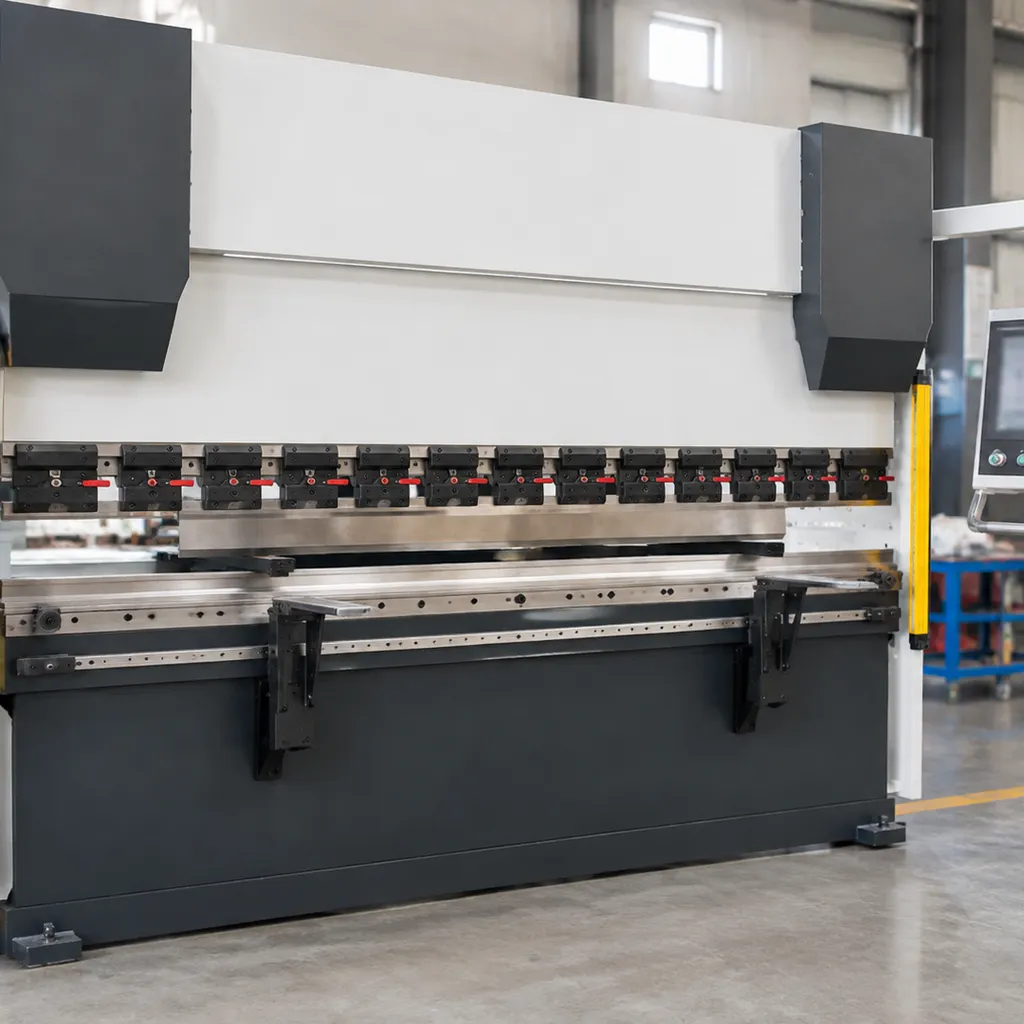
Long shifts at a bending station can wear down operators quickly if machine layout and physical access are poorly planned. In our machine design, we align the working height, foot switch mobility, and stroke travel directly with the natural posture of the operator. By applying proven engineering principles to the chassis geometry, our electric press brake 40 ton setup minimizes repetitive reaching and physical strain during small-part processing.
-
- Adjustable Support Arms: Quick-positioning front support arms slide smoothly along linear guides to catch small parts without awkward wrist bending.
- Responsive Foot Control: Ergonomic, lightweight foot pedals allow single-press cycling and instant stop triggers with zero pedal resistance fatigue.
- Clear Sightlines: The absence of overhead cylinders, hydraulic tanks, and bulky side brackets gives the operator an unobstructed view of the tooling zone and backgauge fingers.
Optical Laser Guarding for High-Speed Operation
Running a high speed electric press brake requires safety systems that keep up with rapid approach and return speeds without causing nuisance tripping. We integrate close-proximity optical laser safety systems that project protective light beams directly below the punch tip.
-
- Real-Time Punch Tracking: The laser envelope moves dynamically with the upper beam, continuously monitoring the pinch point.
- Zero Speed Penalty: Operators can run fast down-strokes safely right up to the sheet mute point without manual safety overrides.
- Complex Flange Modes: Intelligent blanking features let operators process pre-bent boxes, complex returns, and narrow flanges without interrupting the cycle.
Footprint Requirements and Noise Reduction Profile
Floor space and ambient noise directly impact shop efficiency. Traditional small-tonnage hydraulic brakes run noisy pumps continuously, generating constant heat and low-frequency hums. Our all-electric direct-drive mechanism operates on demand—drawing power and creating movement only when the pedal is pressed.
| Environmental Metric | Standard 40T Hydraulic Brake | Our 40 Ton Servo Electric Press Brake |
|---|---|---|
| Idle Noise Level | 65 – 72 dBA (continuous pump roar) | < 50 dBA (silent ambient idle) |
| Operating Noise Level | 75 – 82 dBA | < 68 dBA during active bend cycle |
| Physical Floor Space | Large footprint (external tank + pump) | Ultra-compact, self-contained frame |
| Thermal Emissions | High heat dissipation from hydraulic oil | Negligible heat load on production floor |
Because no hydraulic infrastructure is needed, this small tonnage CNC press brake fits tight floor plans and integrates directly into busy production cells right next to secondary assembly and finishing areas.
Material Capabilities and Target Workpiece Applications
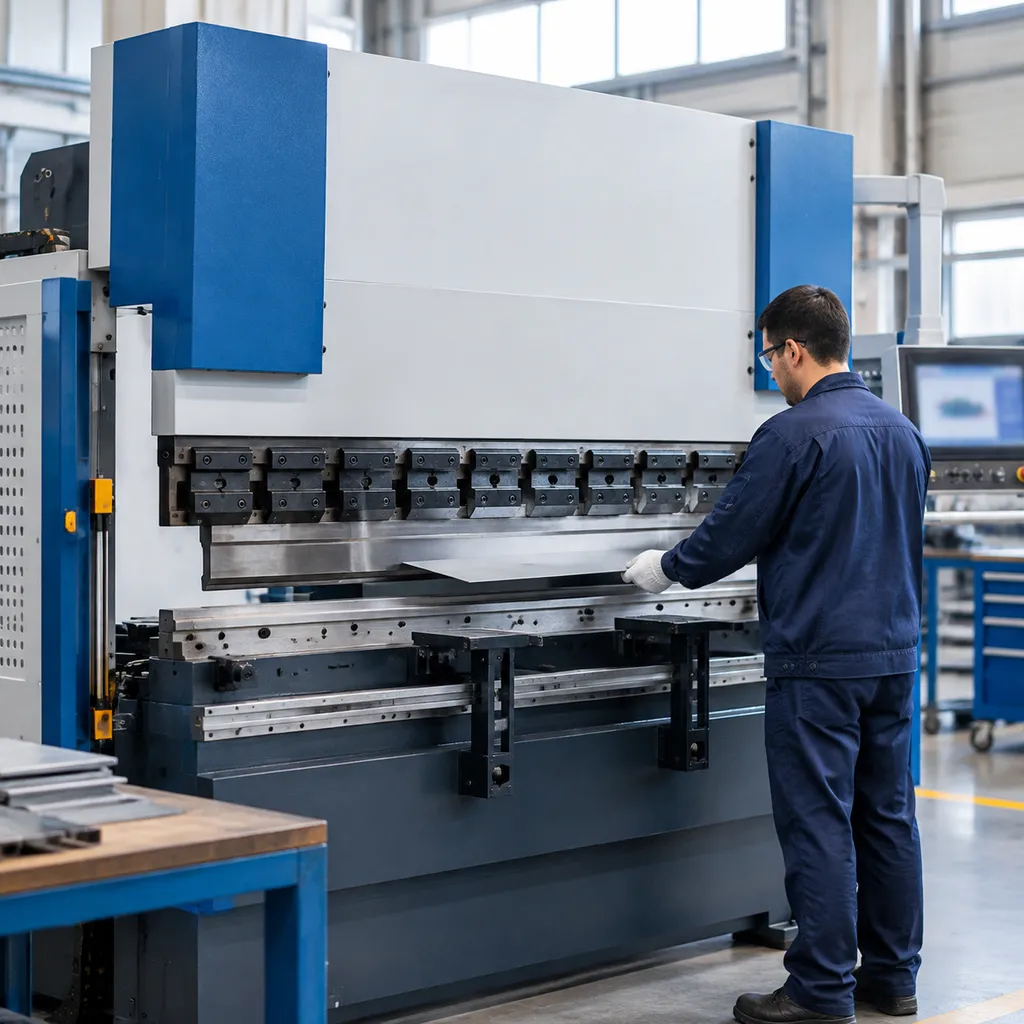
Maximum Bending Thickness Across Materials
Working within a 400 kN bending force envelope means matching material tensile strength with the correct V-die opening. Our precision CNC electric press brake handles everything from thin foil shielding up to medium-gauge structural brackets.
| Material Type | Typical Thickness Range | Ideal V-Die Opening | Common Shop Applications |
|---|---|---|---|
| Mild Steel (Cold Rolled) | 0.5 mm – 3.2 mm (24 ga – 10 ga) | 6x to 8x material thickness | Electrical cabinets, mounting hardware, chassis |
| Stainless Steel (304 / 316) | 0.5 mm – 2.0 mm (24 ga – 14 ga) | 8x to 10x material thickness | Food service equipment, medical housings |
| Aluminum (5052 / 6061-T6) | 0.8 mm – 4.0 mm (20 ga – 8 ga) | 6x material thickness | Heat sinks, avionics boxes, front panels |
| Copper & Brass | 0.5 mm – 3.0 mm | 6x material thickness | Busbars, switchgear terminals, RF shielding |
Note: Achieving tight radii on thicker sheets or short flange lengths requires verifying tonnage-per-meter limits to prevent tool overloading.
Precision Manufacturing and Component Verticals
High-speed electric sheet metal bending machines excel in sectors where cycle speed and bend accuracy take priority over sheer tonnage. Integrating targeted sheet metal bending solutions helps shops clear common forming bottlenecks across several key industries:
-
- Electronics and Telecommunications: Server rack sub-assemblies, power supply casings, PCB mounting brackets, and EMI shielding covers requiring sub-millimeter flange consistency.
- Medical Equipment: Surgical device consoles, laboratory instrument covers, and 304 stainless steel housings formed in clean environments where hydraulic fluid cannot be tolerated.
- Aerospace and Precision Instruments: Lightweight aluminum brackets, avionics enclosures, and sensor housings demanding strict angle tolerances without secondary rework.
- Automotive and Transportation: Sensor clips, terminal connectors, wiring channel supports, and interior dash brackets produced in high-volume, rapid-cycle batches.
Frequently Asked Questions (FAQ) About 40-Ton Electric Press Brakes
What is the maximum material thickness a 40-ton electric press brake can bend?
A 40-ton electric press brake easily handles sheet metal across full-bed and short-length setups depending on your V-die width:
Mild Steel: Up to 3.0 mm (approx. 1/8 in) across a full 1,000 mm to 1,250 mm bed length; up to 6.0 mm on short-width bracket work using appropriate V-openings.
Stainless Steel: Up to 2.0 mm to 2.5 mm on full bends; up to 4.0 mm on smaller flange lengths.
Aluminum: Up to 4.0 mm to 5.0 mm across typical forming profiles without tonnage spikes.
For higher tonnages or extreme plates, traditional CNC hydraulic press brakes take over, but for light-gauge production, 400 kN delivers ample forming tonnage.
How does the power consumption of a 40T electric press brake compare to a 40T hydraulic press brake?
An all-electric machine slashes electrical usage by 50% to 70%:
On-Demand Power: The direct servo drive only draws current when the ram is actively in motion. Hydraulic units keep a main motor spinning continuously to maintain line pressure even while the operator sets up parts.
No Idle Waste: During material handling, program changes, or part inspection, standby power draw stays under 1 kW.
Lower Ambient Cooling Load: Without hydraulic oil tanks radiating heat into the facility, overall HVAC energy overhead drops.
What are the primary advantages of an all-electric press brake for thin sheet metal bending?
For sheet metal under 3 mm, switching to our small electric press brake configurations eliminates the daily headaches of hydraulic drift:
Instant Angle Consistency: No hydraulic oil means no warm-up period. The first bend of the morning lands at the exact same angle as the last bend of a long shift.
Shorter Cycle Times: High-speed ram descent and return speeds cut cycle times by 30% or more compared to older hydraulic systems.
Sub-Micron Positioning: Dual servo ball screws position the ram with extreme repeatability (down to ±0.005 mm), preventing angle deviations on small electronic chassis and enclosures.
Zero Contamination: Clean, oil-free operation satisfies medical, electronics, and food-grade sheet metal processing standards.
Can a 40-ton electric press brake integrate with automated robotic cells?
Yes. Our 40-ton electric press brakes are engineered with open architecture CNC controllers and industrial bus communication (such as EtherCAT and Profinet). These interfaces support direct handshaking with standard industrial 6-axis articulated robots or collaborative robots (cobots). The compact footprint makes it simple to build high-speed, 24/7 lights-out bending cells for repetitive small parts.
Which tooling styles fit standard 40-ton electric clamping systems?
We configure 40-ton electric press brake clamping systems to match your existing shop standard:
European / Promecam Style: Readily accepts standard 12 mm x 20 mm tang tools with manual or pneumatic quick-release levers.
Wila / Trumpf Style (New Standard): Precision-ground self-seating punch and die sets designed for fast vertical loading and sub-millimeter alignment.
Segmented Sectioning: Easily switch between segmented horns, box-folding punches, and specialized gooseneck tooling to clear complex return flanges.