
High-Speed Automatic Panel Bending Centers for Flexible Sheet Metal Production
Haden automatic panel benders combine servo-driven bending, automated workpiece positioning, and programmable bending sequences to support efficient production of cabinets, enclosures, panels, and complex sheet metal components. Integrate panel bending with upstream laser cutting machines for a more automated sheet metal fabrication workflow.
±0.2°
Bending Angle Capability
0.2 s
Fastest Bending Cycle
0.01 mm
Servo Positioning Repeatability
CNC
Automated Bending Control
Available bending speed, accuracy, workpiece dimensions, and automation functions vary by machine model, material, thickness, and part geometry.
Engineered for Maximum Throughput and Exacting Repeatability
Haden automated panel bending systems eliminate bottlenecks common in conventional press brakes with synchronized multi-axis servo actuation, delivering consistent cycle times across complex polygonal profiles.
Throughput Multiplier
Expedites production output compared to traditional CNC press brakes through continuous automated sheet rotation and rapid bending strokes.
Tool Changeover Time
Universal segmented bending blades automatically adjust along the geometry in real time, eliminating mechanical retooling downtime.
Positioning Repeatability
Closed-loop optical encoders and multi-axis servo drives deliver precision matching advanced servo electric press brakes, maintaining tight angular tolerances and consistent dimensional accuracy.
Labor Intensity Reduction
Designed to integrate smoothly with upstream sheet metal laser cutting machines, automated blank handling and manipulator arms remove manual sheet support, reducing operator dependency.
Validate Your Panel Geometry Before Machine Selection
Send your CAD drawings and material specifications. Haden application engineers can review part feasibility, bending sequence, cycle time, tooling requirements, and suitable panel bender configuration for your production.
Scalable Panel Bending Architectures Engineered for Lean Fabrication
Modern sheet metal operations require folding systems that transition seamlessly between high-mix batch runs and high-volume throughput without sacrificing dimensional accuracy. Haden designs industrial panel bending centers that eliminate costly manual setup and tool changes, compressing cycle times across precision fabrication lines.
Whether your shop requires agile, operator-assisted folding for custom enclosures or fully integrated 24/7 lights-out robotic automation, our modular panel bending platforms scale to match your production demands. Review our primary equipment configurations below to identify the right forming architecture for your plant, or explore our comprehensive line of industrial metalworking products.
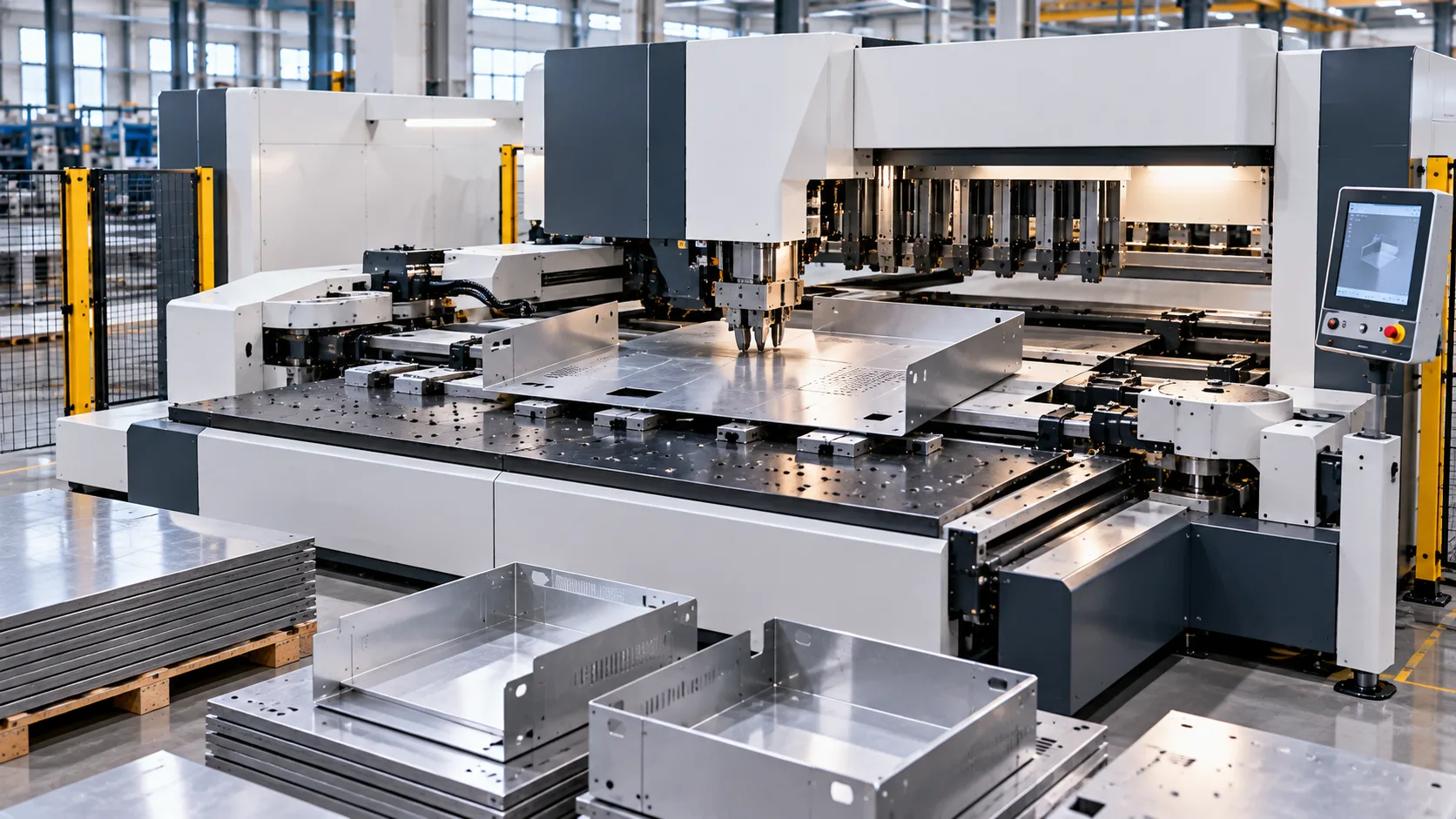
Automatic Panel Benders
Built for rapid job changeovers, tight floor layouts, and complex polygonal panel forming. Universal segmented tooling automatically adapts to varying box profiles and return flanges, allowing flexible single-piece production with reduced manual tooling adjustments.
- ✓ Ergonomic Handling Support: Low-friction worktables and assisted sheet handling help simplify positioning during large-panel processing.
- ✓ Flexible Tooling Kinematics: Programmable bending tools support upward, downward, and application-specific bending sequences.
- ✓ Fast Job Changeovers: CNC programming and servo-controlled positioning support efficient transitions between different part geometries.
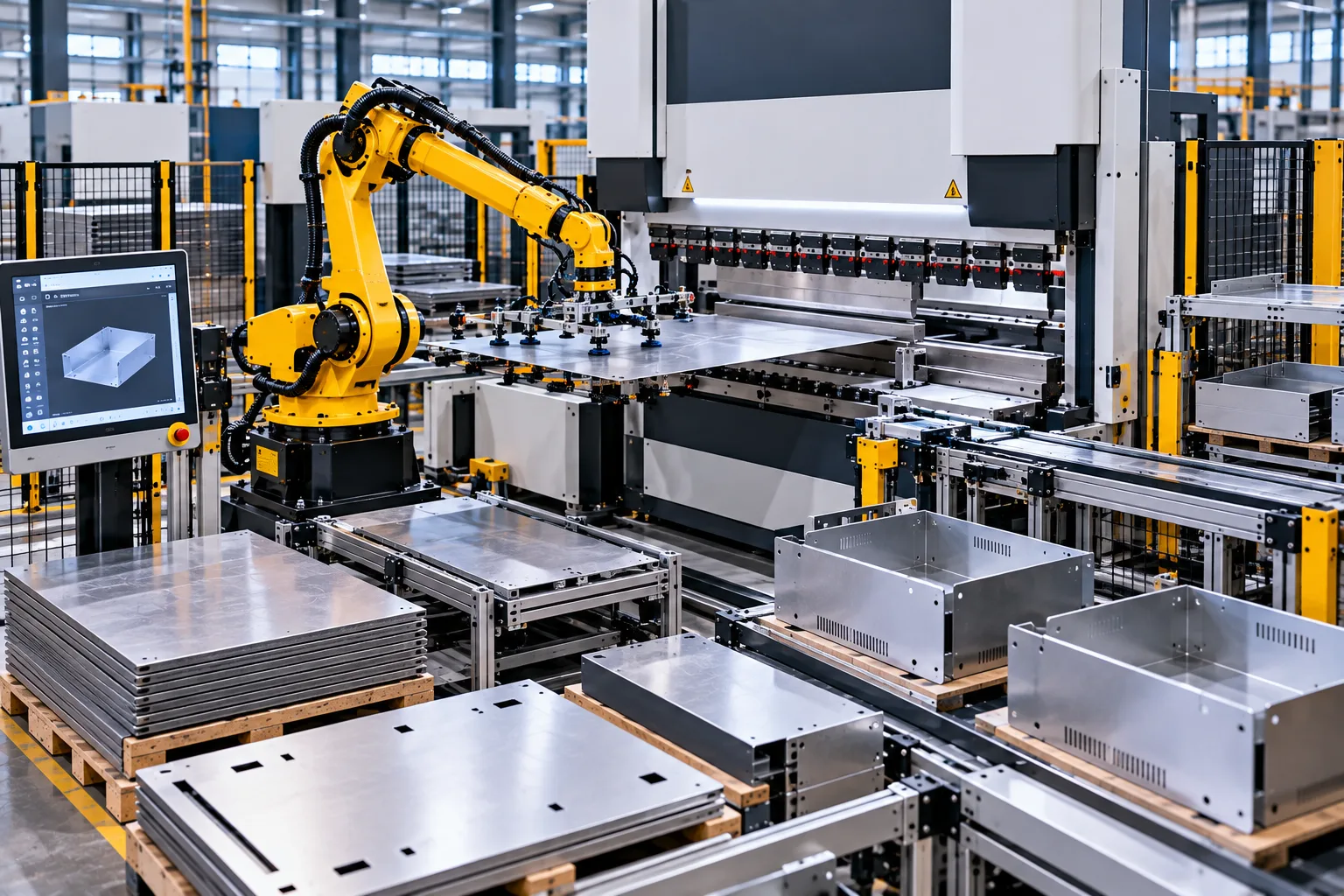
Robotic Panel Bending Cells
Designed for automated panel production with integrated robotic loading, positioning, bending, and unloading. Robotic cells can be configured around part geometry, production volume, material handling requirements, and upstream sheet metal processing.
- ✓ Automated Blank Handling: Robotic loading and unloading can reduce repetitive manual handling between production stages.
- ✓ Part Positioning & Centering: Integrated positioning systems help prepare blanks for repeatable bending sequences.
- ✓ Production Line Integration: Configure robotic bending as part of a wider automated cutting, handling, bending, and downstream workflow.
Comparative Capability Matrix: Standalone vs. Robotic Automation
Evaluate key engineering parameters to determine the appropriate panel bending model for your operational requirements, facility constraints, and target return on investment.
| Performance Criteria | Automatic Panel Benders (Standalone) | Robotic Panel Bending Cells (Turnkey) |
|---|---|---|
| Primary Target Operational Model | High-mix, variable batch runs, rapid prototyping, and custom jobbing | Standardized high-volume runs, recurring contracts, lights-out shifts |
| Operator Interaction | Single operator assisted by low-friction floating brush table | Unattended cycle; autonomous robot blank feed and pallet discharge |
| Maximum Sheet Thickness Capacity | 0.35 mm – 3.2 mm (Mild Steel), up to 2.0 mm (Stainless Steel) | 0.35 mm – 3.2 mm (Mild Steel), up to 2.5 mm (Stainless Steel) |
| Maximum Bending Length | Up to 2,500 mm standard (Custom throat configurations available) | Up to 2,500 mm – 3,200 mm custom integration layouts |
| Tooling Setup & Adjustment Time | 0 seconds (Universal segmented tool expansion) | 0 seconds (Automatic digital CAM positioning) |
| Average Cycle Speed Per Bend | 0.2 – 0.5 seconds per bend | 0.2 – 0.4 seconds per bend (continuous cycle) |
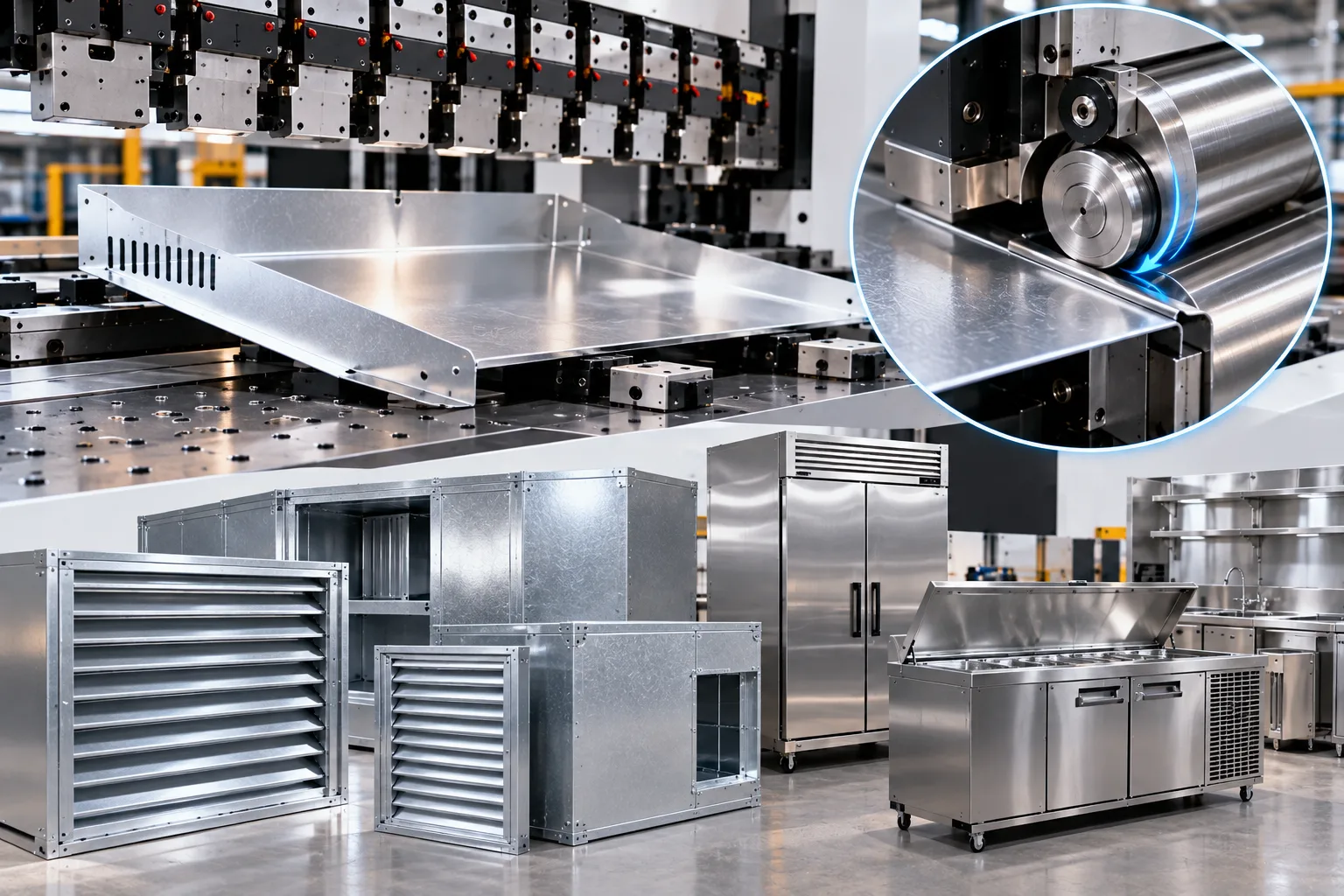
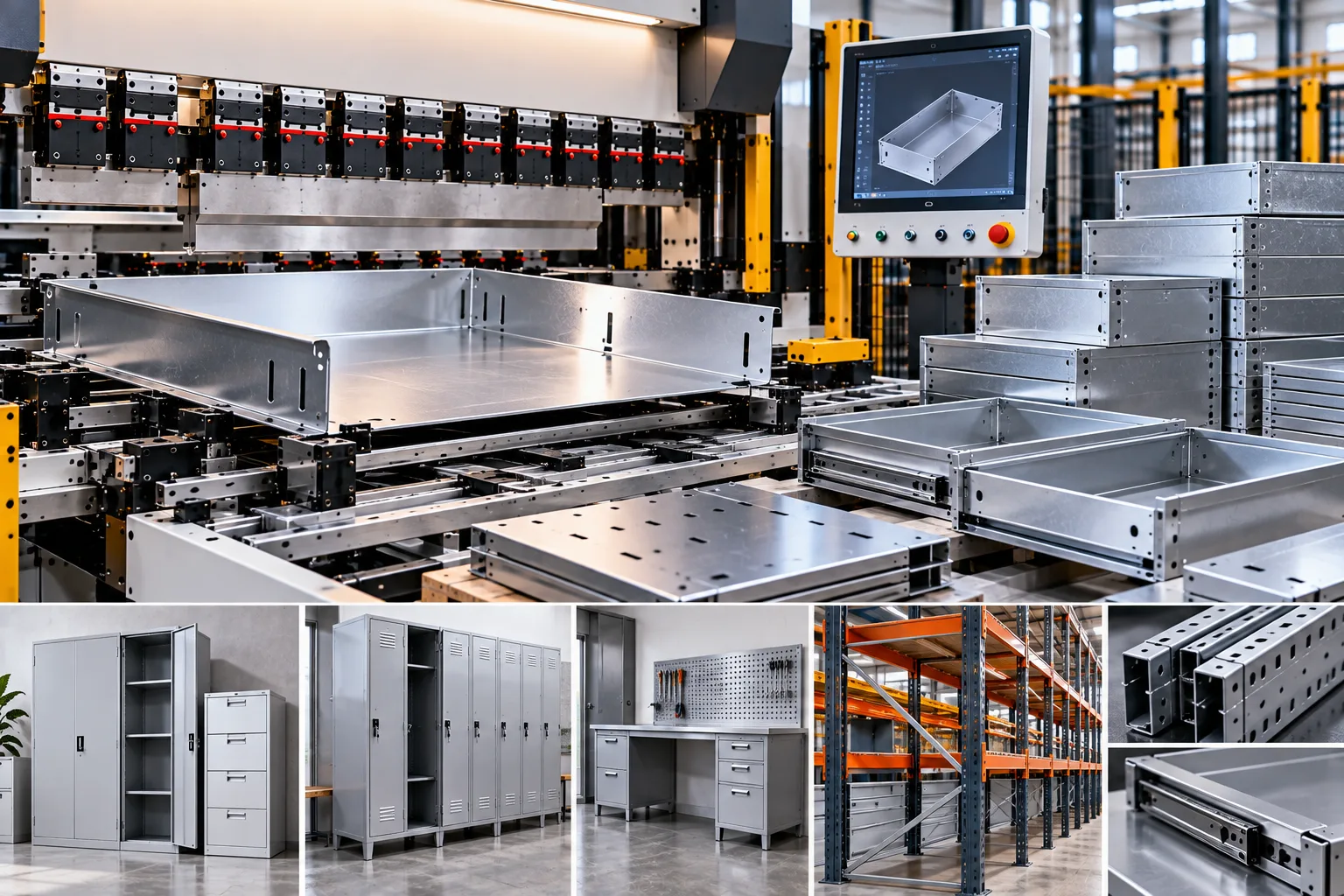
| Typical Industry Applications | Electrical enclosures, custom casework, architectural trim, elevator cabs | Server racks, steel door panels, commercial refrigeration, HVAC ducting |
| Floor Space Footprint Requirement | Compact (~18 – 25 m²) | Expanded Workcell (~40 – 70 m² including safety perimeter) |
Selecting the Optimal Panel Bending Architecture for Your Metal Shop
Deciding between standalone automatic panel benders and fully integrated robotic cells centers on part geometry variance, daily sheet throughput, and available production space. Both Haden system configurations seamlessly complement upstream CNC laser cutting machines and use an all-electric servo drive platform that provides micrometer-level positioning repeatability and cuts energy consumption by up to 60% compared to traditional hydraulic press brakes.
For custom fabricators and contract job shops managing frequent design changeovers across dozens of distinct cabinet geometries daily, Haden Automatic Panel Benders deliver immediate flexibility. Operators easily manipulate large workpieces over low-friction floating tables while universal tooling eliminates setup downtime between different jobs.
For industrial OEMs producing continuous batches of standardized door skins, server enclosures, and HVAC panels, Haden Robotic Panel Bending Cells remove manual material handling entirely. With integrated machine-vision part registration, automated flipping, and organized palletizing, our robotic cells maintain predictable cycle times and sustained unmanned throughput.
Standalone units fit within typical press brake work areas without extensive perimeter fencing or dedicated robot enclosures.
High-mix production environments benefit from 3D CAM offline simulation and single-piece flow without physical tool changes.
All Haden standalone panel benders include standardized communication interfaces for future robotic cell and material tower integration.
Why Modern Sheet Metal Fabricators Are Replacing Press Brakes with Flexible Panel Benders
High-mix, low-volume production schedules and shrinking delivery windows have exposed the core operational limits of conventional CNC hydraulic press brakes: extensive setup downtime, heavy manual sheet manipulation, and severe operator fatigue. When integrated alongside precision sheet metal laser cutting machines, Haden servo-driven flexible panel benders automate all positive, negative, and flattened hems through synchronized upper and lower folding blades. A single operator or robotic cell can complete intricate four-sided enclosures, complex cassettes, and multi-bend architectural panels in one continuous clamping cycle.
Kinematic Forming Mechanics
Traditional press brakes rely on single-stroke vertical force forcing a sheet into fixed V-dies, requiring constant manual lifting, re-gauging, and flipping on large workpieces. Haden flexible panel benders securely clamp the blank horizontally while multi-axis servo blades oscillate upward and downward tangentially, forming positive and negative bends rapidly without physical sheet re-handling.
- Single-operator horizontal loading with zero heavy part lifting
- Fast 0.2 to 0.4 second cycle time per continuous bend stroke
Tooling Overhead & Setup Elimination
Press brake operations spend up to 40% of their shift on mechanical punch and die changes, crane rigging, and trial shimming. Flexible panel benders utilize universal segmented blank holders and standard folding blades. Servo actuators automatically resize tool segments in seconds to match part dimensions, eliminating physical tooling swaps entirely.
- Zero mechanical tool swap between varied product geometries
- Universal tooling accommodates box, hem, and polygonal folds
Scratch-Free Surface Integrity
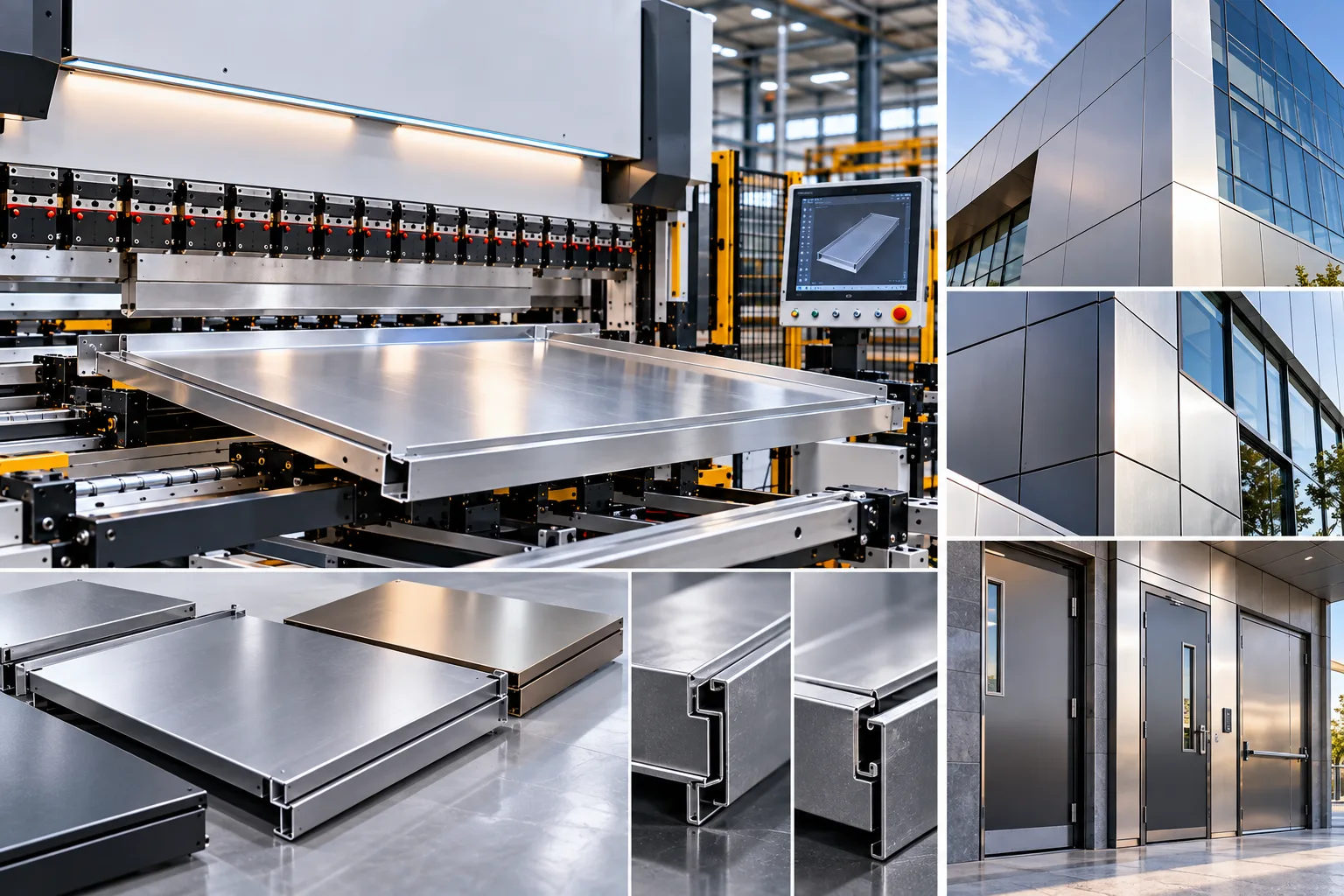
V-die bending forces sheet metal across sharp shoulder radii under immense localized pressure, leaving noticeable drag marks on stainless steel, aluminum, and pre-painted stock. Panel bending uses rolling tangential blade wiping, eliminating abrasive contact and preserving high-finish decorative surfaces, vinyl protective films, and architectural coatings.
- Eliminates post-bend polishing, buffing, and scrap from tool marks
- Gentle forming on architectural cladding, HVAC panels, and appliances
| Performance Parameter | Haden Flexible Panel Bender | Traditional Hydraulic Press Brake |
|---|---|---|
| Bending Cycle Speed | 0.2 – 0.5 s per bend (Automated multi-axis sequence) | 4.0 – 12.0 s per bend (Manual alignment and cycle trigger) |
| Tool Changeover Time | 0 seconds (Universal automated segmented tooling) | 15 – 35 minutes (Manual punch, die, and clamp change) |
| Labor Dependency | Single entry-level operator or 100% lights-out robotic cell | Requires certified, highly experienced CNC brake operator |
| Large Panel Handling | Automatic sheet tracking on low-friction brush/ball table | 2–3 operators or complex mechanical sheet followers needed |
| Surface Scratch Risk | Zero die drag (Tangential rolling contact motion) | High friction lines across bottom V-die shoulder radii |
| Energy Consumption | Direct servo drive (Up to 60% standby power reduction) | Continuous hydraulic pump idle, fluid heat, and valve loss |
| Angle Consistency & Springback | Closed-loop sensor dynamic thickness & angle compensation | Manual test bends, shimming, and mechanical crowning trims |
Quantifying the Financial and Capacity Return on Panel Bending
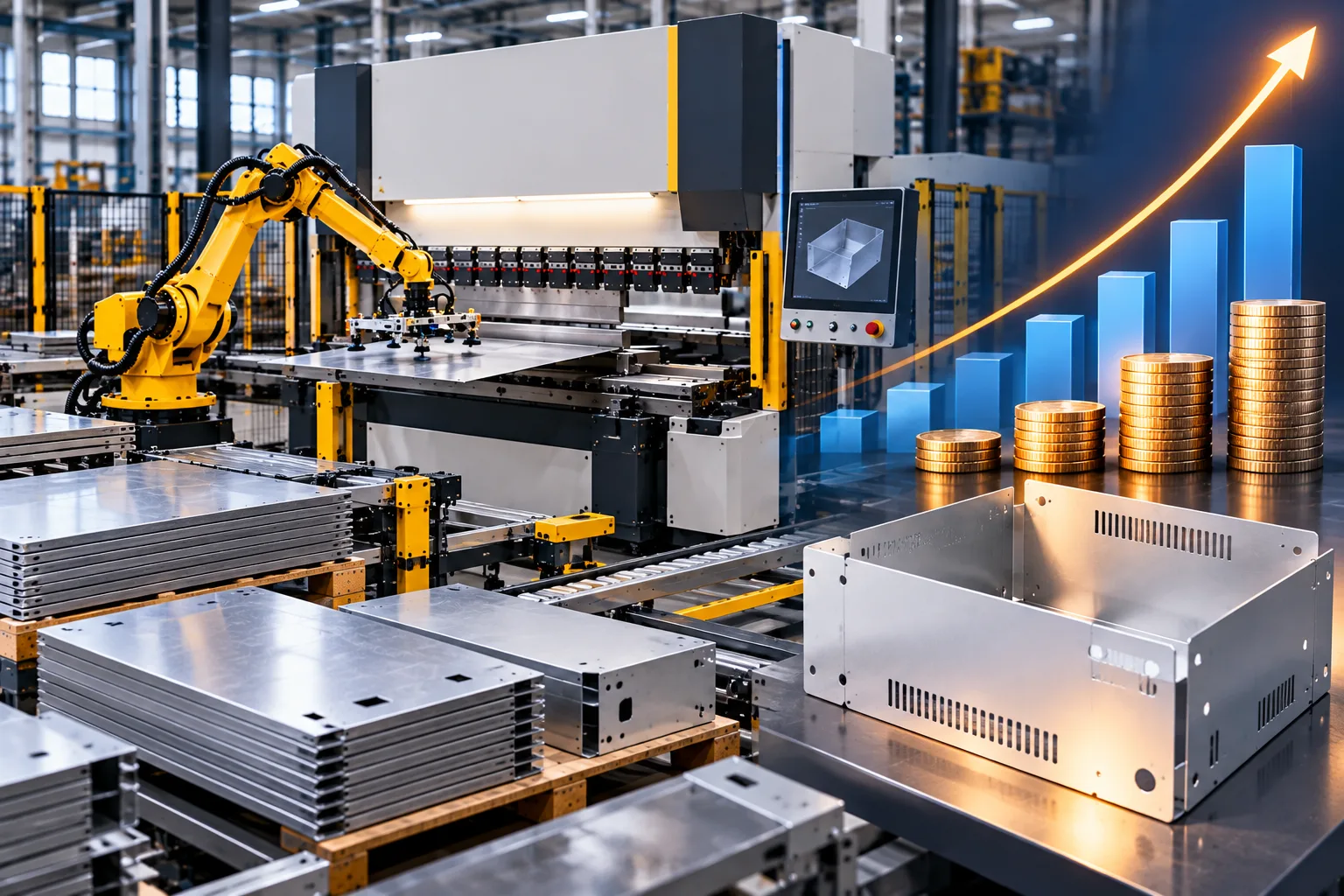
Transitioning from hydraulic press brakes to a Haden all-electric flexible panel bender transforms production economics. Manufacturers of electrical enclosures, server cabinets, HVAC cassettes, and steel doors consistently document an 80% reduction in direct labor cost per component alongside a 3x to 4x surge in daily sheet throughput.
Proprietary Multi-Axis All-Electric Servo Drive and Intelligent Closed-Loop Control
Engineered for demanding industrial throughput, Haden automatic panel benders replace unpredictable hydraulic systems with direct-coupled digital servo actuators. By unifying high-torque servo kinematics, real-time sensory angle compensation, and universal segmented tooling, our systems deliver micrometer-grade repeatability across complex geometric profiles.
Synchronized Motion Architecture with Sub-Millisecond Feedback
Traditional hydraulic bending equipment suffers from oil viscosity fluctuations, proportional valve wear, and continuous thermal drift. In contrast to standard CNC hydraulic press brakes, the Haden all-electric architecture integrates dedicated digital servo controllers per axis, synchronizing upper clamping, lower bending, and dynamic blade repositioning with absolute spatial precision.
Zero Hydraulic Fluid
Eliminates oil leaks, filter replacements, and warm-up cycles completely.
Dynamic Deflection Shield
Closed-loop optical sensors measure real-time material resistance.
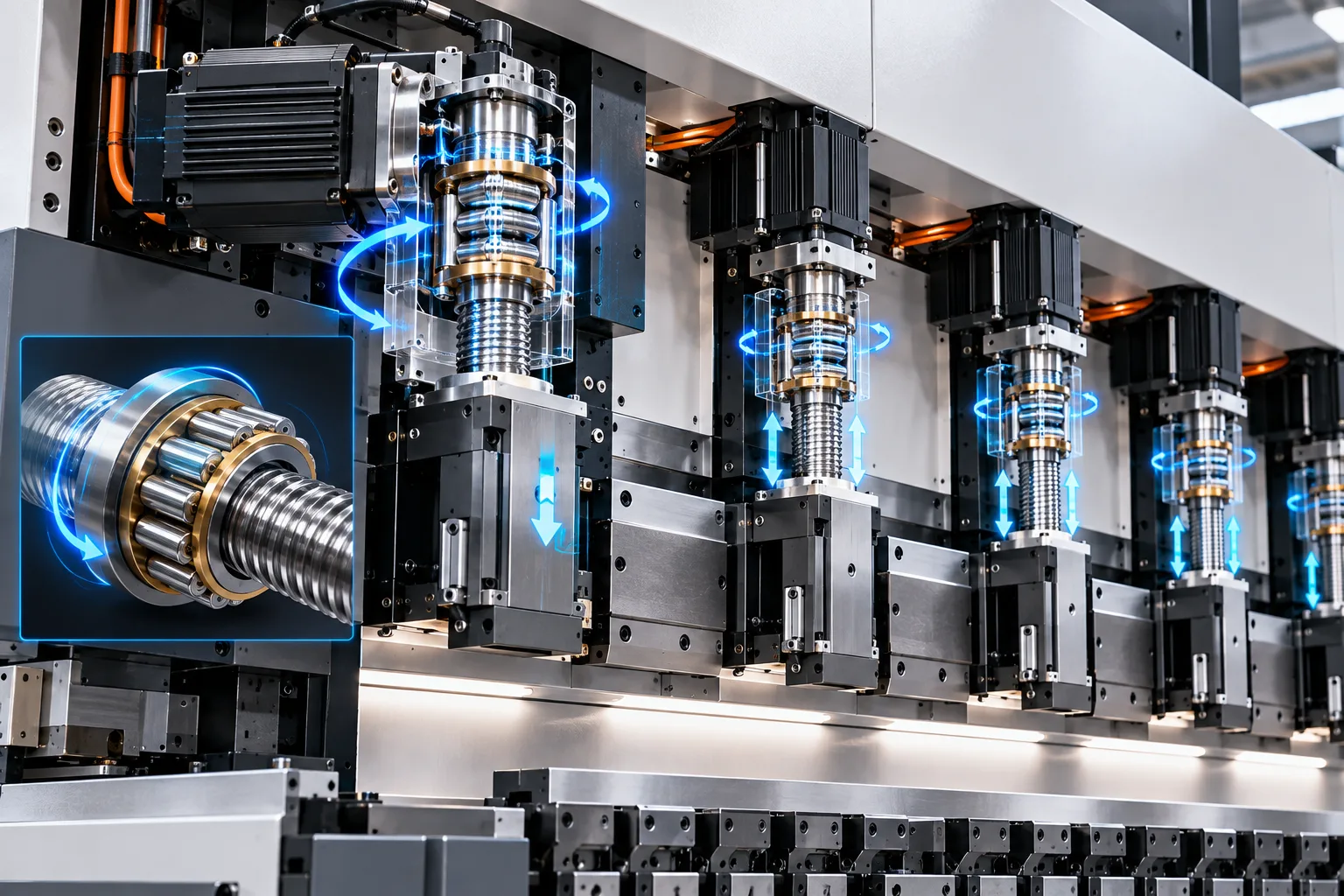
Multi-Axis Servo Direct Drive System
Synchronous planetary roller screws with dynamic torque vectoring
All-Electric Direct Servo Architecture
Eliminates high-maintenance hydraulic cylinders in favor of high-dynamic permanent magnet AC servo motors. Incorporating the speed and precision of modern servo-electric press brakes into an automated panel bending platform, it delivers instant torque response, ultra-low operating noise below 68 dB, and constant positioning accuracy unaffected by ambient workshop temperatures.
- Zero Thermal Expansion: Consistent angles from morning to night.
- Rapid Acceleration: High-speed stroke cycling down to 0.2s.
- On-Demand Energy: Zero power draw during standby intervals.
Real-Time Springback & Deflection Control
Raw sheet metal yields variable tensile strength and thickness tolerances across batches. Haden proprietary load cell arrays detect material elastic threshold during the initial pressing stroke, dynamically calculating and applying the exact overbend angle.
- First-Part Accuracy: Eliminates scrap test pieces during setups.
- Adaptive Crowning: Active servo compensation along full bend lengths.
- Angle Tolerance: Consistent precision maintained within ±0.2°.
Universal Segmented Tooling Mechanism
Engineered with high-yield alloy steel blades that automatically expand, retract, and segment under CNC command. Standard universal tooling seamlessly accommodates diverse box dimensions, narrow internal returns, and window cutouts without manual retooling.
- Zero Manual Tooling Changes: 0-second retooling between jobs.
- High Surface Hardness: Vacuum heat-treated HRC 58-62 tooling.
- Scratch-Free Kinematics: Tangential rolling contact protects surfaces.
Intelligent 3D CAM & Offline Simulation
Streamline shop-floor workflows with automated CAD-to-part programming. The software automatically unfolds 3D STEP and DXF files, detects collision paths, calculates bend sequences, and optimizes the kinematic trajectories of all axes in under 60 seconds.
- One-Click CAD Import: Direct parsing of standard 3D solid models.
- Collision Prevention: Full 3D machine and sheet clearance check.
- Fast Onboarding: Operators program parts with minimal training.
Heavy-Duty Stress-Relieved Monobloc Frame
Formed from certified heavy carbon steel weldments, our machine bases undergo Finite Element Analysis (FEA) optimization and high-temperature thermal annealing to eliminate residual internal stress, guaranteeing decades of rigid, vibration-damped operation.
- Zero Bed Deformation: Symmetrical closed-frame load absorption.
- High Thermal Mass: Resists factory floor temperature variations.
- Precision Ground Surfaces: Micrometer bed mounting tolerances.
High-Speed Interpolation & Synchronized Axes
Industrial EtherCAT bus networks synchronize auxiliary axes, sheet rotating rotators, and upper hold-down clamps with ultra-low jitter. The high-speed CNC interpolation generates fluid sinusoidal transitions to eliminate impact shock on pre-coated or mirror sheets.
- Smooth Bending Vectors: No surface bruising or tool scrub marks.
- EtherCAT Synchrony: Sub-microsecond multi-axis alignment.
- Continuous Diagnostics: Real-time current and torque tracking.
Haden All-Electric Servo Architecture vs. Hydraulic Systems
| Kinematic Parameter | Haden All-Electric Servo Architecture | Conventional Hydraulic Press & Bender |
|---|---|---|
| Actuation Drive System | Direct-Drive AC Servos with Precision Planetary Screws | Hydraulic Pump, Proportional Valves & Fluid Cylinders |
| Positioning Repeatability | ±0.01 mm / ±0.2° (Dynamic Optical Compensation) | ±0.05 mm / ±0.8° (Prone to Oil Temperature Drift) |
| Bending Cycle Speed | 0.2 to 0.4 seconds per bend stroke | 1.2 to 2.5 seconds per stroke (Valve Switching Lag) |
| Energy Consumption | On-Demand Servo Energy Draw (60% to 65% total reduction) | Continuous motor idle pumping (High baseline power) |
| Tooling Setup Duration | 0 Seconds (Universal Automatic Segmented Tooling) | 15 to 30 minutes manual segmented punch/die changeover |
| Maintenance & Environmental | Zero hydraulic oil, sealed linear guides, quiet <68 dB | Annual oil replacement, filter changes, seal leak risks |
Need Detailed Specifications for Your Panel Bending Application?
Share your part drawings, material, thickness, panel dimensions, and production requirements. Haden application engineers can review part feasibility, bending sequence, cycle time, tooling requirements, and suitable panel bender configuration for your project.
Versatile Sheet Metal Forming for High-Precision Global Industries
Modern precision fabrication demands rapid adaptation to intricate cross-sections, tight angular tolerances, and scratch-free surface aesthetics. Following blank preparation on high-speed sheet metal laser cutting machines, Haden flexible panel benders combine synchronized all-electric servo kinematics with dynamic automated tooling adjustments, eliminating setup bottlenecks across high-mix enclosure, HVAC, architectural metalwork, and commercial equipment manufacturing.
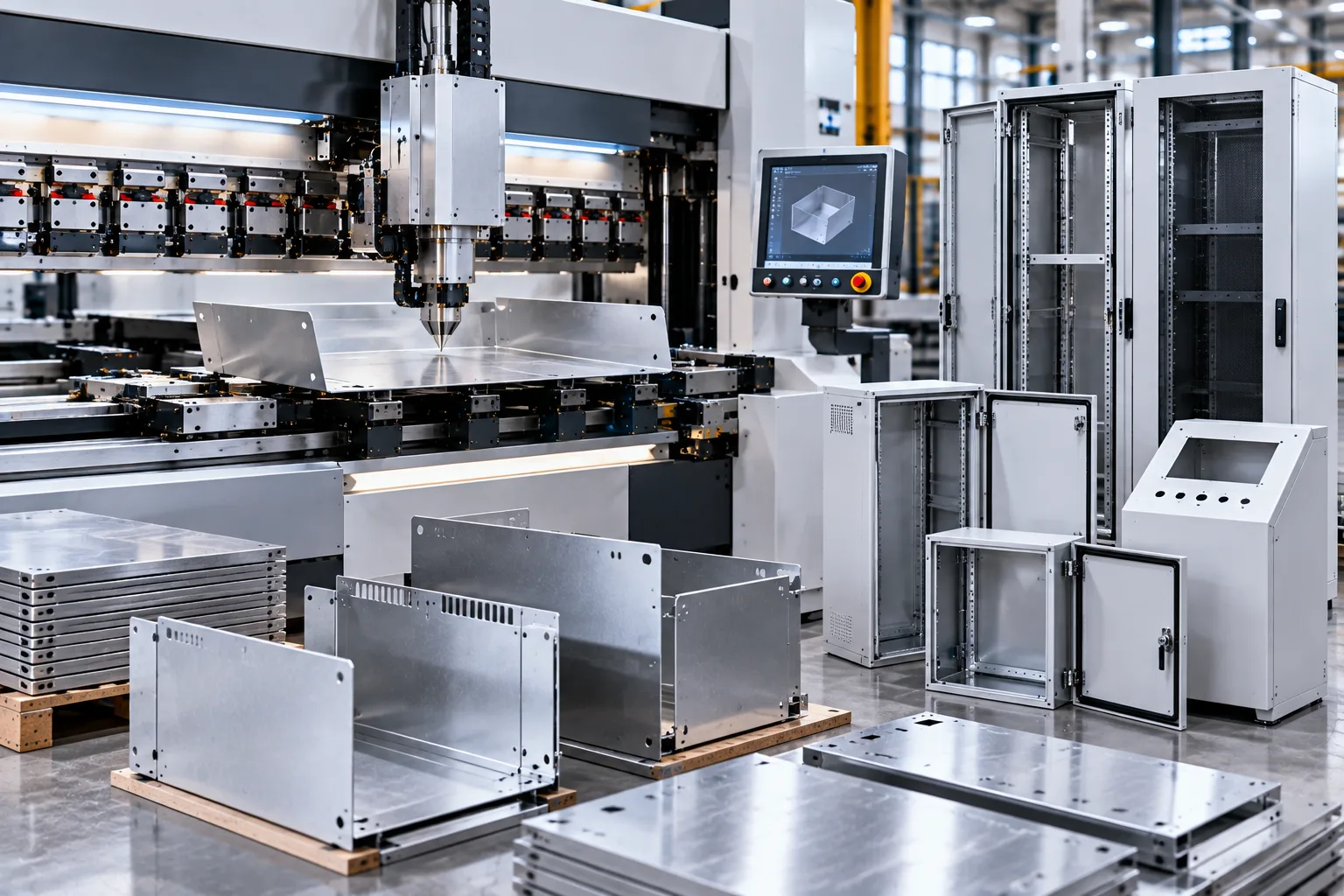
Electrical Enclosures, Server Cabinets & Control Consoles
Fabricating high-integrity electrical cabinets requires exceptional dimensional consistency to guarantee uniform gasket compression and IP66 ingress sealing. Haden automatic panel benders execute complex sequences of positive and negative folding, internal return flanges, and closed dead-edge hems in a single automated CNC cycle without manual panel inversion or mechanical tool changeovers.
Ensures seamless corner alignment for robotic laser welding and uniform PU gasket seating.
Automated acute pre-bends and flattening cycles completed directly in the main clamping bed.
- Multi-Bend Watertight Gutter Profiles: Forms deep drip channels and internal door rebates without die collision marks.
- Narrow Flange Positioning: Accurately forms internal 19-inch rack mounting tabs and DIN-rail mounting channels.
Complex Geometry & Form Factor Capabilities
Haden robotic panel bending cells leverage multi-axis servo motion control across upper, lower, and clamping blades to produce intricate 2D and 3D folding profiles with one universal tool configuration.
Positive & Negative Bends
Synchronized upper and lower bending blades alternate stroke trajectories to execute bi-directional upward and downward folds without sheet turnover.
Bump Bending (Large Radii)
High-frequency CNC micro-stepping generates smooth continuous cylindrical contours and soft architectural radius corners without custom radius dies.
Dead Edge & Teardrop Hemming
Forms an acute 30° pre-bend followed instantly by a full clamping press stroke to execute completely flat crush hems or open teardrop structural edges.
Narrow Stepped & Offset Flanges
Executes tight multi-stage Z-bends, recessed box returns, and narrow stiffener offsets using closed-loop dynamic deflection and backgauge positioning.
Forming Specifications Matrix by Material Grade
Operational working envelopes for Haden high-speed flexible panel bending centers.
| Material Classification | Max Thickness | Min Thickness | Angular Accuracy | Typical Cycle Time / Bend | Max Part Diagonal |
|---|---|---|---|---|---|
| Mild Carbon Steel (Yield ≤ 280 MPa) | 3.2 mm (11 ga) | 0.35 mm (28 ga) | ±0.2° | 0.2 - 0.4s | 2,800 mm |
| Stainless Steel (AISI 304 / 316 / 430) | 2.2 mm (14 ga) | 0.40 mm (26 ga) | ±0.25° | 0.3 - 0.5s | 2,800 mm |
| Aluminum Alloys (5052-H32 / 3003 / 6061) | 4.0 mm (8 ga) | 0.50 mm (24 ga) | ±0.2° | 0.2 - 0.35s | 2,800 mm |
| Pre-Painted & Film-Laminated Galvanized | 2.0 mm (14 ga) | ±0.2° | 0.25 - 0.4s | 2,800 mm |
Calculate Your Part Cycle Time and Operational Cost Savings
Benchmark your existing press brake cycle times against high-speed Haden servo panel bending technology, integrating seamlessly downstream from high-speed laser cutting machines. Adjust your workpiece parameters below to evaluate instant cycle time improvements, direct labor reductions, and annual operational ROI.
Configure Your Workpiece
Adjust your basic part and production parameters to generate a preliminary panel bending application benchmark.
This estimator provides a preliminary application benchmark only. Actual cycle time depends on part geometry, bend length, material, handling sequence, machine configuration, and automation level.
Preliminary Cycle-Time Comparison
Cycle-time values are preliminary comparative estimates based on the selected inputs. Final performance should be evaluated using the actual CAD geometry and machine configuration.
Current Estimator Summary
Need a More Accurate Cycle-Time Analysis?
Send your CAD drawings, material, thickness, and production requirements for a part-specific bending sequence and machine configuration review.
Empirical Material Database
Calculations incorporate real-world springback, tensile characteristics, and deflection curves across carbon steel, stainless steel, and aluminum blanks produced by precision sheet metal laser cutting machines.
Universal Segmented Tooling
Eliminates up to 90% of conventional mechanical tooling setup time. The multi-axis manipulator positions and rotates panels autonomously.
Haden Application Engineering
Our engineering team analyzes your part portfolio to provide detailed 3D collision simulations, cycle time studies, and production guarantees for operations utilizing automated benders and continuous coil-fed laser cutting machines.
Aerospace-Grade Metrology, Global Safety Standards, and Lifecycle Support
Haden adheres to strict precision machine-building standards, providing robust technical backing and reliable lifecycle support for industrial fabricators worldwide. We eliminate operational risk through rigorous dimensional inspection, internationally recognized safety certifications, and a responsive global service network.
Full-Stroke Laser Interferometer Calibration
Every axis undergoes multi-point geometric verification using Renishaw laser interferometers and dynamic circular ballbar diagnostics. We map and compensate for linear pitch error, backlash, and thermal expansion across the complete travel envelope to guarantee true micrometer-level positioning repeatability.
International Safety and Regulatory Compliance
Engineered in strict accordance with European CE Machinery Directives (2006/42/EC) and certified under ISO 9001:2015 quality management systems. Integrated multi-zone optical safety light curtains, Category 4 dual-channel safety relays, and ergonomic interlocked enclosures safeguard operators during high-speed cycle runs.
72-Hour Continuous Full-Load Burn-In Validation
Before factory release, each panel bender completes a mandatory 72-hour continuous endurance run combining dry-cycling kinematics and high-rate batch folding across carbon steel, aluminum, and stainless steel sheets prepared by advanced sheet metal laser cutting machines. This extensive Factory Acceptance Testing (FAT) eliminates infant mortality and ensures immediate plug-and-produce readiness.
Remote IoT Tele-Diagnostics and Field Support
Integrated industrial IoT communication modules enable real-time telemetry, remote PLC parameter tuning, and predictive component monitoring over encrypted protocols. Backed by dedicated regional service engineers, Haden provides swift troubleshooting, rapid spare parts dispatch, and complete on-site lifecycle maintenance.
Certified Quality Standards and Global Trust
CE Machinery Directive Certified
Full compliance with European Union standards for machinery safety, electromagnetic compatibility, and operator health protection.
ISO 9001:2015 Quality System
Standardized quality assurance across every phase, including raw material procurement, structural machining, assembly, and testing.
Global Lifecycle Support
24/7 technical hotline access, expedited genuine replacement parts distribution, and qualified regional engineering teams worldwide.
Our Manufacturing Commitment: Built for Decades of Precision
At Haden, engineering integrity drives every manufacturing stage. From high-temperature thermal stress relief on our heavy-duty monolithic frames to sub-micron calibration applied across our high-performance laser cutting machines and multi-axis servo drives, we build bending machinery that delivers consistent structural rigidity and angular accuracy. Our comprehensive quality control protocols ensure your production lines achieve high throughput, minimal downtime, and rapid return on investment.
- 100% full-travel axis calibration verified via Renishaw multi-channel laser systems
- 72-hour continuous full-speed live sheet metal forming and thermal endurance tests
- Encrypted industrial IoT connectivity for proactive tele-diagnostics and continuous process optimization
- Comprehensive global technical coverage, structured operator training, and rapid replacement parts delivery for forming systems and tube laser cutting machines
Technical FAQ and Equipment Selection Guide
Explore detailed technical answers on sheet metal forming capacities, universal tooling kinematics, zero-scratch surface protection, and intelligent CAM programming to select the right Haden panel bending solution.
What material thickness and sheet size capacities are supported by flexible panel benders?
What material thickness and sheet size capacities are supported by flexible panel benders?
Haden flexible panel benders process standard cold-rolled mild steel from 0.35 mm up to 3.2 mm (approx. 28 gauge to 11 gauge), stainless steel up to 2.2 mm, and aluminum alloys up to 4.0 mm. Standard working lengths accommodate blanks—routinely pre-cut via high-speed sheet metal laser cutting machines—from 2000 mm to 2500 mm (78.7 in to 98.4 in), with custom extended bed configurations engineered for structural panels up to 3200 mm. The system's multi-axis servo feed and dynamic crowning sensors automatically detect tensile variations across mild steel, galvanized plate, brushed stainless, and pre-coated aluminum, adjusting bending force and compensation curves dynamically for consistent angular accuracy across the entire sheet profile.
How does the universal tooling system operate without frequent manual tool changes?
How does the universal tooling system operate without frequent manual tool changes?
Unlike conventional press brakes that require dedicated V-dies and punches for each unique flange geometry, Haden panel benders employ a universal segmented blankholder combined with upper and lower bending blades. High-strength alloy segments automatically expand, retract, and reposition along multi-axis ball screws to match the programmed edge length within 2 to 4 seconds.
During the bending cycle, the universal blade executes positive (upward), negative (downward), and hemmed folds through coordinated interpolating servo motions without requiring tool swap-outs. This eliminates the typical 15 to 30 minutes of setup downtime associated with manual tooling adjustments, transforming high-mix, low-volume (HMLV) panel production as well as automated lines fed by coil-fed laser cutting machines into a continuous, batch-size-of-one workflow with near-zero idle time.
What are the bending results on scratch-sensitive stainless steel or coated aluminum sheet?
What are the bending results on scratch-sensitive stainless steel or coated aluminum sheet?
Haden panel benders utilize a rolling tangential wipe folding kinematics where the bending tool rolls along the outer bend radius rather than scraping or sliding against the sheet surface under heavy concentrated tonnage. This non-sliding contact virtually eliminates surface friction lines, tool scoring, and protective film tearing.
Equipped with physical vapor deposition (PVD) anti-wear blade coatings and soft-clamping polyurethane inserts, our machines achieve pristine, scratch-free finishes on #4 brushed and #8 mirror stainless steel, PVDF-coated architectural aluminum panels, and film-laminated metal sheets. This capability is critical for electrical control cabinets, commercial refrigeration, architectural facades, and elevator interior fabrication where secondary polishing or part rejection carries high labor costs.
Can operators without CNC programming experience easily operate the machine?
Can operators without CNC programming experience easily operate the machine?
Yes. Haden’s proprietary intelligent 3D CAM operating software removes the complexity of traditional G-code and manual angle calculations through an intuitive, visual workflow:
- Direct CAD Import: Import native 3D STEP, IGES, or 2D DXF files directly with automated sheet thickness, bend deduction, and geometry recognition.
- Automated Bend Sequencing: The CAM engine calculates collision-free tool paths, clamping segments, and optimal rotation sequences within seconds.
- Full 3D Collision Simulation: Operators visually verify part rotation, backgauge clearance, and bending clearance prior to live cycle execution.
- One-Touch Production Launch: The operator loads the blank against zero-point reference pins and triggers the cycle via dual safety palm buttons or foot pedal.
New operators typically reach full production independence within half a day of standard training, dramatically lowering labor onboarding costs and decoupling factory output from specialized press brake setup masters.
How can a standalone panel bender be upgraded to a robotic bending cell in the future?
How can a standalone panel bender be upgraded to a robotic bending cell in the future?
All Haden standalone panel benders are built on an open automation-ready architecture designed for seamless retrofit into fully autonomous cells:
- Integrated Industrial Protocols: Pre-wired EtherCAT, Profinet, and OPC UA interfaces enable instant handshake communication with 6-axis industrial robots, upstream laser cutting machines, Cartesian gantries, and automated guided vehicles (AGVs).
- Standardized Mechanical Docking: Factory-machined mounting points allow bolt-on integration of sheet destackers, centering alignment tables, and finished part turnover units.
- Safety Dual-Circuit Handshake: Pre-configured safety interlock relays and light curtain muting circuits comply with ISO 10218 and CE robotic integration standards.
- Cell Control Synchronous Software: The central control module supports automated recipe distribution, robot kinematic pathing, and direct MES/ERP production tracking.
This modular scalability allows sheet metal fabricators to invest in a standalone machine today and expand into a lights-out robotic bending cell as production demand scales, safeguarding initial capital expenditure.
Configure the Right Panel Bending System for Your Production
Share your part geometry, material, thickness, and production requirements. Haden application engineers can review your project and recommend a suitable automatic panel bender or robotic panel bending cell based on your bending workflow and automation goals.
Part Feasibility
Review part geometry, material, thickness, and bending requirements.
Cycle-Time Review
Evaluate bending sequence, handling workflow, and production targets.
System Configuration
Match machine capacity and automation level to your application.
Planning a more automated sheet metal workflow? Combine panel bending with sheet metal laser cutting machines for integrated cutting and bending production.
Request Machine Proposal & Quotation
Provide your basic application requirements so our engineers can review the appropriate panel bending configuration.