
Sheet Metal Machinery Buying Guide & Selection Matrix
Haden empowers global manufacturers with high-rigidity, cost-effective metal forming and cutting equipment. Compare high-performance laser cutting machines, press brakes, panel benders, plate rollers, grooving units, and leveling systems with technical precision.
Metallurgy & Thickness
Evaluate tensile strength, yield limits, and multi-gauge sheet capacities across stainless, carbon steel, and aluminum alloys.
Takt Time & Duty Cycle
Benchmark cycle speeds, rapid traverse rates, and thermal structural stability under demanding continuous 24/7 plant operations.
Automation Integration
Audit compatibility for robotic loading, automatic tool changers, smart material towers, and Industry 4.0 MES connectivity.
ROI & Payback Period
Calculate energy efficiency savings, reduced scrap rates, tooling longevity, and accelerated capital recovery timeframes.
Sheet Metal Machinery Buying Guide: Sizing, Kinematics & Processing Boundaries
Comprehensive engineering blueprints for selecting fiber laser cutters, CNC press brakes, panel bending centers, plate rolls, groovers, and leveling lines. Align machine tonnage, laser wattage, and dynamic tolerances with actual shop throughput.
Fiber Laser Cutting Machine Buying Guide: Bed Kinematics & Wattage Selection
Specifying industrial laser cutting machines requires balancing optical oscillator wattage, motion kinematics, and duty cycles. Beam parameter product matching directly dictates cut edge perpendicularity, heat-affected zone width, and assist gas cost per meter across high-volume nesting schedules.
Single Table vs Dual Shuttle Pallet Changers
Single-table laser cutters suit low-mix maintenance facilities or prototype cells with intermittent cutting runs. High-throughput production floors require hydraulic or electric shuttle tables that swap 3015 to 6025 pallets within 10 to 15 seconds, lifting optical beam uptime above 85%.
Sheet & Tube Combination vs Coil-Fed Laser Blanking
Integrated dual-purpose sheet and tube laser cutting machines combine round, square, and open-profile processing within a consolidated footprint. High-volume stamping substitutes achieve maximum material yield via continuous coil-fed laser blanking lines that eliminate sheared precuts and reduce scrap drop.
Oscillator Wattage Scaling & Assist Gas Economics
Standard 6kW to 12kW fiber sources cut mild steel up to 25mm with clean oxygen edges. Scaling to 20kW through 60kW ultra-high-power generators unlocks high-velocity nitrogen and high-pressure air cutting on thick carbon steel plates, eliminating secondary oxide stripping before structural welding.

Laser Cutting Technical Benchmarks
- Oscillator Power 1.5kW to 60kW Continuous Fiber
- Positioning Accuracy ±0.02 mm / 1000 mm (X/Y Axis)
- Rapid Traverse Speed Up to 200 m/min Simultaneous
- Machine Bed Structure Thermal Annealed Tubular Steel
Haden Advantage: Heavy-duty, stress-relieved gantry beds machined on 5-axis bridge centers maintain dynamic micro-accuracy under 2.5G accelerations without structural resonance.

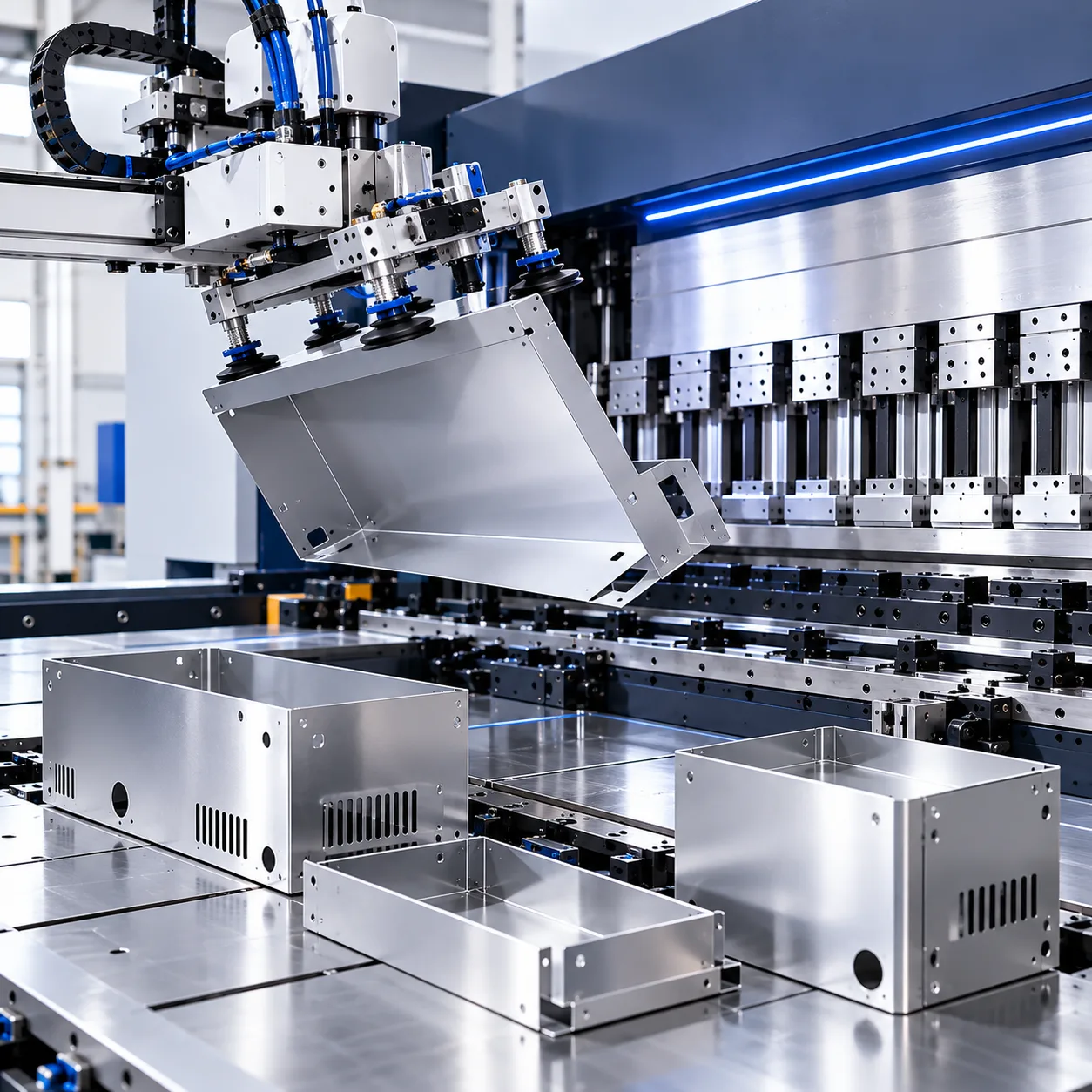


Critical Equipment Sizing Checklist and Procurement Pitfalls
Evaluate structural frame rigidity, CNC open-bus compatibility, assist gas operating expenses, and tooling standards before finalizing machinery capital expenditures.
Frame Rigidity & Stress Annealing
Non-annealed machine frames suffer from micro-distortion after 12 to 18 months of dynamic cycling. Require certified 600°C electric furnace stress-relief annealing and shot blasting to ensure lifetime geometric alignment.
CNC Open-Bus Interoperability
Closed, proprietary controllers limit Industry 4.0 integration. Prioritize open EtherCAT-based fieldbus controllers compatible with universal CAD/CAM nesting software, automated ERP schedulers, and plant-wide MES systems.
Assist Gas Dynamics & Line Sizing
Assist gas represents up to 45% of daily laser operating costs. Size high-pressure compressed air filtration systems (16 bar to 30 bar) to substitute nitrogen on medium carbon steel and aluminum, lowering cost per part.
Tooling Clamping Standards & Wear Parts
Proprietary tooling styles create vendor lock-in and high replacement costs. Standardize on European Promecam or Wila-style precision ground tooling with deep induction-hardened contact surfaces on press brakes.
Explore Haden Sheet Metal Machinery by Process
Compare equipment for laser cutting, bending, panel bending, plate rolling, V grooving, leveling, and shearing. Explore the complete Haden machinery portfolio or discuss your material, part geometry, production volume, and automation requirements with our application engineering team.
Fiber Laser Wattage, Press Brake Tonnage, & Plate Rolling Capacity Sizing
Selecting the correct sheet metal fabrication machinery requires rigorous mechanical calculations rather than standard estimation. Under-sizing equipment leads to structural frame deflection, premature hydraulic valve failure, poor edge squareness, and restricted throughput, while over-specifying inflates initial CapEx and baseline energy consumption.
Use the foundational engineering formulas, metallurgical variables, and empirical sizing matrices below to calculate precise fiber laser generator wattage, air bending press brake tonnage, and plate rolling bending capacities for high-duty manufacturing environments.
Fiber Laser Power Matching Rules
Fiber laser power dictates maximum pierceable plate thickness, sustainable cutting speeds, and kerf metallurgical quality. On high-performance sheet metal laser cutting machines , power selection balances optical beam density, focal spot Rayleigh length, and assist gas pressure dynamics.
- 6kW to 12kW Generators: Optimum for carbon steel up to 25 mm and stainless steel up to 16 mm. Delivers peak economic return for standard sheet metal job shops.
- 20kW to 30kW+ Ultra-High Power: Enables continuous high-speed nitrogen and air cutting on thick plate (20 mm to 50 mm), eliminating recast oxide layers for direct weldability.
- Assist Gas Dynamics: High-pressure nitrogen (N2 at 18–25 bar) prevents dross on stainless steel; shop dry air reduces per-part assist gas costs by up to 65% on mild steel.
Press Brake Tonnage Calculation
Air bending tonnage requirements depend on material tensile strength, sheet thickness, bend length, and bottom V-die opening. Selecting an undersized V-opening spikes tonnage exponentially and causes tool deformation.
- V-Die Opening Ratio: Standard structural steel uses V = 6 to 8 × S. For high-strength wear plates (e.g., Hardox), expand to V = 10 to 12 × S to prevent flange cracking.
- Material Multipliers (Cm): Mild Steel (450 MPa) = 1.0; Stainless Steel (304/316) = 1.5; Aluminum Alloys = 0.5; High-Yield Structural Steel (700 MPa) = 1.8 to 2.2.
- Frame Safety Factor: Size the press brake frame with a continuous 20% tonnage safety margin above nominal requirements to protect proportional valves and hydraulic cylinder seals.
Plate Rolling & Leveling Capacity
Plate bending rolls and leveling lines operate across the plastic-elastic boundary. Sizing limits depend on material yield strength (σs), pre-bending unbent flat length criteria, and roll deflection resistance.
- 3-Roll vs. 4-Roll Sizing: 4-roll hydraulic systems clamp the plate securely, reducing unbent flat ends to 1.5 × S compared to 3 × S on standard 3-roll initial pinch machines.
- Yield Strength Derating: Machine nameplate capacities assume carbon steel (σs ≤ 245 MPa). For high-yield alloys (σs ≥ 400 MPa), derate effective thickness capacity by 35% to 50%.
- Leveling Roller Density: 19-roll and 21-roll precision levelers alternate high-strain reverse bending cycles, neutralizing residual coil stress for laser blanking flatness.
Fiber Laser Power vs. Thickness & Cutting Speed Reference Chart
Industrial production parameters for continuous processing with maximum cut edge squareness and minimal burr formation.
| Material Type | Thickness (mm) | Assist Gas | 6kW Fiber | 12kW Fiber | 20kW Fiber | 30kW Fiber |
|---|---|---|---|---|---|---|
| Carbon Steel (A36 / Q235) | 3.0 mm | Air / N₂ | 18.0 - 22.0 | 35.0 - 40.0 | 55.0 - 65.0 | 75.0 - 90.0 |
| Carbon Steel (A36 / Q235) | 12.0 mm | O₂ (Oxygen) | 1.8 - 2.2 | 2.8 - 3.2 | 3.8 - 4.5 | 5.2 - 6.0 |
| Carbon Steel (A36 / Q235) | 25.0 mm | O₂ (Oxygen) | Pierce Limit | 0.8 - 1.1 | 1.4 - 1.8 | 2.2 - 2.8 |
| Stainless Steel (304 / 316) | 4.0 mm | N₂ (Nitrogen) | 10.0 - 13.0 | 24.0 - 28.0 | 40.0 - 48.0 | 60.0 - 70.0 |
| Stainless Steel (304 / 316) | 16.0 mm | N₂ (Nitrogen) | Production Limit | 1.2 - 1.6 | 2.8 - 3.4 | 5.0 - 6.2 |
| Aluminum Alloy (5052 / 6061) | 8.0 mm | N₂ / Air | 3.0 - 4.2 | 8.5 - 11.0 | 15.0 - 18.0 | 24.0 - 28.0 |
Press Brake Air Bending Tonnage Load Reference Chart
Required bending force per linear meter (T/m) based on standard structural steel (Rm = 450 N/mm²). Apply relevant alloy multipliers for other materials.
| Sheet Gauge ($S$) | V-Die Width ($V$) | Min. Flange ($b_{min}$) | Inner Radius ($r_i$) | Carbon Steel ($450 text{ MPa}$) | Stainless Steel ($304$) | Aluminum ($6061text{-T6}$) |
|---|---|---|---|---|---|---|
| 1.0 mm | 6.0 mm | 4.2 mm | 1.0 mm | 11.0 T/m | 16.5 T/m | 6.0 T/m |
| 2.0 mm | 12.0 mm | 8.5 mm | 2.0 mm | 22.0 T/m | 33.0 T/m | 12.5 T/m |
| 3.0 mm | 24.0 mm | 17.0 mm | 4.0 mm | 25.0 T/m | 37.5 T/m | 14.0 T/m |
| 6.0 mm | 50.0 mm | 35.0 mm | 8.0 mm | 48.0 T/m | 72.0 T/m | 27.0 T/m |
| 10.0 mm | 80.0 mm | 56.0 mm | 13.0 mm | 83.0 T/m | 124.5 T/m | 46.0 T/m |
| 16.0 mm | 140.0 mm | 98.0 mm | 23.0 mm | 120.0 T/m | 180.0 T/m | 67.0 T/m |
Require Tonnage Verification for Complex Alloys or Deep Bends?
Prevent tooling wear and machine overload. The Haden application engineering team provides customized CAD tonnage verification, laser cut edge metallurgical evaluations, and physical sample testing to confirm machinery specifications prior to order commitment.
Material Metallurgy, Metal Fabrication Material Thickness, and Workpiece Precision Compatibility
Align machinery selection, cutting parameters, and forming tooling with the metallurgical properties of carbon steel, stainless steel, aluminum alloys, and high-strength steels to achieve strict dimensional tolerances and clean edge finishes.
| Material Type & Grade | Material Thickness Range | Achievable Tolerance | Recommended Machinery | Process & Tooling Considerations |
|---|---|---|---|---|
| Mild Carbon Steel (Q235 / A36 / SPCC) | 0.5–6.0 mm | ±0.2 mm to ±0.5 mm | Fiber Laser (3–12 kW), CNC Press Brake (40–160 T), High-Speed Hydraulic Shears | High machinability; clean compressed air or oxygen cutting; standard hardened V-dies (V=6~8T). |
| Heavy Plate Carbon Steel (A572 / S355) | 6.0–32.0 mm+ | ±0.5 mm to ±1.0 mm | High-Power Fiber Laser (20–40 kW), Heavy CNC Hydraulic Press Brake (300–1000 T), 4-Roll Plate Roller | Requires dynamic hydraulic crowning, multi-stage piercing cycles, and high thermal capacity cutting heads. |
| Austenitic Stainless Steel (304 / 316 / 316L) | 0.5–16.0 mm | ±0.1 mm to ±0.3 mm | Nitrogen-Assisted Fiber Laser (6–20 kW), Automatic Panel Bender, CNC Press Brake with Non-Marking Film | High work-hardening rate requires 1.5x tonnage; high-purity nitrogen assist (>99.999%) eliminates edge oxidation. |
| Aluminum Alloy (5052 / 6061 / 3003) | 0.8–12.0 mm | ±0.1 mm to ±0.2 mm | Fiber Laser with Anti-Reflection Isolator (12–30 kW), Electric Servo Press Brake, Soft-Tooling Panel Bender | High optical reflectivity (>90%); requires larger inside bend radii (R ≥ 1.5~2T) to avoid cracking across grain lines. |
| Hardox & High-Yield Structural Steels | 3.0–25.0 mm | ±0.5 mm to ±0.8 mm | Heavy-Duty 4-Roll CNC Plate Bender, High-Rigidity Electro-Hydraulic Press Brake (400–2000 T) | Yield strength exceeding 700–1200 MPa; massive springback (up to 15°) requires active CNC real-time angle compensation. |
| Hot-Dip Galvanized & Coated Sheet | 0.6–4.0 mm | ±0.2 mm to ±0.4 mm | Fiber Laser with High-Volume Dust Collector, CNC Press Brake with Chrome-Plated Tooling | Zinc layer vaporization requires multi-vent zoning; non-stick coated tooling prevents zinc pickup and die galling. |
Fabrication Tolerance Class Reference & Equipment Specifications
Commercial Sheet Metal Standards (±0.3 mm to ±0.5 mm)
- • Typical applications: Construction brackets, HVAC ducting, heavy machine enclosures, and agricultural frames
- • Machine baseline: Standard electro-hydraulic press brakes (Y1-Y2-X-R) and high-speed sheet metal laser cutting machines
- • Tooling setup: Standard 42CrMo ground tooling, standard V-dies (V=6~8T), and conventional backgauges
- • Primary objective: Maximized throughput speed, cost per cut optimization, and low tooling changeover times
Precision Electronic & Enclosure Standards (±0.05 mm to ±0.15 mm)
- • Typical applications: Telecommunication chassis, medical console housings, EV battery trays, and aerospace fairings
- • Machine baseline: All-electric servo press brakes, smart robotic panel benders, and high-precision linear motor laser cutters
- • Tooling setup: Hardened precision-ground segmented punches (±0.005 mm tolerance) and laser angle-measuring systems
- • Primary objective: Zero-defect cosmetic surfaces, zero secondary grinding, and absolute angle repeatability across lots
Carbon Steel & Thick Plate Processing
Optimized for high-yield throughput. Advanced laser cutting machines use high-pressure oxygen cutting for economical thick-plate processing and high-pressure nitrogen for oxide-free weld preparation, combined with high-tonnage hydraulic forming.
- Assist Gas Strategy: O₂ for plates >8 mm; N₂ or high-pressure shop air for high-speed thin gauge cutting
- Bending Tonnage Rule: Standard formula applies: Tonnage (P) = 650 × S² × L / V
- Thermal Distortion Control: Lead-in cooling points and nested heat dispersal cutting paths
Stainless Steel Cutting & Aluminum Bending
Addresses severe beam back-reflection and surface sensitivity. Demands continuous optical isolation, protective urethane tooling, and precise nitrogen pressure regulation to avoid edge burring and cosmetic scratching.
- Back-Reflection Protection: Real-time optical sensors prevent laser resonator feedback when processing 5000/6000 series aluminum and copper
- Scratch-Free Forming: Automatic panel benders and urethane die covers eliminate die marks on polished stainless finishes
- Edge Quality: High-pressure nitrogen (16–25 bar) delivers shiny, burr-free edges ready for immediate robotic welding
High-Yield Hardox & Wear-Resistant Alloys
Handles extreme tensile loads up to 1400 MPa. Requires rigid annealed machine frames, widened V-grooves (V=10~14T), dynamic CNC crowning, and heavy 4-roll bending to counter massive mechanical springback.
- Tonnage Multipliers: Requires 2.0x to 3.5x the standard bending force compared to mild carbon steel
- Pre-Bending Roll Geometry: Planetary 4-roll machines minimize unbent flat ends on heavy cylinder pre-forming
- Tooling Durability: Deep-hardened HRC 58–62 heavy-duty tooling prevents shoulder indentations and fracturing
Workpiece Precision & Dynamic CNC Compensation
Maintains tight tolerances across fluctuating material thicknesses and tensile variations. Integrates laser interferometer positioning verification and closed-loop optical angle correction in real time.
- Optical Angle Measuring: Real-time laser sensors measure bending angles and compensate ram depth on the fly
- Multi-Axis Backgauges: 4-axis to 6-axis independent finger backgauges handle tapered flanges and stepped parts
- Thermal Stabilization: Dual-circuit water chillers and oil temperature regulators maintain machine repeatability
Verify Machine Capability with Your Actual Material
Share your CAD drawings, material grade, thickness, part dimensions, and production requirements. Our application engineering team can review your process and discuss suitable cutting, bending, rolling, or forming validation requirements.
Haden industrial machinery—including high-accuracy sheet and tube laser cutting machines—incorporates proprietary beam reflection suppression algorithms, heavy-stress-relieved machine frames, and adaptive crowning systems engineered for consistent accuracy across carbon steel, stainless steel, aluminum, and specialty alloys.
Automated Sheet Metal Production Line vs. Standalone Machinery
Engineering decision framework and ROI financial modeling for sheet metal manufacturers evaluating the transition from standalone manual machinery to robotic bending cells and flexible manufacturing systems (FMS).
Production Mode Evolution Roadmap
Phase 1: Standalone Manual Cell Operation
Individual laser cutting machines and press brakes with manual sheet loading, part positioning, and scrap offloading. Lowest initial CapEx, but high labor dependency, ergonomic bottlenecks, and typical OEE under 45%.
Phase 2: Semi-Automated Material Handling
Dual shuttle exchange tables, vacuum cup sheet loaders, and pneumatic unloader units. Eliminates manual sheet handling downtime, cuts cycle changeover by 35%, and stabilizes equipment OEE at 60%–65%.
Phase 3: Robotic Bending Cells & Storage Towers
Articulated 6-axis robotic press brake bending cells paired with multi-tier automated storage towers and automatic gripper exchange. Reduces skilled operator headcount by 65% while driving OEE to 75%–80%.
Phase 4: Fully Integrated Flexible Manufacturing System (FMS)
End-to-end automated production lines linking automated material towers, laser blanking, robotic sorting gantries, panel benders, and centralized MES software. Achieves 85%+ OEE with 24/7 lights-out capability.
Robotic Bending & Automation ROI Model
Direct Labor Overhead Reduction
Transitioning to robotic bending cells and automated sheet loading replaces 2 to 3 skilled operators per shift, significantly lowering direct production labor costs.
Overall Equipment Effectiveness (OEE) Gain
Continuous cutting beam-on time and uninterrupted bending cycles boost overall machine utilization from a baseline of 45% up to 85%+ in balanced lines.
Setup Scrap & Handling Damage Reduction
Robotic repeatability, precision gripper control, and closed-loop angle measurement eliminate manual positioning errors and cosmetic sheet scratching.
Target Capital Payback Horizon
Multi-shift operations typically achieve full robotic bending cell ROI within 18 to 30 months through labor savings, reduced scrap, and higher throughput capacity.
Flexible Manufacturing System Application Diagnosis
High-Mix, Low-Volume (HMLV) Production
Tailored for custom fabrication job shops, electrical enclosure manufacturing, and HVAC components requiring rapid tool changes and dynamic job scheduling.
- • Diverse part geometries with short batch runs under 50 pieces per setup
- • Intelligent automatic tool changers (ATC) and adaptive CNC panel benders
- • Offline 3D CAD/CAM parametric programming with collision simulation
- • Recommended Architecture: Phase 2/3 automated lasers and servo panel bending centers
High-Volume, Low-Mix (HVLM) Production
Engineered for OEM mass production, automotive bracket fabrication, appliance panels, and standardized commercial racking systems.
- • Standardized part geometries running continuous production for weeks or months
- • Coil-fed laser cutting machines and blanking lines with integrated leveling, decoiling, and scrap conveyors
- • Dedicated robotic bending workstations with standardized punch-and-die setups
- • Recommended Architecture: Phase 4 complete flexible production lines with MES tracking
Automation Upgrade Investment & Feasibility Matrix
| Evaluation Metric | Phase 1 (Manual) | Phase 2 (Semi-Automated) | Phase 3 (Robotic Cell) | Phase 4 (Full FMS Line) |
|---|---|---|---|---|
| Annual Sheet Processing Volume | < 50,000 parts/yr | 50,000–150,000 parts/yr | 150,000–500,000 parts/yr | 500,000 parts/yr |
| Estimated Capital Expenditure | $50,000–$250,000 | $250,000–$600,000 | $600,000–$1,500,000 | $1,500,000–$5,000,000+ |
| Dedicated Operator Requirement | 1.0–1.5 per machine/shift | 0.5 per machine/shift | 1 tech per 3 robotic cells | 1 systems engineer per line |
| Projected Payback Timeline | Baseline / CapEx Only | 12–18 months | 18–28 months | 24–36 months |
| Target Machine OEE Benchmark | 40%–50% | 60%–70% | 75%–82% | 85%–92%+ |
Factory Integration & Phased Automation Strategy
Phased Factory Migration Strategy
Transitioning to automated metal fabrication does not require an immediate, high-risk factory overhaul. Fabricators typically achieve the highest return by automating upstream sheet metal laser cutting machines with material loading towers first, eliminating raw sheet delivery bottlenecks and stabilizing primary cut volume.
Haden machinery is built with open industrial fieldbus communication protocols and modular dock interfaces, allowing you to deploy standalone fiber lasers or press brakes today and integrate robotic arms, automated storage towers, or conveyor systems as production volumes grow.
Critical Technical & Operational Prerequisites
- ✓ Floor slab load-bearing capacity and vertical height clearance for automated storage towers
- ✓ Standardized raw sheet tolerances and burr-free edge preparation for robotic vacuum grippers
- ✓ Offline 3D CAD/CAM programming integration linked directly to CNC cell controllers
- ✓ Clean dry compressed air supplies, uninterrupted power supplies (UPS), and network drops
- ✓ Structured preventive maintenance schedules and sensor-driven tool life management
The Haden Turnkey Advantage: Haden delivers complete scalable fabrication ecosystems—from standalone high-precision fiber lasers and CNC press brakes to automated material storage towers, robotic bending cells, and factory MES software integrations. Our application engineering team performs complete factory layout simulations and cycle-time studies to ensure your automated sheet metal production line reaches targeted OEE and payback milestones from day one.
Sheet Metal Machinery TCO Analysis & Factory Commissioning Acceptance Checklist
Evaluating industrial sheet metal laser cutting machines and fabrication equipment requires calculating total cost of ownership (TCO) well beyond the upfront equipment price. In heavy production environments, ongoing operating expenditures (OpEx)—including assist gas supply, electrical consumption, wear tooling, and routine servicing—often exceed the initial capital invoice within the first four years of operation.
Haden provides clear operational expenditure models alongside standardized Factory Acceptance Testing (FAT) and Site Acceptance Testing (SAT) frameworks. By combining rigorous laser interferometer alignment with pragmatic shop-floor utility planning, plant managers and procurement teams can protect capital budgets and ensure rapid return on investment.
5-Year TCO Cost Breakdown
Two-Shift Job Shop ModelFor high-utilization laser cutting machines, CNC press brakes, and automated panel benders, the initial machine purchase price typically accounts for only 25% to 35% of cumulative five-year expenditure under typical industrial workloads.
Critical OpEx Optimization Levers
Operating a 12kW–20kW fiber laser with delivered liquid nitrogen costs $18.00–$28.00 per hour. Implementing a dedicated 16–20 bar ultra-dry compressed air system lowers hourly assist gas costs to under $3.00, yielding substantial annual utility savings on stainless steel and aluminum cutting.
Pure electric servo press brakes consume power strictly during ram motion, reducing idle electricity demand by up to 70% compared to conventional hydraulic systems while eliminating oil degradation, seal replacements, and valve pack maintenance.
Unplanned production stoppages can cost $1,500–$3,200 per shift in lost machine output. Haden utilizes open-architecture CNC controllers, industry-standard optical interfaces, and premium servo drives to guarantee rapid component replacement and prevent costly downtime.
CapEx vs. OpEx Sizing Comparison Matrix
Lifecycle comparison over 10,000 standard operational hours
| Cost Parameter | Standard Commercial Machine | Haden Heavy-Duty Platform |
|---|---|---|
| Initial CapEx | Lower initial acquisition cost | Engineered high-rigidity structure |
| Machine Frame Heat Treatment | Vibratory stress relief only | 600°C High-temperature furnace annealing |
| Geometric Accuracy Retention | Noticeable drift after 18–24 months | 10 years within ±0.03mm tolerance |
| Assist Gas Efficiency | Standard turbulent nozzle flow | Up to 35% savings via laminar gas nozzles |
| 5-Year Residual Asset Value | 20%–30% of original invoice | 50%–60% secondary market value |
Plant Floor Infrastructure Requirements
Prior to machinery arrival, facilities must verify structural, electrical, and pneumatic site readiness to prevent installation delays.
Minimum 200–300mm reinforced concrete floor with vibration isolation perimeter joints to isolate harmonic vibration from nearby stamping presses.
Dedicated overhead bridge crane or heavy rigger forklift rated for uncrating and positioning (typically 8 to 25 metric tons depending on machine frame).
Dedicated industrial step-down transformer and voltage stabilizer (±5% regulation) with verified ground resistance under 4 Ohms.
ISO 8573-1 Class 1.4.1 certified compressed air supply paired with a refrigerated desiccant dryer and multi-stage oil coalescing filters (<0.01 mg/m³).
FAT / SAT Commissioning Checklist
Interactive verification protocol for factory sign-off and on-site handover
Use this verification checklist during pre-shipment factory sign-off (FAT) and on-site production commissioning (SAT). Click each step to log your inspection progress.
Execute full-travel pitch, yaw, and linear positioning verification with a calibrated Renishaw laser interferometer. Specification criteria: Positioning accuracy ≤ ±0.03mm; Repeatability ≤ ±0.02mm across full axis travel.
Perform non-stop cutting or forming cycles across complex nested test sheets for 72 consecutive hours. Monitor drive motor temperatures, chiller heat dissipation stability, and CNC axis synchronization without servo alarms.
Process customer-specified CAD test profiles on standard plate setups and dedicated tube laser cutting machines across minimum and maximum material thickness ranges. Confirm taper angles (<1°), dross-free edge quality, hole roundness, and press brake angular consistency (±0.3° along a 3200mm bend length).
Test dual-channel optical safety light curtains, emergency stop loop reaction speeds (<100ms), laser enclosure interlock switches, and multi-zone dust extraction damper responsiveness.
Validate seamless communication between the CNC controller and plant ERP/MES nesting software. Verify automated program downloading, raw material inventory batch tracking, and OPC-UA production telemetry.
Deliver structured 16-hour operator training covering nozzle alignment, protective optic replacement, hydraulic pressure adjustment, automated lubrication checks, and standard troubleshooting procedures.
Haden Global Commissioning Assurance
Every Haden machine undergoes a mandatory 72-hour full-load factory testing run prior to dispatch. Our experienced field application engineers provide on-site precision leveling, optical calibration, and comprehensive team training to guarantee rapid operational readiness.
Sheet Metal Equipment Finder & Machine Capacity Calculator
Configure your fabrication parameters across three fast steps to size our advanced laser cutting machines and metalworking systems. Algorithms calibrated on Haden's 30-year industrial application database deliver verified machinery sizing, tonnage, and laser wattage with built-in engineering safety margins.
Select Primary Manufacturing Process
Choose your primary fabrication operation to match kinematics, laser wattage, or hydraulic tonnage.
Haden ProCut Ultra 12kW Fiber Laser
Engineered for high-speed precision cutting across medium-to-heavy plate ranges with zero focal drift.
30-Year Application Database
Calculations are verified against empirical fabrication records from 5,000+ global installations, including automated sheet metal laser cutting machines.
Guaranteed Power Margins
Automatic 25% continuous-duty safety factors prevent hardware overload during demanding multi-shift operations.
Modular Production Upgrade Paths
Selected platforms support field upgrades for higher laser power sources, dedicated tube laser cutting machines, additional CNC axes, and automated loading cells.
Build the Right Machine Around Your Production.
Share your part drawings, material, thickness, dimensions, production volume, and automation requirements. Haden application engineers can evaluate your process and recommend a machine configuration aligned with your actual manufacturing needs.
Part Drawings
CAD, DXF, STEP, PDF or reference drawings.
Material & Thickness
Material grade and maximum stock thickness.
Part Dimensions
Working length, width, diameter or envelope.
Production Requirements
Volume, cycle expectations and automation needs.