Formula details
Product Details
Overview
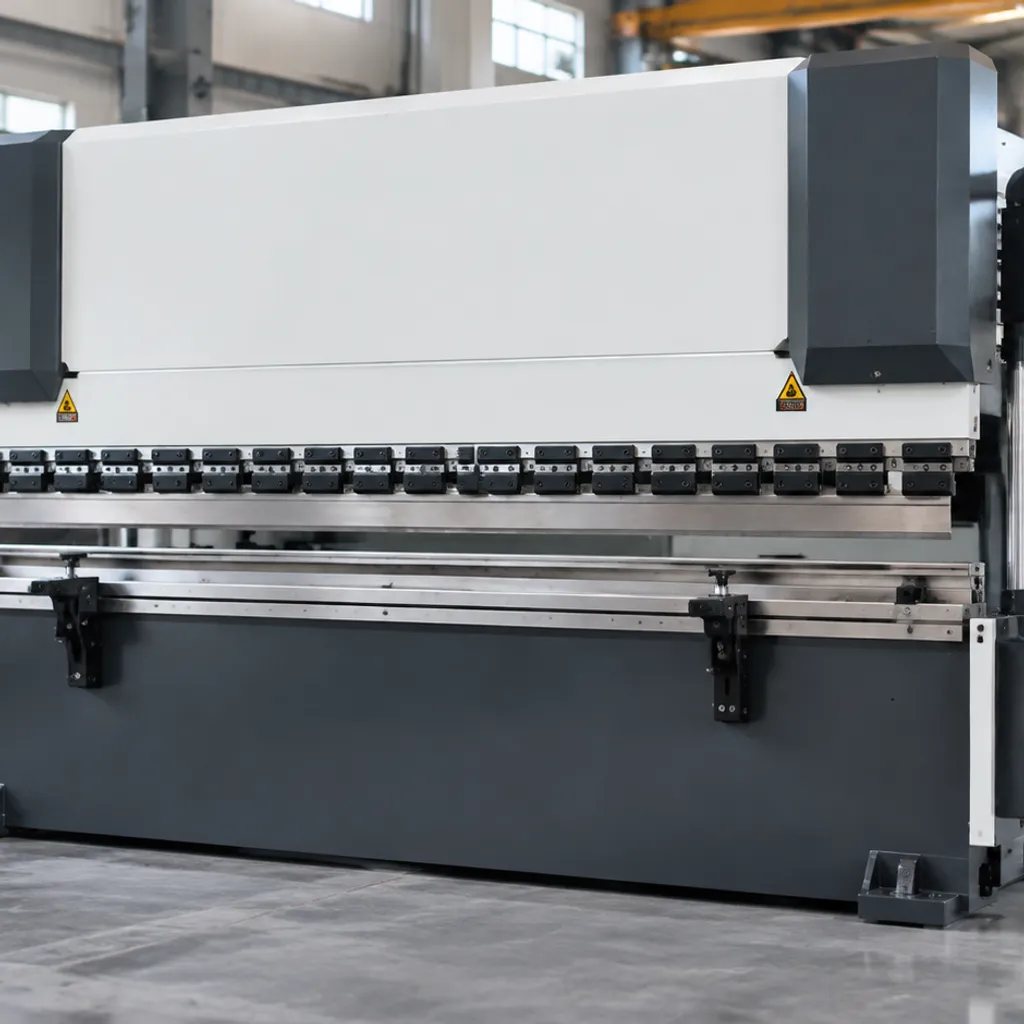
110 Ton Electric Press Brake Frame and Structural Build
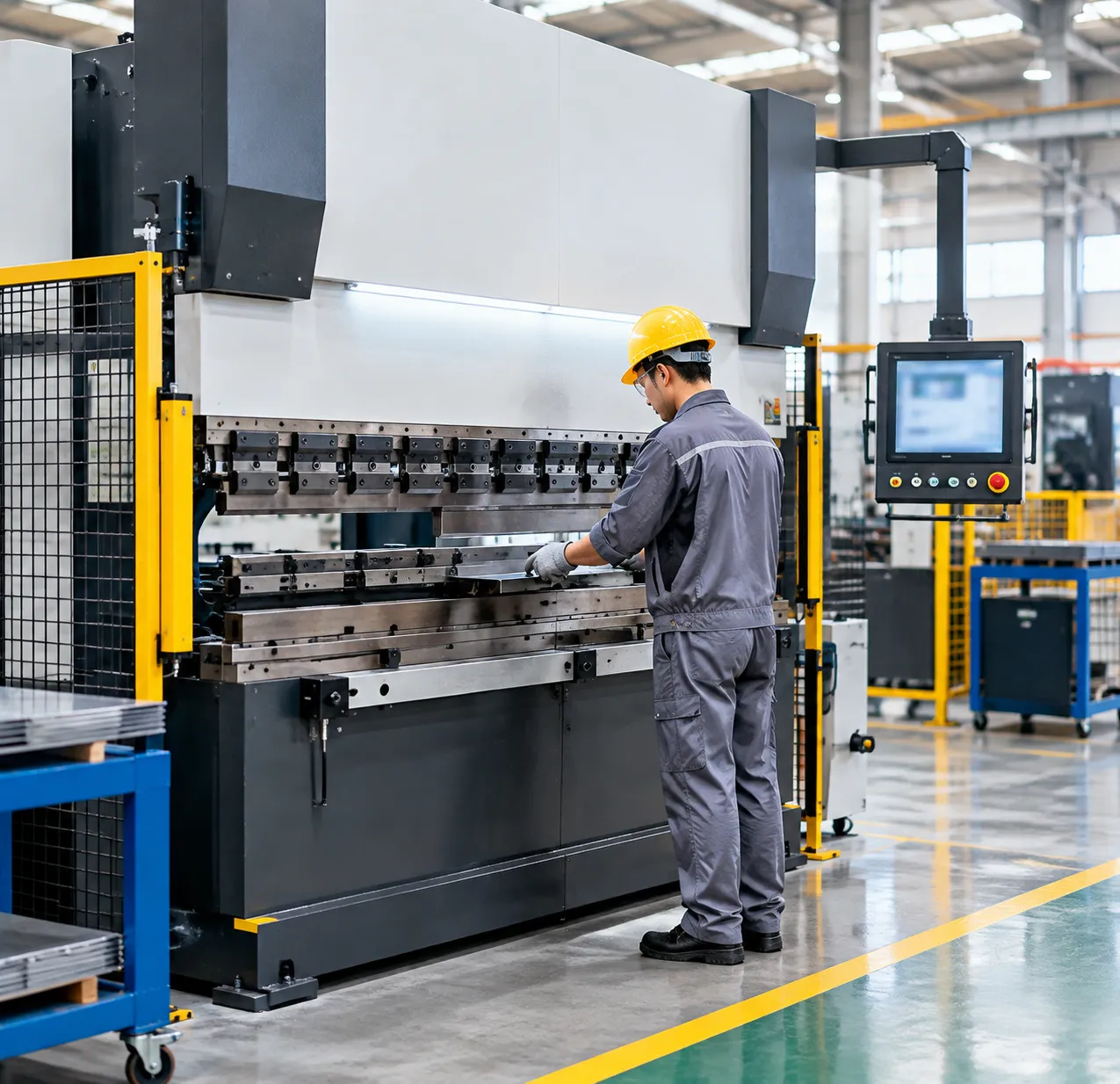
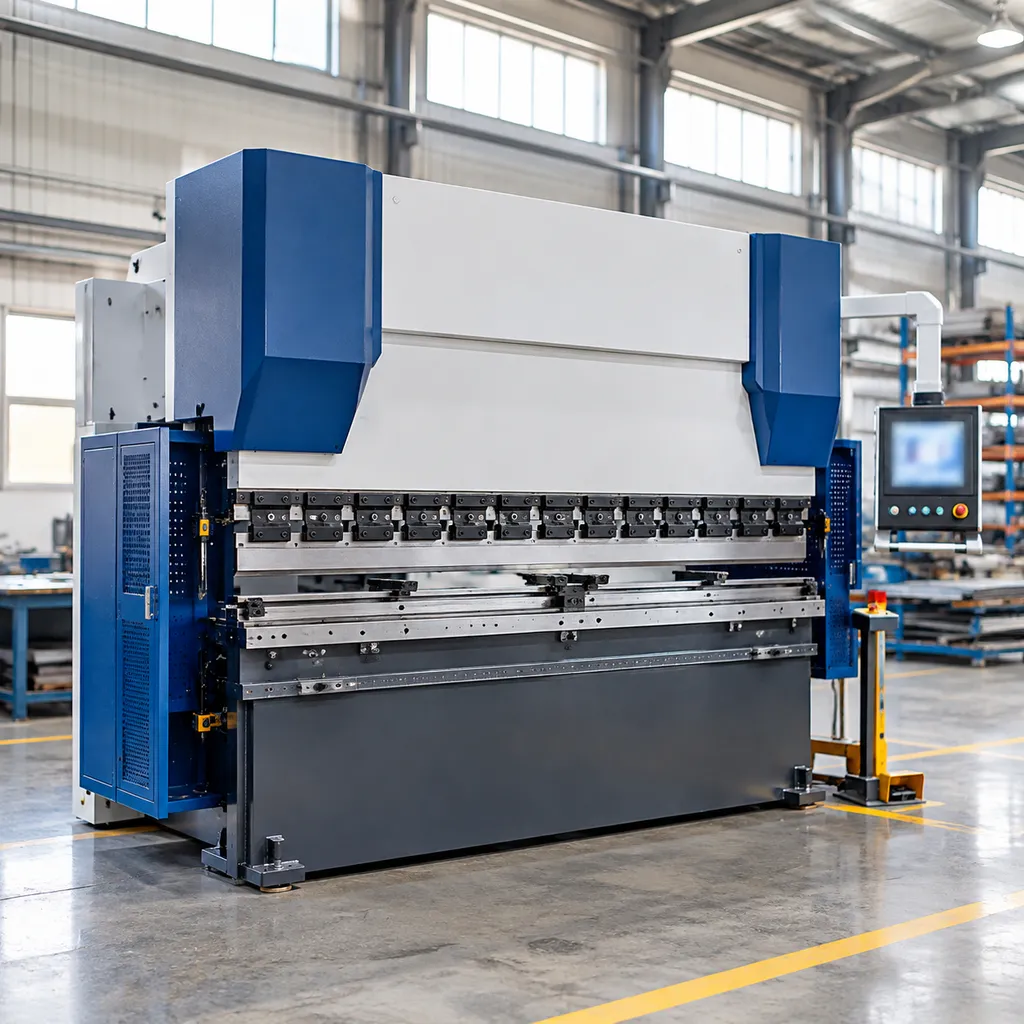
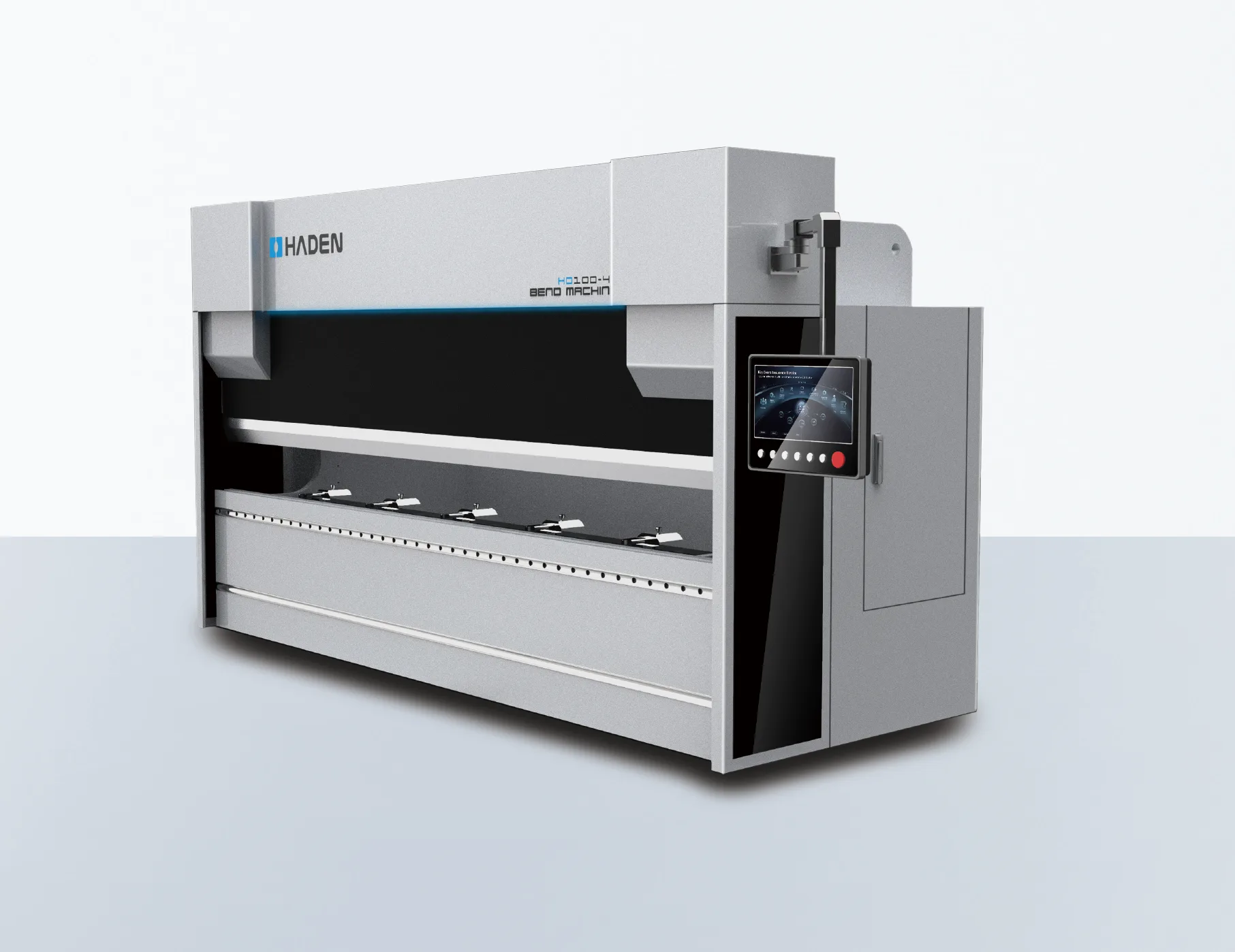
Precision sheet metal forming starts with structural integrity. We engineer our 110 ton electric press brake around a high-rigidity chassis designed to handle maximum tonnage without structural deformation. By moving away from traditional hydraulic systems to an all-electric drive platform, the structural design directly targets accuracy, stability, and zero thermal distortion on the production floor.
FEA-Optimized Heavy-Duty Frame Rigidity
Every frame undergoes rigorous Finite Element Analysis (FEA) to ensure uniform load distribution across the entire working length under a full 1100 kN load.
-
- High-Tensile Welded Steel: Stress-relieved solid steel plate construction resists static and dynamic deflection during aggressive cycling.
- Optimized O-Frame and C-Frame Geometry: Engineered side housings limit frame yawn, stabilizing the tooling bed under full tonnage.
- Balanced Load Paths: Symmetrical frame construction channels pressing forces vertically into the bed foundation, eliminating lateral twisting.
Zero Throat Deflection for Angle Consistency
Standard hydraulic machines flex at the throat during the bending cycle, introducing angle variance between the center and the edges of the workpiece.
-
- Reinforced Throat Geometry: Engineered side frames prevent throat gap opening during bottom-dead-center dwells.
- Consistent Bend Angles: Flange angles remain true across long parts, cutting setup test bends and scrap rates.
- Reduced Need for Extreme Compensation: Minimal structural flex allows mechanical crowning systems to function with pinpoint precision rather than fighting frame distortion.
Dual-Servo Direct-Drive Belt and Screw Mechanics
The drive architecture of our 110t servo electric press brake delivers mechanical power via high-torque dual AC synchronous servomotors paired with direct-drive transmission mechanics.
| Drive Component | Engineering Function | Production Benefit |
|---|---|---|
| Dual AC Brushless Servos | Independent Y1 and Y2 real-time ram positioning | Precise ram synchronization with zero hydraulic lag |
| Heavy-Duty Belt System | High-durability multi-rib synchronous belt drive | Vibration-free kinetic transfer with low mechanical wear |
| Planetary Roller Screws | High-load linear screw actuation with large contact surface | Extended operational lifespan under continuous 1100 kN cycles |
Eliminating Hydraulic Fluid, Manifolds, and Thermal Drift
Hydraulic bending systems suffer from temperature-sensitive oil viscosity, leaky proportional valves, and degrading seals. The servo-driven press brake 110 ton platform operates completely fluid-free.
-
- Zero Thermal Drift: Cold morning startups yield the exact same bend angles as mid-afternoon production runs without oil warm-up delays.
- Clean Shop Floor: No hydraulic oil changes, filter replacements, blown O-rings, or messy fluid spills.
- Zero Contamination Risk: Ideal for precision manufacturing environments, electronics enclosures, and cleanroom hardware fabrication.
Technical Specifications of the 110 Ton Electric Press Brake
When we spec out a 110 ton electric press brake for precision bending lines, we look directly at frame rigidity, axis velocity, and repeatability.
Core Machine Dimensions and Kinematic Data
Below is the standard configuration breakdown for our 110t servo electric press brake models:
| Parameter | Standard Specification | Extended / Heavy Spec |
|---|---|---|
| Nominal Bending Force | 1100 kN (110 US Tons) | 1100 kN (110 US Tons) |
| Bending Length Options | 2600 mm (approx. 8.5 ft) | 3100 mm (approx. 10 ft) |
| Distance Between Frames | 2200 mm | 2650 mm |
| Open Height (Daylight) | 450 mm | 520 mm |
| Ram Stroke Length | 200 mm | 250 mm |
| Throat Depth | 400 mm | 450 mm |
| Y1 / Y2 Approach Speed | Up to 200 mm/s | Up to 200 mm/s |
| Working Bending Speed | 10 – 20 mm/s | 10 – 20 mm/s |
| Return Speed | Up to 200 mm/s | Up to 200 mm/s |
| Ram Positioning Repeatability | ±0.005 mm | ±0.005 mm |
| Backgauge Repeatability (X Axis) | ±0.01 mm | ±0.01 mm |
| Connected Load Rating | 11 kW – 15 kW | 15 kW – 18.5 kW |
| Total Net Machine Weight | ~7,800 kg | ~9,200 kg |
Ram Speeds and Micron Repeatability
-
- Direct-drive dual-axis synchronization: Independent Y1 and Y2 axes utilize high-torque AC servo motors paired with linear glass scales to lock in positioning accuracy within ±0.005 mm.
- Rapid approach and retraction: Cycle times drop significantly with rapid approach and return speeds reaching 200 mm/s, shifting down smoothly to bending speeds between 10 mm/s and 20 mm/s right at the sheet mute point.
- On-demand power draw: Because the dual servo motors draw electricity only when the ram moves, average shop floor power consumption drops to roughly one-third of a standard hydraulic system. When weighing operational payback, review our comprehensive electric press brake cost and price guide to calculate your shop's exact return on investment.
- Solid frame mass: Weighing up to 9,200 kg, the heavy-duty welded structure prevents frame flex, giving you uniform flange angles across full 2600 mm and 3100 mm bed lengths.
High-Speed Kinematics and Cycle-Time Performance
Seamless Pinch-Point Transitions
-
- Zero mechanical shock: High-torque servo motors provide smooth deceleration curves, shifting instantly from rapid approach speeds down to the exact mute and pinch points without jarring the frame or tooling.
- Instant acceleration: Eliminating proportional hydraulic valves removes fluid-switching delays, delivering instantaneous directional reversal and crisp decompression cycles.
30% to 45% Cycle-Time Reductions
When compared to standard CNC hydraulic press brakes, this 110t servo electric press brake cuts overall part cycle times by 30% to 45%. The high-speed kinematics allow the ram to accelerate to 200 mm/s in approach and return, maximizing parts-per-hour output on multi-bend sheet metal profiles.
Quiet Operation Under 65 dBA
Traditional pumps run continuously, generating constant shop noise and heat. In contrast, our servo-driven press brake 110 ton system only consumes power and moves mechanics during active stroke phases:
Operating noise level: Consistently under 65 dBA during full-speed operation.
Standby mode: Completely silent during part handling, gauge positioning, and operator loading.
Multi-Axis CNC Backgauge Positioning
Accurate sheet positioning defines overall bend quality. On our 110 ton electric press brake, we configure high-speed backgauge systems engineered to match the rapid cycle times of the dual-servo ram. Instead of standard pneumatic or low-spec belt stops, each gauge axis is driven independently by high-torque AC brushless servos paired with precision preloaded ball screws and dual linear guide rails. This mechanical assembly eliminates mechanical play, delivering fast traverse speeds and consistent positioning repeatability within ±0.005 mm.
4-Axis and 6-Axis Backgauge Configurations
Complex, asymmetrical, or tapered flanges require independent axis control to avoid manual sheet manipulation and scrap. We offer flexible configurations based on your production requirements:
-
- Standard 4-Axis System (X, R, Z1, Z2): Controls gauge depth (X), vertical finger height (R), and lateral finger spacing (Z1/Z2) directly from the CNC program. Ideal for multi-station setups where operators move sequentially along the bed.
- Advanced 6-Axis System (X1, X2, R1, R2, Z1, Z2): Provides full independent movement for each gauge tower. This setup allows for tapered sheet metal parts, asymmetrical stepped flanges, and complex geometries that conventional backgauges cannot locate accurately.
| Axis Designation | Motion Type | Function | Operating Range / Stroke |
|---|---|---|---|
| X / X1-X2 | Horizontal depth | Controls flange length and gauge depth | 500 mm – 1000 mm |
| R / R1-R2 | Vertical height | Matches step dies, hem dies, and varying tool heights | 150 mm – 250 mm |
| Z1 / Z2 | Lateral travel | Positions fingers along the machine bed length | Across usable bed width |
Multi-Stop Finger Blocks and Visual Gauging
Every gauge tower on this multi-axis electric brake press features rugged, hardened multi-stop finger blocks. We design these stops with multiple gauging levels to support tight reverse bends, long overhangs, and narrow interior flanges without sheet sag or slippage.
-
- Multi-Tier Contact Points: Stepped finger faces provide distinct gauging depths for fast part nesting during staged progressive bending.
- Manual Micro-Adjustment: Each finger assembly includes fine-pitch vernier micrometer controls for mechanical fine-tuning when dealing with uneven sheet edges or localized material variation.
- Visual Reference Indices: High-contrast dimensional markings give operators instant visual confirmation during manual sheet alignment, speeding up setup verification.
- High-Rigidity Linear Rails: The entire backgauge assembly is mounted to heavy structural members isolated from frame stress, verified through rigorous shop-floor quality and testing protocols to guarantee absolute accuracy over continuous multi-shift production.
Dynamic Crowning and Real-Time Angle Control
Motorized Mechanical Wave Crowning
Bed deflection naturally occurs under 110-ton loads, particularly when forming long parts over 2500 mm to 3100 mm tooling lengths. We counteract this using an integrated, motorized mechanical wave crowning system built directly into the lower bed:
-
- Opposed Wedge Mechanics: Hardened, precision-ground steel wedges move across each other to create an exact, parabolic counter-curve along the bed center.
- Direct Motor Drive: Driven by a dedicated CNC servo motor rather than slow manual cranks or inconsistent hydraulic cylinders.
- Point-to-Point Uniformity: Eliminates angular deviation from end to end, holding parts within precise angular tolerances across the entire flange length.
Closed-Loop Deflection Compensation
Our controller takes the guesswork out of setup. Working as a dedicated CNC press brake forming machine for precise metal bending, the CNC system calculates material parameters, tooling geometry, and bending force in real time:
-
- Automatic Calculation: The controller dynamically calculates expected frame and bed deflection based on thickness, tensile strength, and V-opening width.
- Pre-Bend Adjustment: The mechanical crowning axis positions itself instantly before the punch contacts the sheet, avoiding mid-stroke hesitation.
- Repeatable Accuracy: Yields uniform bend angles on the first run, dramatically cutting test-piece scrap during changeovers.
In-Process Optical and Laser Angle Measurement
Variations in sheet grain direction, surface hardness, and thickness tolerances from the mill cause unpredictable springback. To eliminate scrap completely, our 110 ton electric press brake supports live optical and laser angle measuring systems:
-
- Real-Time Flange Tracking: Non-contact laser sensors continuously scan the exterior flange angle as the sheet forms.
- Live Springback Calculation: The system reads the angle at target depth, unloads slightly to detect material springback, and re-strikes automatically to achieve the programmed angle.
- Zero Warm-Up Drift: Because our all-electric drive generates no hydraulic oil heat, laser-corrected positioning remains accurate from the first piece in the morning to the end of the shift.
Precision Tooling Interfaces and Clamping Systems
Tooling changeover speed directly determines daily throughput on any 110 ton electric press brake. We configure our tool holders and beds to accept standard industrial tooling styles, cutting setup times from twenty minutes down to seconds while maintaining extreme mechanical alignment.
Rapid Clamping Options: European, Promecam, and Wila-Trumpf
We equip our ram interfaces with versatile clamping configurations to match your existing tool library:
-
- European / Promecam Style: Fast mechanical lever or pneumatic quick-clamp systems that secure standard tang punches with instant vertical seating.
- Wila-Trumpf Style: Heavy-duty hydraulic or mechanical push-button clamping with automated self-seating and real-time tool safety clicks.
- Pneumatic / Hydraulic Upgrades: One-touch automated tool locking via the CNC pendant, eliminating manual wrench work across the entire bend length.
| Clamping System | Tool Loading Method | Typical Setup Time | Best Application |
|---|---|---|---|
| Mechanical Quick-Clamp | Front-loading quick lever | < 2 minutes | Standard job shop punch sets |
| Wila-Trumpf Style | Vertical click & seat | < 30 seconds | High-mix, low-volume rapid changes |
| Pneumatic Auto-Lock | Push-button auto-seat | < 15 seconds | High-volume serial production lines |
Much like our smaller electric press brake 40 ton units, this 110-ton platform utilizes rigid upper beams engineered to prevent local jaw expansion under maximum tonnage.
Self-Centering Multi-V Dies and Single-V Lower Tool Rails
Lower tool alignment requires absolute centerline stability to prevent asymmetrical flange lengths. Our bed options support both versatile job-shop operations and dedicated high-precision runs:
-
- Single-V Tool Rails: Precision-ground slot rails compatible with self-centering 1V dies, optimized for narrow flanges, reverse bends, and tight hems.
- Multi-V Die Holders: Robust base blocks accepting 2V and 4V dies for rapid sheet thickness transitions without removing the lower block.
- Hardened Rail Beds: Lower beds induction-hardened to 55–60 HRC, resisting localized indentation from concentrated point loads.
Sectional Tooling for Deep Box Forming
Complex parts like electrical enclosures and four-sided chassis demand flexible tool staging. We supply hardened and precision-ground sectional punches and dies that allow clear ram clearance:
-
- Segmented Sets: Standard tool lengths including 10 mm, 15 mm, 20 mm, 40 mm, 50 mm, 100 mm, and ear sections (left/right horns).
- Deep Box Clearance: Tall gooseneck and sash punches deliver clearance for return flanges up to 200 mm high without side collisions.
- Precision Grinding: Matched-tolerance tooling sets ground to ±0.01 mm, enabling seamless mixing and matching of segmented blocks anywhere across the bed without shimming.
CNC Controller and Offline Software for the 110 Ton Electric Press Brake
Multi-Touch Industrial CNC Interfaces
Fabricators can select from leading multi-touch CNC control platforms configured for pure electric drive kinematics:
Delem DA-60 Series: Intuitive touch controls with fast 2D and 3D graphical programming.
ESA S-Series: High-performance PC-based industrial architecture with expandable I/O.
Cybelec Touch Units: Optimized for rapid parameter entry, backgauge staging, and servo axis monitoring.
2D/3D Bend Sequencing and Dynamic Collision Detection
Before the upper beam moves, the CNC software automatically runs a full digital simulation:
Calculates optimal bend sequences based on tool library profiles and blank dimensions.
Provides real-time collision alerts between the workpiece, backgauge fingers, machine frame, and tooling.
Generates precise flat pattern layouts and stretch calculations tailored to specific material grades.
Direct CAD File Import
Our control architecture integrates directly with engineering design software. Operators import standard 3D files (.STEP, .IGES) and 2D geometry (.DXF) directly into the console. The system unfolds parts automatically, assigns tool stations, and generates NC code without manual code entry, aligning seamlessly with advanced sheet metal bending solutions across automated fabrication lines.
Industry 4.0 Telemetry and OPC-UA
Each all-electric CNC bending machine operates as an active node on your shop floor network:
OPC-UA Communication: Standard protocol for direct data exchange with plant ERP, MES, and job-tracking systems.
Live Machine Diagnostics: Continuous feedback on servo motor temperatures, drive cycles, and linear encoder positioning.
Remote Support: Secure network access enables real-time diagnostic reviews, software updates, and maintenance troubleshooting without on-site service delays.
110 Ton Electric Press Brake vs. Hydraulic Cost and ROI Analysis
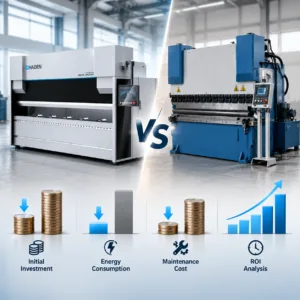
When we calculate real-world shop floor costs, a 110 ton electric press brake consistently outpaces conventional hydraulic machinery by reducing power bills, wiping out routine fluid servicing, and slashing material scrap.
On-Demand Power Draw Cuts Electricity Use by Up to 60%
Traditional hydraulic power units continuously run heavy electric motors to maintain line pressure, burning kilowatt-hours even while the ram sits parked during blank loading. In contrast, our servo electric press brakes only consume electrical energy when the ram is physically in motion.
-
- True On-Demand Draw: Servos draw peak power only during the active pinch and bend cycle. Standby idle draw drops down near zero.
- Lower Energy Bills: Fabricators running multiple shifts regularly log a 50% to 60% drop in press brake power usage compared to standard proportional-valve hydraulic units.
- Lower Factory Thermal Load: Less wasted electrical energy means lower ambient heat generation, cutting cooling loads in climate-controlled fabrication plants.
Zero Oil Changes, Seal Rebuilds, or Fluid Disposal
Hydraulic maintenance creates predictable downtime and regulatory liabilities. An all-electric CNC bending machine eliminates the entire fluid circuit:
-
- No Fluid Purchases or Disposal: Completely avoids the ongoing cost of oil refills, reservoir flushes, filter elements, and expensive hazardous fluid haul-away fees.
- No Valve or Cylinder Rebuilds: Eliminates leaking piston seals, clogged proportional valves, ruptured high-pressure hoses, and pump cavitation failures.
- Pristine Operating Conditions: Keeps your facility clean and contaminant-free, avoiding slick floors and meeting clean-manufacturing standards for electronics and food-grade stainless jobs.
Instant Cold-Start Precision Eliminates Warm-Up Scrap
Hydraulic viscosity fluctuates as temperatures shift between a morning startup and an afternoon production peak, leading to noticeable angular drift and out-of-spec test bends.
Our dual-servo electric drive delivers exact positional accuracy from stroke one:
Zero Machine Pre-Heating: Operators can start forming production parts immediately without idling the machine for 15 to 30 minutes to stabilize oil temperatures.
Eliminated Test Bends: Repeatable ram positioning within ±0.005 mm ensures the first part matches the last part across an entire batch, saving expensive sheet stock and keeping cycle times lean.
Material Capacities and Target Sheet Metal Applications
Gauge Thickness Thresholds
Pairing our 110t servo electric press brake with standard tooling setups provides consistent forming across key material categories:
-
- Mild Steel: 0.8 mm to 6.0 mm (up to ~1/4" on narrower V-dies or shorter lengths).
- Stainless Steel: 0.8 mm to 4.0 mm, maintaining exact bend angles on work-hardening alloys.
- Aluminum Alloys: 1.0 mm to 6.35 mm (5052, 6061-T4/T6), delivering accurate relief without corner cracking.
For facilities processing parts directly off sheet metal laser cutting machines, the pure electric drive handles tight-tolerance cutouts and short flanges with direct stroke control.
Target Industrial Applications
Our 110 ton pure electric press brake runs in high-demand fabrication sectors where repeatability and clean operation matter most:
-
- Electrical Cabinets and Switchgear: Accurate multi-flange sequencing for enclosures, modular doors, and sub-panels requiring exact seam alignment and clean corner fitment to hit IP and NEMA ratings.
- Server Racks and Telecom Chassis: High-density, multi-bend 19-inch rack components, mounting brackets, and chassis covers where micro-gauge tolerances prevent assembly line bind-up.
- Precision HVAC Hardware and Dampers: Fast approach and return speeds maximize throughput on volume runs of heavy-gauge louvers, volume control dampers, and duct transitions.
- Sanitary and Medical Hardware: Eliminating hydraulic oil from the machine design guarantees zero fluid vapor or drip contamination. This makes the all-electric CNC bending machine the preferred platform for food-service grade stainless steel cabinetry, commercial kitchen tops, and cleanroom medical housings.
Safety Systems and Global Compliance Standards
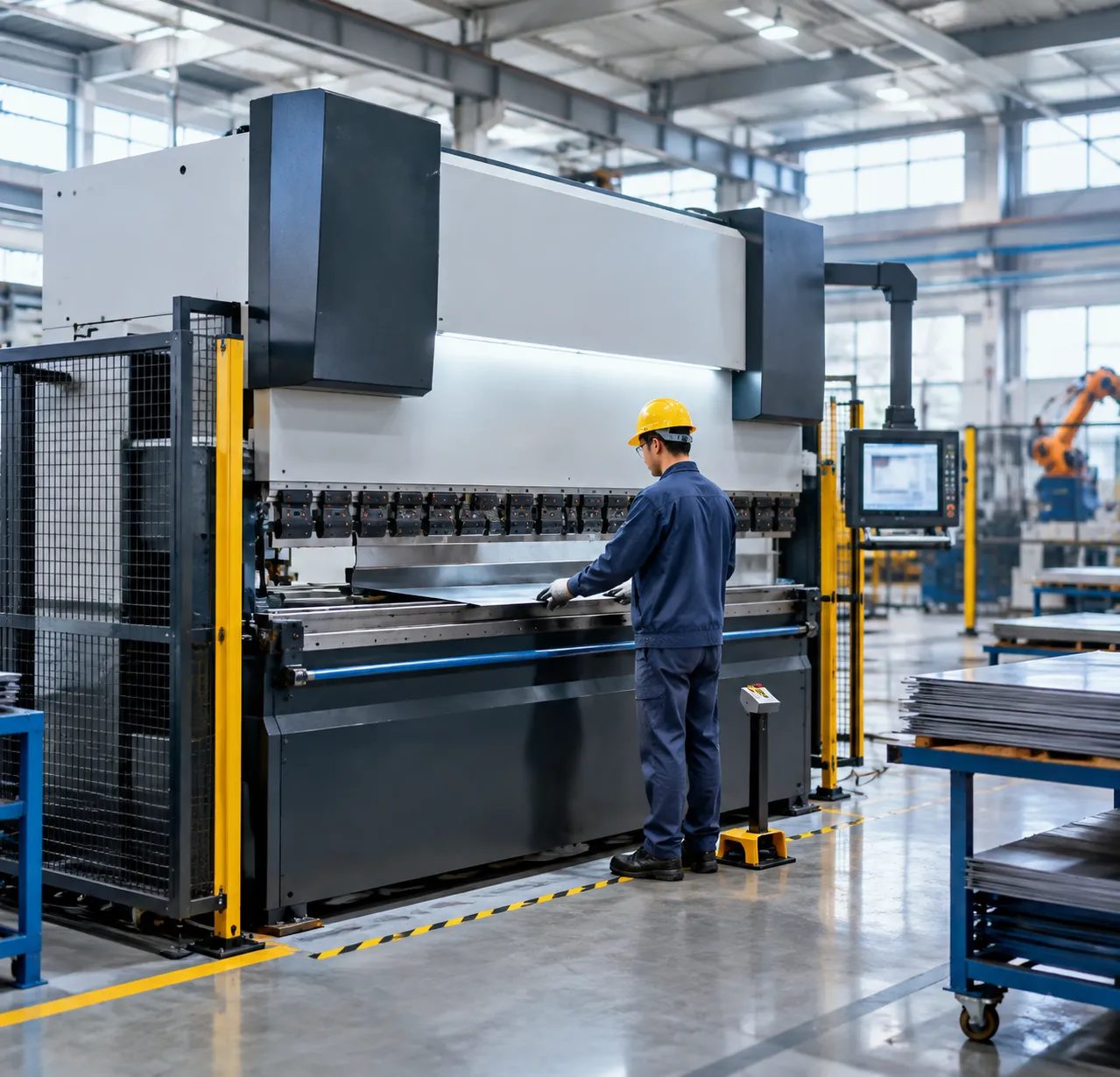
Operator safety and shop floor ergonomics dictate how we engineer every 110 ton electric press brake. Fast cycle times demand protection systems that keep operators safe without slowing down production.
Optical Laser Safety Guarding
-
- Dynamic Pinch-Point Tracking: Optical laser guard systems mount directly to the upper beam, moving synchronously with the punch tip.
- Mute Point Automation: The laser field monitors the obstruction zone down to the pinch point, shifting from high-speed descent to bending speed seamlessly.
- Zero Cycle Lag: Operators can safely manipulate parts close to the tooling without triggering false emergency stops.
Mechanical Interlocks and Ergonomic Handling
-
- Physical Enclosures: Interlocked side gates and rear mechanical fencing cut servo motor power instantly when opened for tool changes or routine inspections.
- Dual-Pedal Stations: Ergonomic wired foot switch stations feature intuitive two-stage clamping and emergency return sequences.
- Adjustable Sheet Supports: Heavy-duty front support arms slide smoothly along linear rails, with height, angle, and tilt adjustments to minimize operator fatigue on repetitive bends.
Global Compliance and Certifications
Every machine build meets and exceeds international machine tool directives. We support these compliance standards across all installations through our global service infrastructure:
-
- CE Machinery Directive: Fully compliant with EN 12622 safety requirements for hydraulic and servo-electric press brakes.
- ANSI B11.3: Built to meet North American standards for power press brake construction, safeguarding, and operational use.
- OSHA Compliance: Certified design standards provide verified zero-energy lockout/tagout (LOTO) protocols and mechanical fail-safe braking.
Robotic Cell Integration and Factory Customization
We engineer the 110 ton electric press brake for seamless lights-out manufacturing and tailored shop-floor layouts. The servo-electric architecture provides instant digital communication with automated handling systems, eliminating the cycle latency common in hydraulic retrofits.
-
- Standardized Robot Interfaces: Native plug-and-play communication protocols connect our CNC system directly to KUKA, ABB, and Fanuc industrial robotics. The controller shares real-time axis positioning, pinch-point verification, and cycle status to execute high-speed, unmanned bending cycles.
- Synchronized Sheet Followers: For large or thin-gauge panels, CNC-interpolated front sheet followers support the material through the entire bend trajectory. This eliminates back-bending, preserves bend-angle accuracy, and protects operators from repetitive lifting strain.
- Tailored Frame Geometries: Standard machine dimensions do not fit every deep-box or high-flange profile. Through our dedicated customization options, we modify open daylight height, extend the ram stroke, and deepen the side frame throat clearance to clear your most demanding part profiles.
By integrating multi-axis automation and adapting physical frame limits to your parts, our 110 ton electric press brake delivers reliable, repeatable production runs with minimal labor overhead.
Frequently Asked Questions About 110 Ton Electric Press Brakes
What maximum sheet thickness can a 110 ton electric press brake bend across standard bed lengths?
A 110 ton electric press brake handles up to 6 mm (approx. 1/4 inch) mild steel and 4 mm stainless steel across standard 2500 mm to 3100 mm bed lengths using proper die openings (typically 8 to 10 times material thickness). For high-precision parts in lighter gauges, such as 1 mm to 3 mm electrical enclosures, the machine forms tight-radius bends without losing bottom-dead-center accuracy across the full length.
How does an electric press brake reduce power consumption compared to a hydraulic brake?
-
- Zero Idle Draw: Traditional hydraulics run a continuous motor to keep oil pressurized, even when sitting idle. An all-electric CNC bending machine draws heavy power only when the ram is physically in motion.
- Direct Mechanical Transfer: Servo motors turn power directly into bending force with minimal drivetrain loss.
- Up to 50% Energy Reduction: Eliminating constant pump cycling and high-pressure relief valves cuts overall shop floor power costs noticeably from month one.
What ram repeatability can I expect from a dual-servo electric drive system?
A servo-driven press brake delivers ram positioning repeatability within ±0.005 mm. Dual optical linear encoders provide real-time position feedback directly to the CNC, instantly correcting Y1 and Y2 balance. Because there is no hydraulic fluid to heat up, expand, or degrade, you get identical bend angles on the first stroke of a cold morning and the last stroke of an eight-hour run.
Can I integrate a 110 ton electric press brake into an automated robotic bending cell?
Yes. Our machines are built with open industrial communication protocols to connect directly with industrial articulation robots:
Robotic Interfaces: Pre-configured fieldbus protocols match standards used by Fanuc, KUKA, and ABB.
Synchronized Movement: The CNC controller signals the robot gripper to track material through the bending cycle, eliminating back-gauge drag and part deformation.
Automated Tool Changers: Clean setups fit easily alongside automated sheet loaders, visual part identifiers, and offload stacking stations.
What daily and preventative maintenance does an all-electric press brake require?
All-electric technology drastically cuts routine maintenance by removing the hydraulic system entirely.
-
- No Fluid Handling: Zero hydraulic oil, zero filter changes, and no worn piston seals to rebuild.
- Routine Lubrication: Keep the linear guide rails and preloaded ball screws topped off via the central automatic lubrication port.
- Visual Cleaning: Wipe down the scale sensors, vacuum debris from the backgauge tracks, and check belt tension periodically.
Our team focuses on direct, reliable machine engineering so your shop stays running without sudden maintenance downtime.