Formula details
Product Details
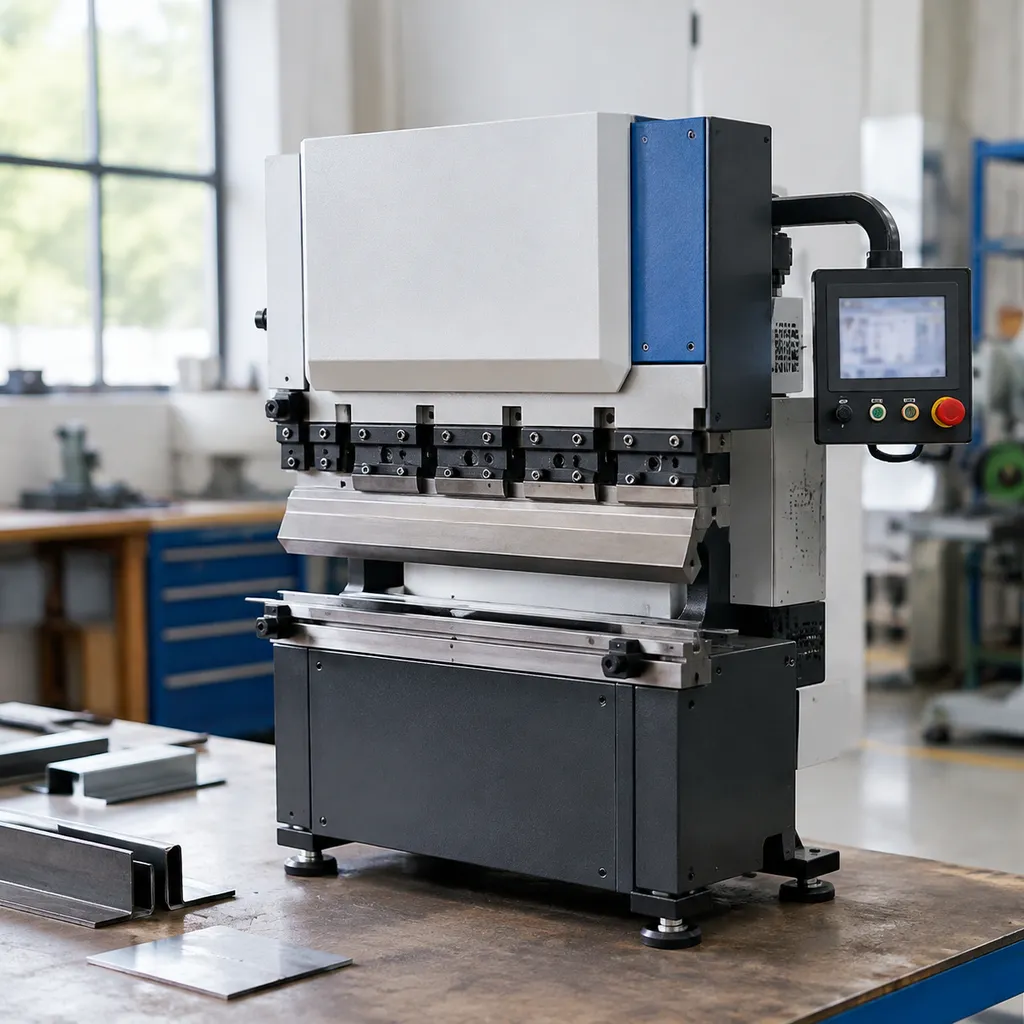
Overview
Why Switch to a Mini Electric Press Brake?
Running small precision brackets on an oversized hydraulic machine burns electricity, wastes floor space, and introduces angle variance as hydraulic oil warms up.
Moving from Messy Hydraulics to Pure Electric Drives
Traditional hydraulic systems demand continuous pump operation, regular fluid flushes, seal replacements, and frequent valve calibration. Our small electric press brake technology replaces hydraulic cylinders entirely with direct-servo electric drives.
-
- Zero hydraulic fluid: Eliminates oil disposal costs, valve leaks, and ambient shop floor slip hazards.
- Instant thermal stability: Delivers full tonnage and accurate ram depth immediately without waiting for hydraulic oil to reach operating temperature.
- Cleaner production: Keeps thin sheet metal parts, tooling, and workstations free of oil mist and residue.
How a Compact Footprint Saves Shop Floor Space
Floor space is prime real estate in high-mix, low-volume job shops. A standard hydraulic bender requires massive side clearances for oil reservoirs and power packs.
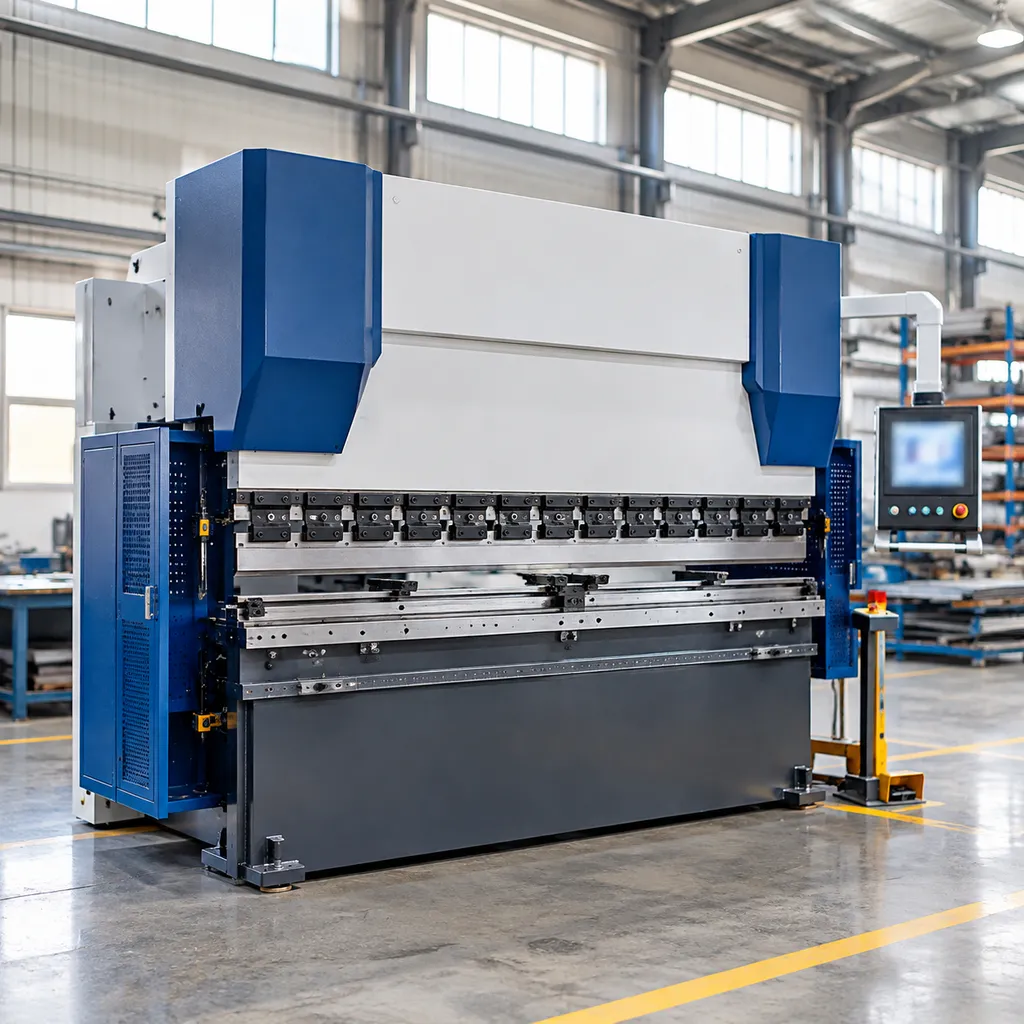
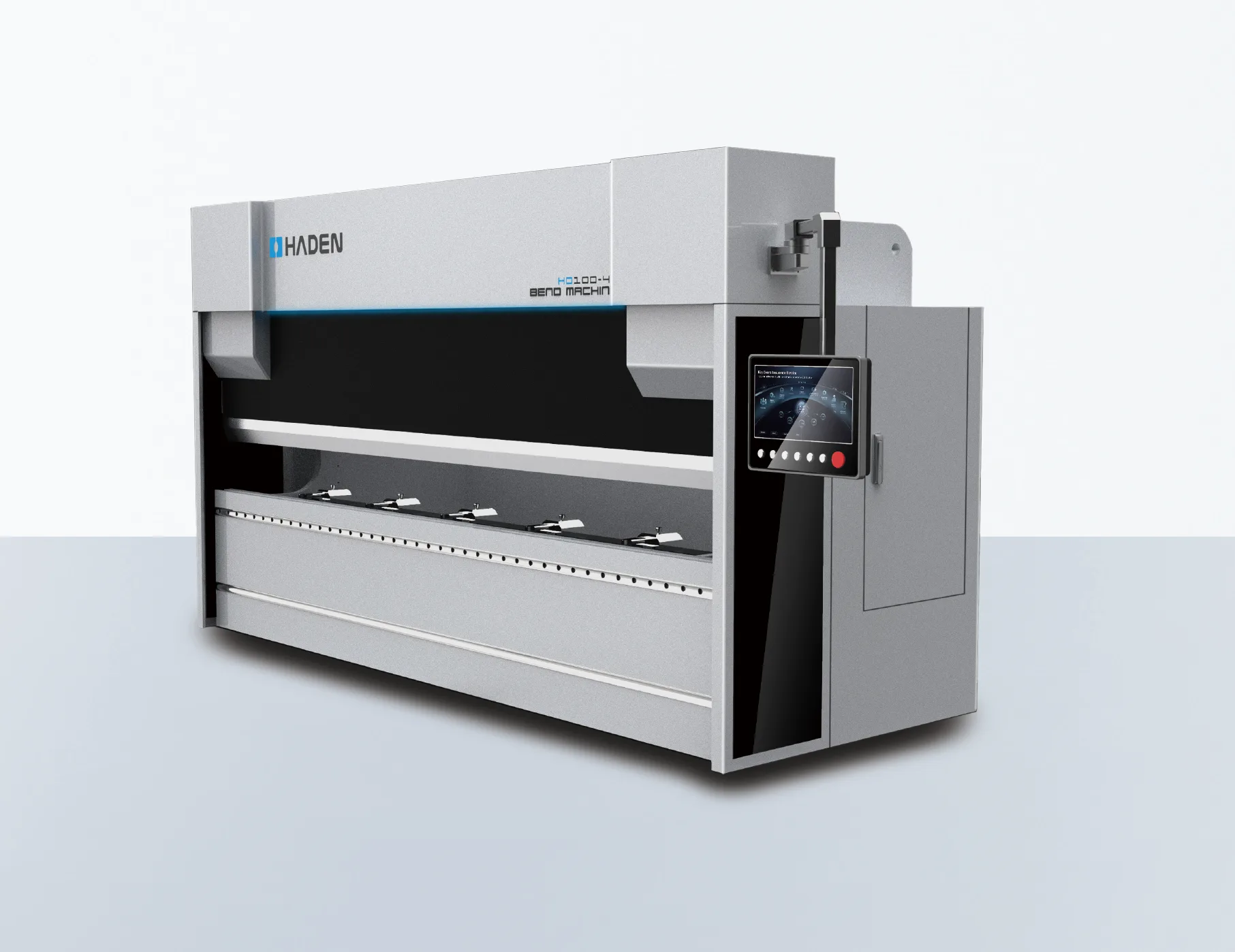
Our mini press brake electric platforms integrate the motor, controls, and mechanics within a consolidated frame:
-
- Minimal footprint: Takes up less than a single standard pallet footprint, fitting directly into localized work cells.
- Point-of-use processing: Drops cleanly next to punching stations or laser cutting tables to prevent parts staging backlogs.
- True mobile integration: Simple forklift pockets allow fast repositioning whenever your production layout changes.
Focused 20T to 35T Range with a 25-Ton Core Focus
Most precision hardware, electronics chassis, and brackets rarely require more than 30 tons of bending force. Oversized machines operate inefficiently when handling delicate, narrow workpieces.
We concentrate our electric lineup in the 20-ton to 35-ton capacity window, with our 25 ton electric press brake serving as the core workhorse. This specific tonnage band provides the exact mechanical stiffness and fine-stroke control needed for tight-tolerance bending without unnecessary power draw or bulky frames.
Core Build: How Dual-Servo Drives Change the Game
We built our small electric press brake lineup around a dual-servo direct-drive architecture to eliminate the maintenance headaches and inconsistencies of hydraulic valves. By coupling heavy-duty servo motors directly to high-load planetary roller screws, we transfer mechanical force instantly to the ram without hydraulic fluid, seals, proportional valves, or oil warm-up routines.
Direct-Drive Motors and Planetary Roller Screws Replace Hydraulic Valves
Hydraulic bending systems rely on fluid transfer, oil viscosity stability, and proportional valves that wear out over time. In our dual-servo bending machine setup:
-
- Direct Mechanical Linkage: High-torque synchronous servo motors connect to planetary roller screws, converting rotational power directly into smooth linear tonnage.
- Instant Ram Response: Eliminating fluid delay delivers micro-second response times for acceleration, bending speed, and decompression.
- No Fluid Contamination: A 100% hydraulic-free press brake design removes messy oil changes, valve block rebuilds, and leaking line gaskets.
- Long-Term Durability: Roller screws distribute contact loads across multiple precision rollers rather than standard ball bearings, preventing groove wear under continuous production loads.
Power-on-Demand Cuts Electric Bills by up to 65%
Traditional hydraulic presses run a main motor continuously to circulate fluid, wasting energy even while the machine sits idle between bends. Our all-electric press brake mechanics operate purely on a power-on-demand principle:
-
- Zero Idle Consumption: The dual-servo motors draw zero current when the ram is parked or waiting for sheet loading.
- Regenerative Braking: Energy generated during ram deceleration feeds back into the power system rather than generating wasted heat.
- Lower Operating Costs: Fabricators reviewing our electric press brake cost and price guide find that cutting continuous power draw reduces everyday electricity overhead by up to 65% compared to hydraulic equivalents.
| Drive Factor | Standard Hydraulic Brake | Our Dual-Servo Electric Press Brake |
|---|---|---|
| Idle Power Draw | Continuous (pump motor running) | 0 kW (motors engage only on cycle start) |
| Motion Transfer | Hydraulic cylinders, oil, valves | Direct-drive motors + planetary roller screws |
| Operating Noise | Constant pump drone (72–80 dBA) | Quiet standby, silent idle (<62 dBA) |
| Thermal Stabilization | 20–40 min warmup needed daily | Ready to bend accurately on the first strike |
Dual Optical Linear Scales Hit ±0.005 mm Ram Repeatability
Consistent part angles require exact ram positioning on every stroke. We mount dual optical linear glass scales on isolated side frames to monitor Y1 and Y2 axis positions independently:
-
- True Closed-Loop Feedback: Optical encoders continuously read the mechanical ram position, instantly signaling the CNC to correct any mechanical imbalance.
- ±0.005 mm Repeatability: The direct-drive roller screws stop and reverse within five microns, ensuring uniform flange dimensions across small production runs.
- Off-Center Load Control: Independent Y1/Y2 servo drives synchronize down to the micron, allowing our mini press brake electric units to run off-center stage tooling without ram tilting or angular twist.
Solid O-Frame and C-Frame Bodies Stop Thermal Drift and Flex
Precision sheet metal bending fails when shop temperature swings or tonnage loads cause machine deflection:
-
- Heavy Stress-Relieved Steel: We fabricate both O-frame and deep-throat C-frame configurations from stress-relieved steel plates, preventing structural deflection under full rated tonnage.
- Zero Thermal Drift: Because no hydraulic oil reservoir heats up inside the frame during a shift, machine dimensions stay stable from the morning's first part to the final evening cycle.
- Rigid Bed Deflection Resistance: The compact throat and bed structure maintain punch-and-die alignment, delivering dead-on angle repeatability across thin stainless, aluminum, and mild steel blanks.
25 Ton Electric Press Brake Specs and Capabilities
Key Technical Specifications
| Parameter | Specification |
|---|---|
| Bending Force | 250 kN (25 US Tons) |
| Bending Length | 800 mm to 1000 mm |
| Ram Stroke | 100 mm to 150 mm |
| Open Height (Daylight) | 320 mm to 380 mm |
| Approach Speed | Up to 150 mm/s |
| Bending Speed | 0.2 to 20 mm/s (adjustable) |
| Return Speed | Up to 150 mm/s |
| Ram Repeatability (Y1/Y2) | ±0.005 mm |
Precision Bending for Thin Sheet Materials
This 25 ton sheet metal bending machine excels at tight-tolerance processing across common industrial alloys:
-
- Mild Steel: Up to 3.0 mm sheet thickness on standard V-die openings for reliable structural brackets.
- Stainless Steel: Clean, mark-free bends on 0.5 mm to 2.0 mm stock for electrical enclosures and food-grade hardware.
- Aluminum: Flawless acute and right-angle bends on up to 3.0 mm sheets without cracking or surface scoring.
High Output in a Tight Machine Cell
Floor space is prime real estate in modern sheet metal shops. Our small electric press brake features an integrated frame design that eliminates external hydraulic tanks, heat exchangers, and bulky hydraulic manifolds.
With a total floor footprint under two square meters, fabricators can drop our servo-electric press brakes directly alongside turret punch presses, fiber laser cutters, or dedicated robotic cells without disrupting shop traffic or workflow.
Multi-Axis Backgauge and Touchscreen CNC Controls
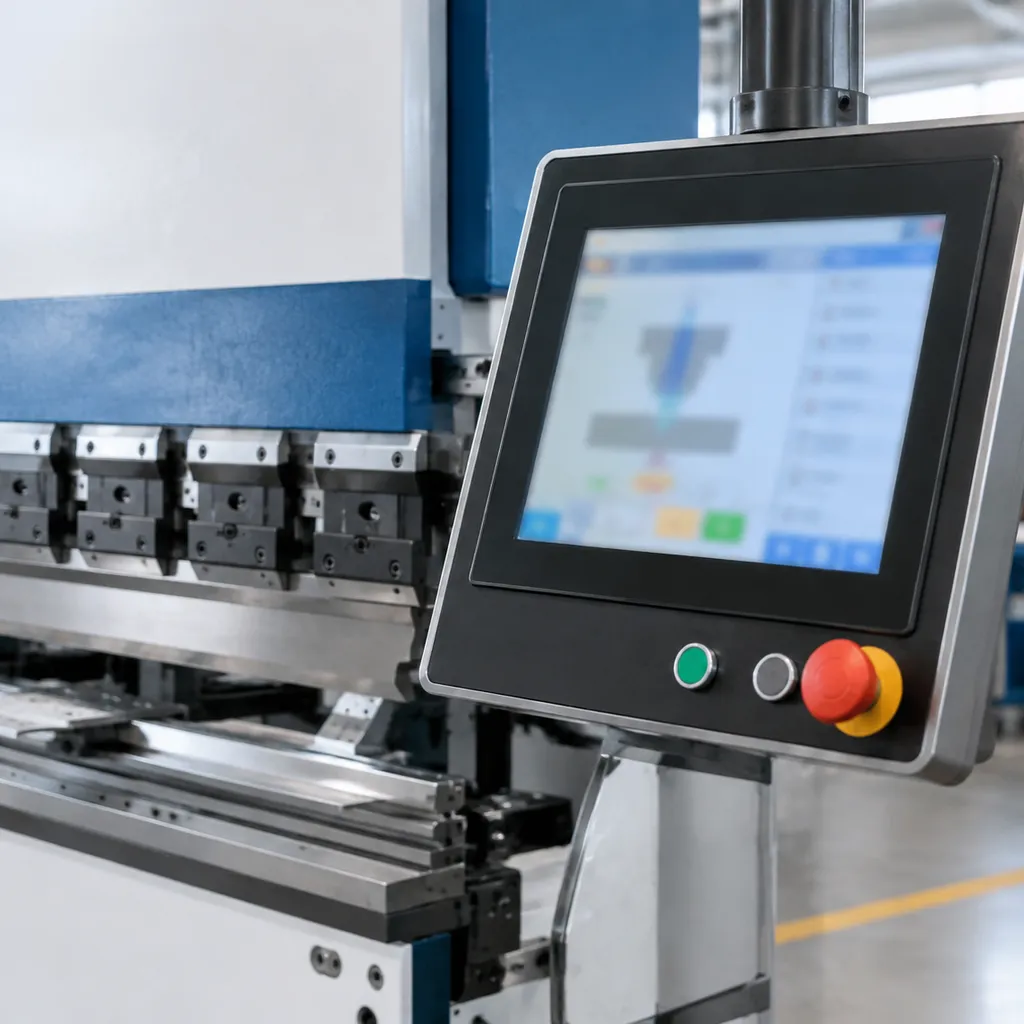
Accurate small-part bending depends entirely on backgauge response and control precision. We configure every small electric press brake with multi-axis backgauge assemblies and intuitive CNC systems, ensuring that tight-tolerance micro-flanges seat securely before the ram cycles.
Backgauge Setups: 2-Axis to 6-Axis Micro-Fingers
Parts with complex stepped flanges or narrow return lips require versatile backgauge positioning. We offer scalable gauge arrangements to match your part geometry:
-
- Standard 2-Axis (X, R): Handles rapid depth and height changes for standard box and bracket work.
- 4-Axis (X, R, Z1, Z2): Independent left-to-right lateral finger travel across split tooling setups.
- 6-Axis (X1, X2, R1, R2, Z1, Z2): True micro-finger independence for tapered profiles, asymmetric parts, and delicate electronic enclosures.
Driven by brushless digital servomotors and precision ground ball screws, our backgauges position at traverse speeds up to 500 mm/s with ±0.02 mm positioning accuracy. Hardened micro-stop fingers prevent deflection during high-cycle sheet metal stamping and folding runs.
| Backgauge Axis | Travel Range | Max Speed | Positioning Accuracy |
|---|---|---|---|
| X-Axis (Depth) | 400 mm – 600 mm | 500 mm/s | ±0.02 mm |
| R-Axis (Height) | 120 mm – 200 mm | 250 mm/s | ±0.02 mm |
| Z1/Z2-Axis (Lateral) | Across bed length | 600 mm/s | ±0.05 mm |
Touchscreen CNC Options: Delem, ESA, and Cybelec
A modern mini CNC press brake should eliminate setup bottlenecks at the control screen. We integrate industry-proven touchscreen CNC packages—including Delem DA-53Tx/DA-58Tx, ESA S640/S660, and Cybelec CybTouch platforms—giving operators clear shop-floor control.
-
- 2D & 3D Graphical Visualization: View your complete bending sequence, blank profile, and tooling layout before cycling the machine.
- Real-Time Collision Detection: The controller automatically calculates tool-to-gauge clearance and ram travel limits to prevent costly tool strikes.
- Automatic Bend Sequencing: Input your material parameters and CAD profile; the software calculates optimal flange progressions, springback compensation, and cut-off lengths.
- Offline PC Programming: Generate programs directly from engineering workstations and transfer DXF files via USB or network ports without stopping production.
As a dedicated small electric press brake supplier, we subject our gauge modules and control integrations to rigorous inspection protocols under our strict quality and testing procedures to ensure pinpoint positioning repeatability right out of the crate.
Quick-Change Tooling and Operator-First Design
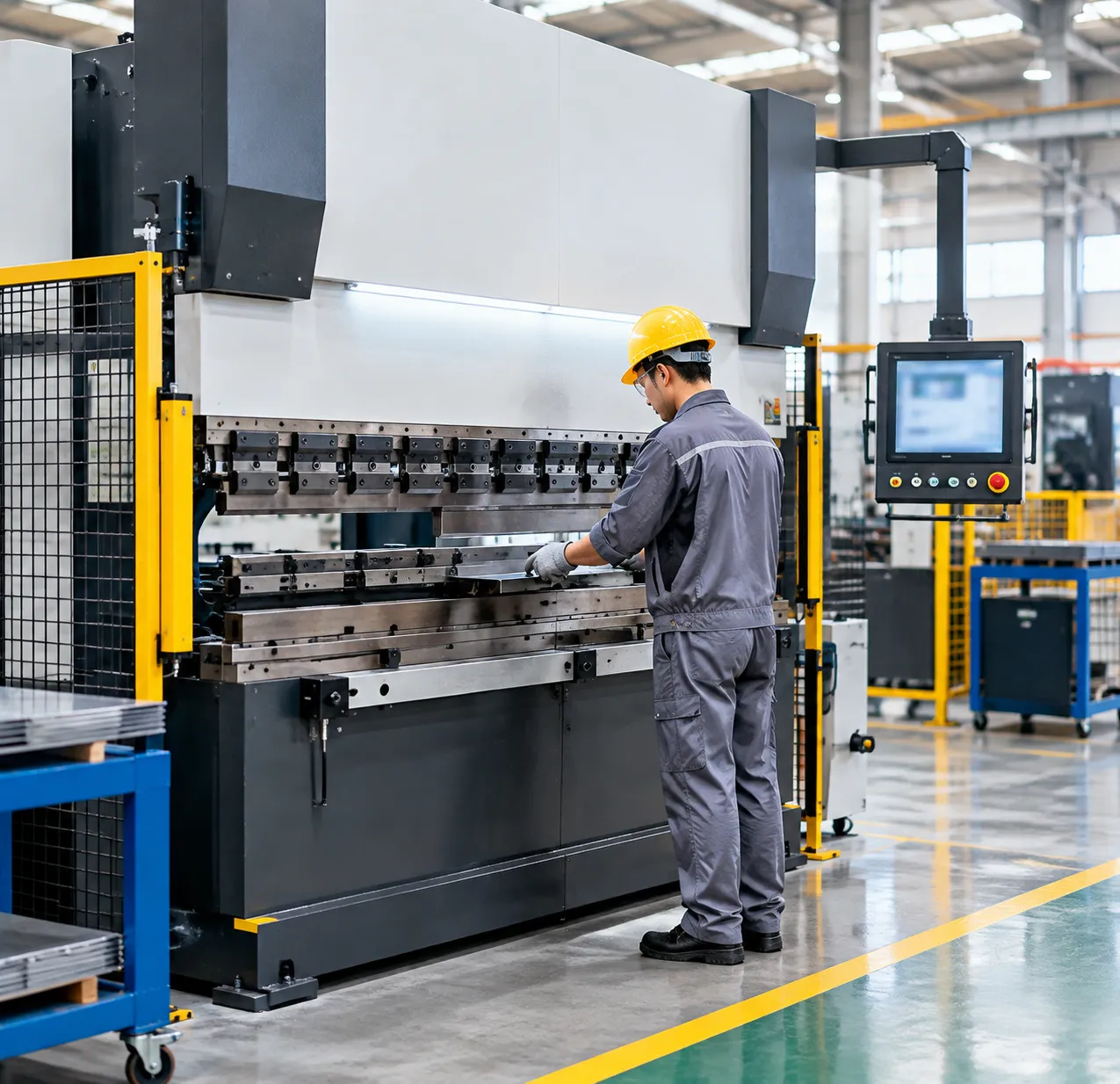
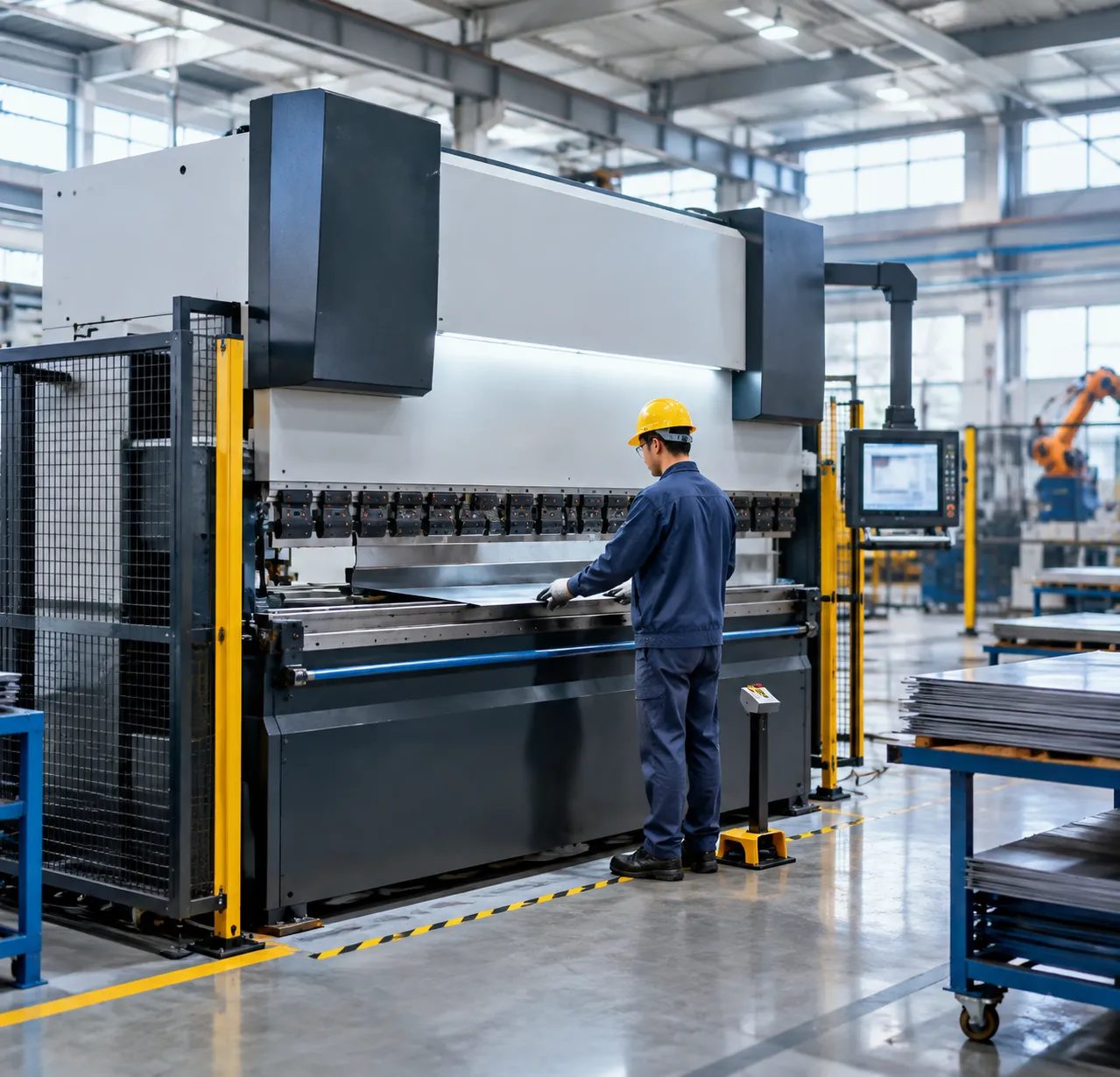
Every mini electric press brake we design focuses on the person running it. Fast setups and daily operator comfort directly impact your small-part output and part consistency.
Universal Tooling Compatibility
Tool changes should take seconds, not minutes. We equip each small electric press brake with precision clamping systems ready for your existing tooling inventory:
-
- Promecam and European Style: Direct fit for standard segmented punches and multi-V dies.
- Amada Quick-Clamping: Push-button and quick-lever mechanical clamping to lock punches instantly without hex keys.
- Segmented Tooling Support: Easy drop-in sections for bending micro-boxes, return flanges, and narrow electronic enclosures.
Built for Daily Work Comfort
Traditional bending requires standing over vibrating, loud machinery all day. Our small electric brake press changes that dynamic on your shop floor:
-
- Seated or Standing Operation: The low-profile frame and adjustable table height let operators run miniature parts comfortably from an ergonomic workbench stool or standing up.
- Whisper-Quiet Working Environment: Operating below 62 dBA, our electric drives eliminate the continuous background drone of hydraulic pumps. Your team stays sharp and focused through long production shifts.
- Full-View Workspace: Open side frames give clear sightlines to the backgauge fingers and workpieces, cutting down on operator strain during micro-part positioning.
High-Speed Safety Without Slowdowns
Running small parts at high speeds demands instant safety response. We integrate premium DSP and Lazersafe optical protection directly into the ram control:
-
- Optical Guarding: Dual-laser beams travel directly beneath the punch tip to track sheet clearance in real time.
- High-Speed Descent: The ram runs at top approach speed and transitions to bending speed just millimeters above the metal surface, keeping your cycle times fast while keeping hands safe.
- Instant Ram Reversal: If an obstruction breaks the laser field, the dual-servo drive halts ram motion in milliseconds, avoiding accidental pinches and scrap parts.
Best Production Jobs for a Small Electric Brake Press
Electronics: Brackets, Chassis, and Busbars
Consumer electronics, power distributions, and IT infrastructure demand microscopic accuracy without surface marring:
Copper and Brass Busbars: Pure electric control delivers exact tonnage across the bend line, preventing material thinning or cracking on high-conductivity busbars.
Server Trays and Chassis: Consistent backgauge repositioning allows rapid multi-step flanging for compact server enclosures.
Component Brackets: Micro-scale brackets bend with sub-millimeter flange consistency, ensuring automated assembly pins line up perfectly every time.
Medical Hardware: Instruments and Stainless Micro-Housings
Cleanroom and medical device production cannot tolerate hydraulic oil mists, leaks, or part contamination:
Surgical Tools and Trays: Our all-electric setup creates an oil-free bending zone suited for food-grade and surgical-grade cleanroom environments.
Stainless Micro-Housings: Precise ram positioning bends thin 304 and 316 stainless sheets down to 0.5 mm without springback inconsistencies.
Implantable Enclosures: Smooth dual-servo descent eliminates shock loads, keeping delicate profiles true to CAD dimensions.
Aerospace Components: Thin Aluminum and Titanium Brackets
Precision aerospace hardware calls for strict angular repeatability and flawless surface finishes:
Avionics Enclosures: High-speed Y1/Y2 synchronization on our servo-electric press brake models holds exact angles across multiple consecutive bends.
Thin-Gauge Aluminum: Soft aluminum alloys bend cleanly without tooling marks or stress fractures along tight bend radii.
Titanium Clips and Shims: Micro-step ram speed control lets tough, springy alloys settle into the die gradually, eliminating material distortion.
Hydraulic vs. Small Electric Press Brake: Real Cost Comparison
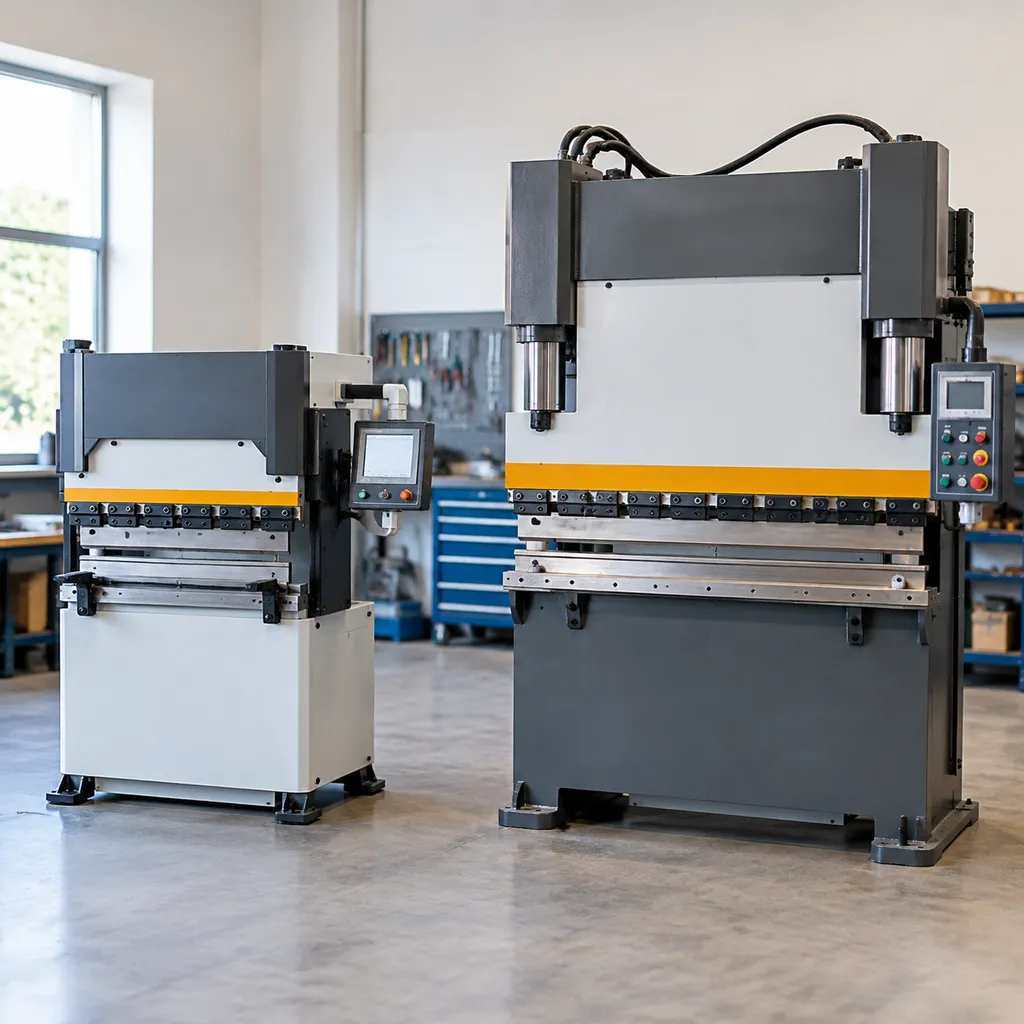
Running standard hydraulics on small parts burns shop profit fast. When you compare an old-school hydraulic unit to our small electric press brake, the operating costs tell the real story across power, maintenance, and cycle speeds.
| Operating Factor | Traditional Hydraulic Press Brake | Small Electric Brake Press |
|---|---|---|
| Power Consumption | Constant motor draw (idling consumes 40–50% power) | On-demand dual-servo power (zero idle draw) |
| Maintenance Routine | Regular fluid swaps, filter changes, seal leaks | Periodic grease point lubrication only |
| Thermal Stability | Oil temperature swings cause angle drift | Consistent positioning with zero hydraulic fluid |
| Cycle Speed | Slower valve switching and ram return | Instant servo ram reversal, up to 35% faster cycles |
Power Draw: Constant Idle Waste vs. On-Demand Servo Power
Traditional hydraulic systems run their main pump continuously, burning kilowatt-hours even while an operator measures a part or steps away from the machine. Our mini electric press brake relies on direct servo-drive actuation that pulls electricity only when the ram moves. When the foot pedal is released, the power draw drops to near zero. While shops needing heavy plate bending might look at hybrid press brakes to curb energy use on higher-tonnage runs, switching to a pure electric setup for small parts cuts baseline electric consumption immediately.
Maintenance: Messy Oil Changes vs. Quick Grease Points
Hydraulic oil creates continuous shop headaches:
Fluid degradation: Costly oil replacements, filter disposal, and hazardous waste fees.
Leaking seals: Valve block weeping, hose replacements, and messy cleanup around the base.
Warm-up delays: Wasting 15 to 30 minutes every morning just to bring hydraulic tanks to stable working temperatures.
With an all-electric press brake, we eliminate the oil tank, valves, and proportional manifolds completely. Daily and weekly upkeep comes down to wiping the guide ways and lubricating direct-access grease blocks.
Cycle Times: Instant Ram Reversal Boosts Output by 35%
Hydraulic valves take milliseconds to shift spool positions, vent pressure, and switch ram direction. Our servo-driven ram reacts instantly. Direct control over acceleration, deceleration, and instantaneous reversal allows this small electric brake press to complete short-bend sequences significantly faster, ramping up daily parts output on high-volume production jobs.
Why Source from a Direct Small Electric Press Brake Supplier
Buying bending equipment directly from the factory floor eliminates dealer markups, communication delays, and mismatched specifications. As a dedicated small electric press brake supplier, we build, assemble, and test every unit under one roof to give precision fabricators total control over machine quality, custom tooling layouts, and after-sales support. Whether paired with existing punch presses or feeding blanks from high-precision sheet metal laser cutting machines, our compact electric units drop straight into lean workflow cells without middleman friction.
Factory-Direct Build Quality and Strict Testing
Every mini electric press brake leaves our assembly floor tuned for immediate high-tolerance production. We do not drop-ship uninspected inventory or outsource quality assurance:
-
- 72-Hour Continuous Cycle Stress Tests: Each servo-electric drive assembly runs uninterrupted multi-cycle dry runs to verify thermal stability, electrical load handling, and drive screw reliability under full pressure.
- Dual-Axis Laser Calibration Checks: We use Renishaw laser interferometers to verify the Y1/Y2 positioning and linear scale repeatability down to ±0.005 mm across the entire bed length.
- Frame Deflection Validation: Bed and ram structures face high-load dial indicator verification to ensure zero angular deflection during peak 25-ton tonnage hits.
Direct Factory Warranty, Global Shipping, and Fast Parts Delivery
Sourcing your small electric press brake for sale directly from us secures reliable lifecycle backing:
-
- Comprehensive Direct Warranty: Complete coverage for core drive components, dual-servo motors, CNC controllers, and optical scales.
- Export-Grade Crating and Global Shipping: Fully assembled machines arrive sealed with moisture barriers in sea-freight reinforced wooden crates, pre-calibrated and wired for rapid plug-and-play installation.
- Direct Wear-Parts Inventory: Replacement planetary roller screws, backgauge finger stops, and electrical modules ship straight from our central factory warehouse to minimize shop downtime.
Frequently Asked Questions About Mini Press Brake Electric Models
What maximum thickness can a 25-ton electric press brake bend in stainless steel?
On our standard 25 ton electric press brake, maximum thickness depends on your bend length and die opening:
-
- Short brackets (under 200 mm): Up to 2.5 mm or 3.0 mm stainless steel using an appropriate V-die (8× to 10× material thickness).
- Mid-length parts (300 mm to 600 mm): Up to 1.5 mm to 2.0 mm stainless steel across standard V-openings.
- Full bed length (up to 800–1000 mm): Recommended for 1.0 mm to 1.2 mm gauge sheet, perfect for thin-gauge chassis and precision housings for electrical enclosures.
How does a mini press brake electric eliminate angle variations from temperature changes?
Conventional hydraulic brakes suffer from thermal drift as hydraulic oil warms up during the shift, changing fluid viscosity and shifting your bend angles. Our mini press brake electric systems eliminate oil completely:
-
- Direct dual-servo drives: Ball screws drive the ram mechanically, delivering identical force from the first bend of the morning to the end of a double shift.
- Closed-loop optical scales: Real-time Y1/Y2 positioning feeds back directly into the CNC, holding ±0.005 mm ram repeatability regardless of shop ambient temperature.
Which tooling styles fit directly onto this small electric brake press?
We design our small electric brake press clamping tables to work with the industry standards you already have in your shop:
-
- European / Promecam style: Standard tang upper punches mount straight into our quick-clamp mechanical or pneumatic holders.
- Universal 2V and single-V die rails: Bottom beds accept standard European slotted dies, self-centering rails, and multi-V blocks.
- Sectional tooling: Pre-split segmented tooling fits directly to bend four-sided boxes and deep return channels without interference.
What electrical hookups and floor space do I need for installation?
Because there are no heavy hydraulic pumps running on massive continuous draw, the infrastructure footprint is minimal:
-
- Power requirements: Configured for standard factory 3-phase connections (220V, 380V, or 480V, 50/60 Hz) on a modest 15A to 20A dedicated breaker.
- Floor space: A standard unit takes up roughly 1.5 m × 1.2 m of actual floor real estate, rolling in on heavy-duty caster/pad leveling assemblies that fit easily into lean fabrication cells.
What are the standard lead times, shipping methods, and warranty terms for machines for sale?
As a dedicated small electric press brake supplier, we manage fulfillment directly from our production floor:
-
- Lead times: In-stock standard configurations ship within 10 to 15 business days; custom backgauge or stroke orders average 4 to 6 weeks.
- Shipping & crating: Every small electric press brake for sale is crated in moisture-sealed, heavy-gauge wooden export crates suitable for sea container or dedicated air/ground freight.
- Warranty & parts: Each machine carries our direct 12-month factory parts warranty, backed by remote CNC diagnostics and off-the-shelf mechanical replacement support.