Formula details
Product Details
Overview
Engineering Architecture: The Pure Electric Advantage
Direct-Drive Belt and Roller Screw Kinematics
Traditional hydraulics rely on fluid dynamics, which introduce lag, seal degradation, and constant leak risks. Our mechanical drive platform utilizes heavy-duty dual servo motors coupled directly to high-load planetary roller screws or reinforced synchronous belt-pulley drive systems:
-
- No Hydraulic Fluid: Completely eliminates oil changes, fluid disposal costs, and leaking seals around the shop floor.
- Instant Mechanical Response: High-torque AC brushless servo motors deliver immediate mechanical force straight to the ram without hydraulic delay.
- Consistent Force Distribution: Dual-axis servo synchronization ensures perfectly balanced tonnage across the full bending length, protecting machine beds and tooling from eccentric loads.
Zero Idle Power Draw: Pure Power-On-Demand
Hydraulic machines waste electrical power the entire shift just idling their pump motors. Our servo drive sheet metal brake operates on true dynamic demand:
| Metric | Traditional Hydraulic Press Brake | Our Servo Electric Motor Press Brake |
|---|---|---|
| Idle Power Draw | Continuous motor run (3 kW – 7.5 kW) | 0 kW (Standby servo drives) |
| Bending Energy Cycle | Constant flow bypass valve waste | Proportional to workpiece resistance |
| Ram Return Cycle | High pump pressure consumption | Regenerative braking energy recovery |
| Average Energy Savings | Baseline standard | Up to 50% – 70% reduction |
The main drives only pull line current during active ram acceleration, pressing, and decompression. The moment the ram stops or waits for sheet repositioning, energy consumption drops straight to near zero.
Thermal Stability and Instant Repeatability
Hydraulic press brakes change their bending angles as hydraulic oil warms up from ambient morning temperatures to afternoon production heat. This thermal expansion forces operators to continually tweak backgauges and ram depth settings.
-
- Zero Warm-Up Cycles: Power on the CNC controller and bend your first part immediately with zero warm-up idle routines.
- No Thermal Drift: Eliminating oil means eliminating thermal viscosity changes. The bottom dead center (BDC) stays rock-solid within ±0.001 mm repeatability all day.
- First-Part Accuracy: Angle targets set in the controller match perfectly on the very first bend, minimizing sheet metal scrap during high-mix production runs.
Servo Electric Motor Press Brake Specifications
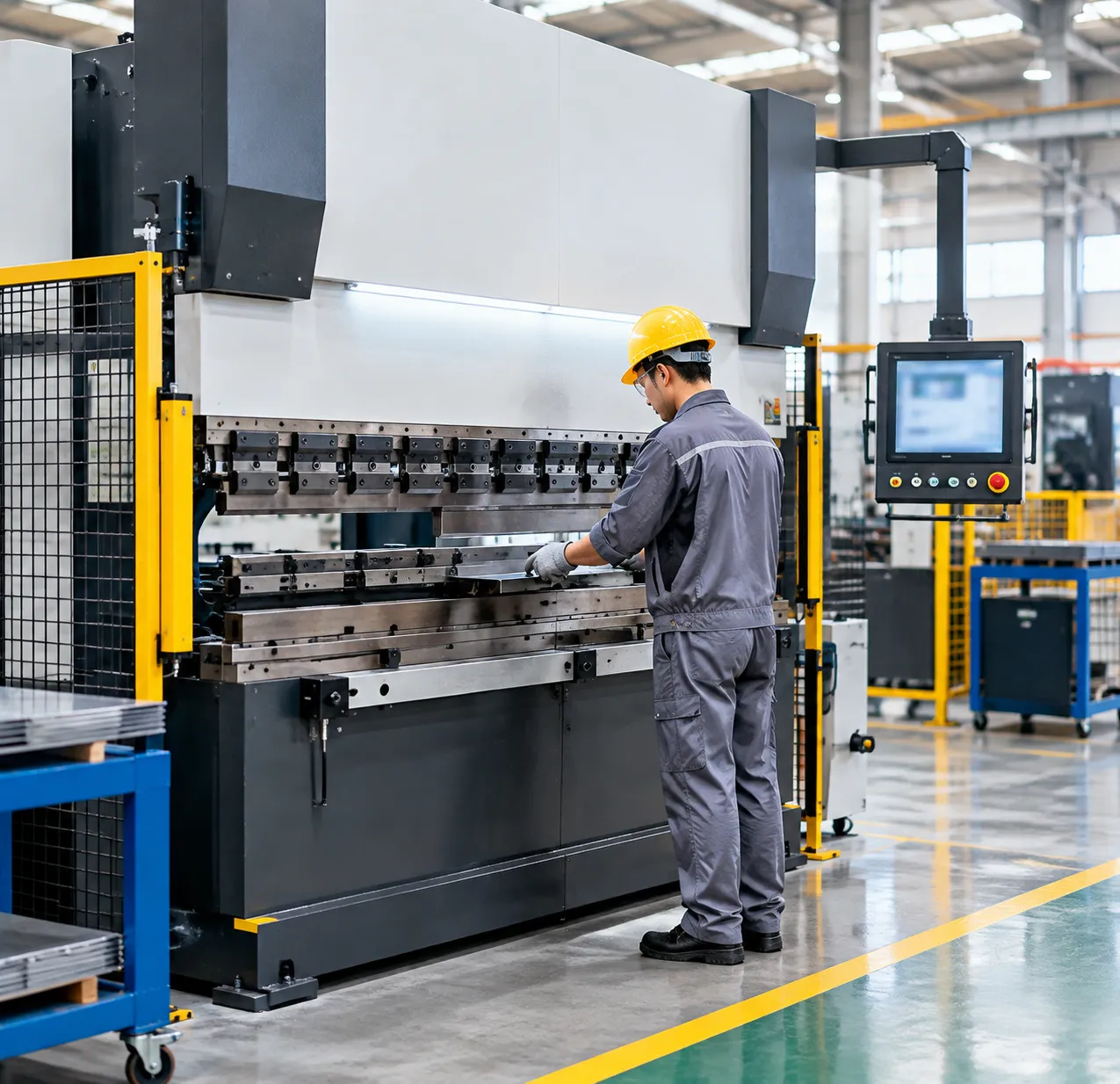
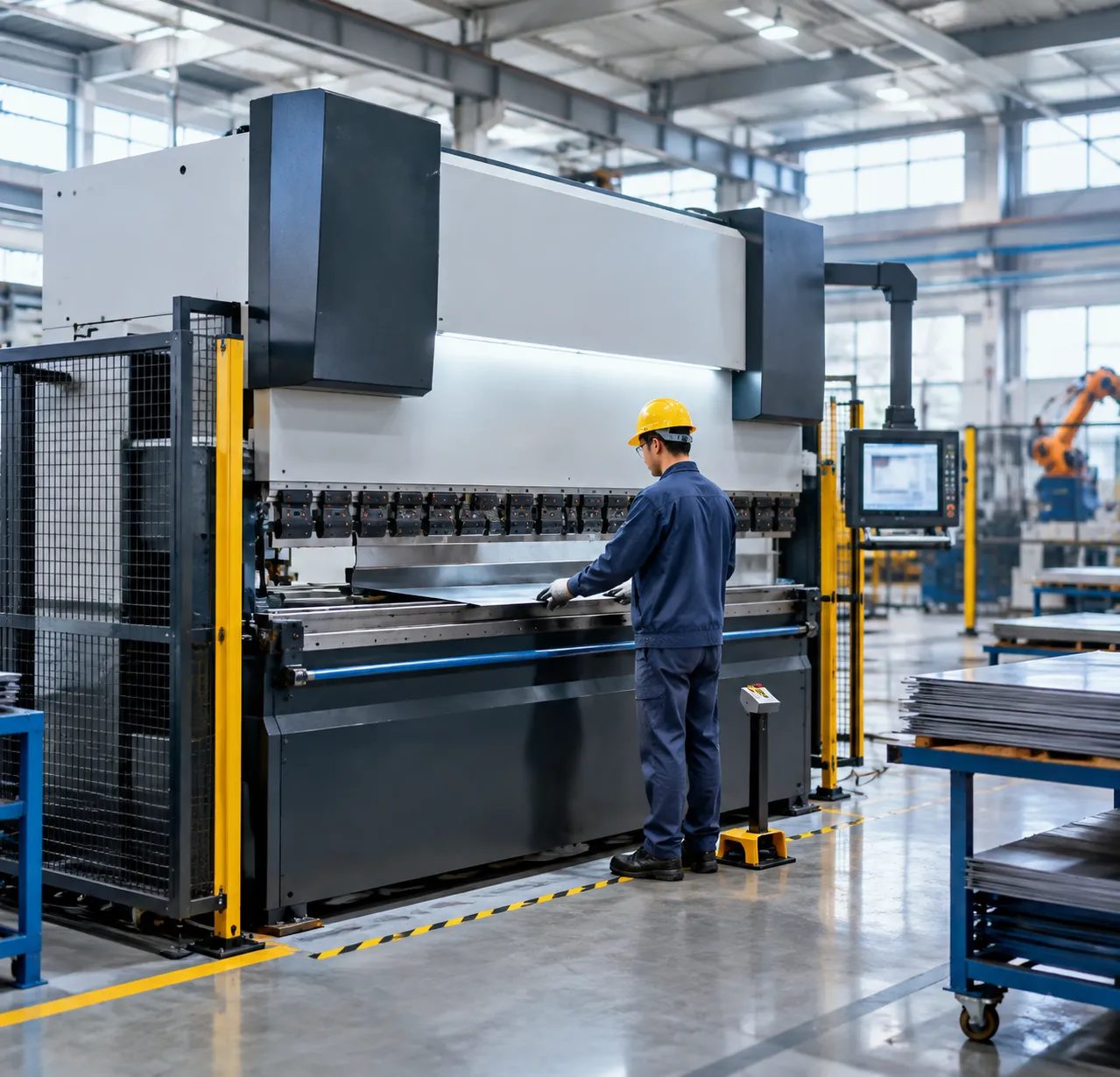
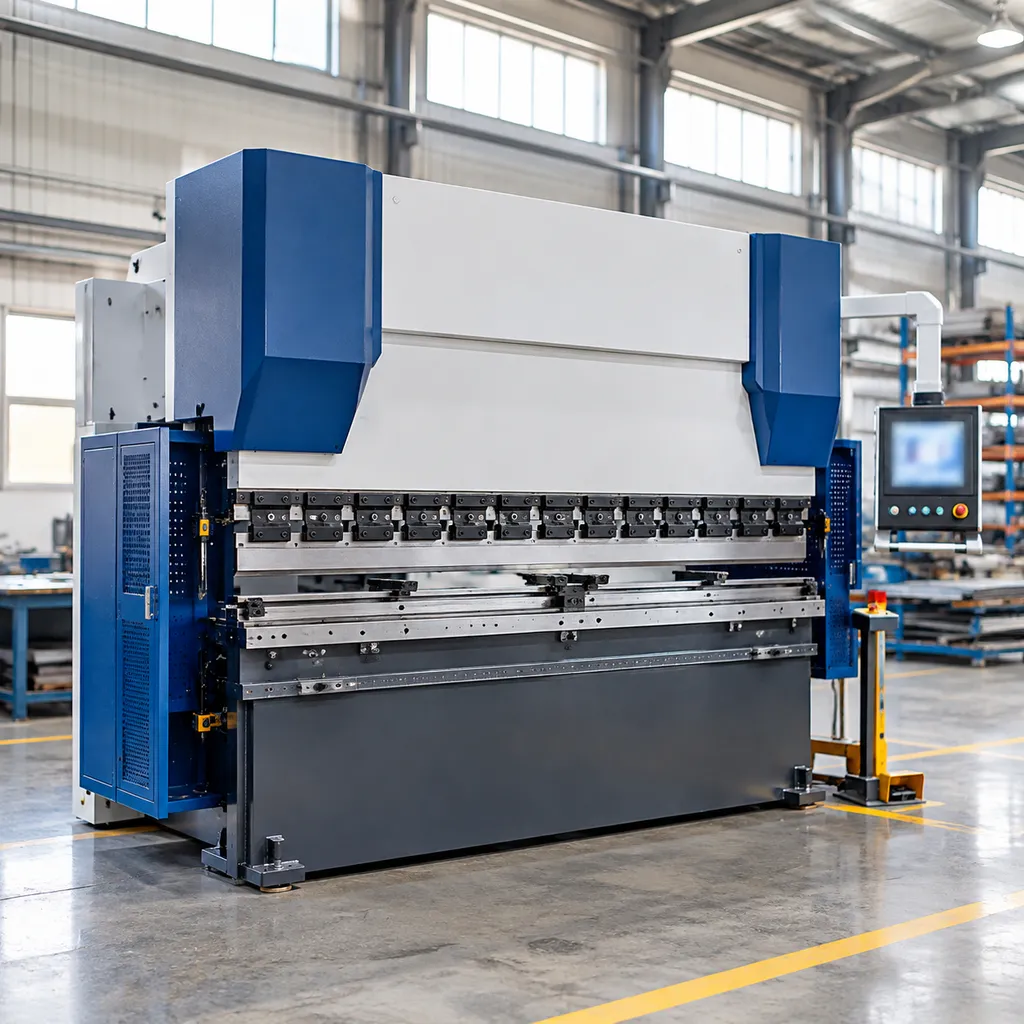
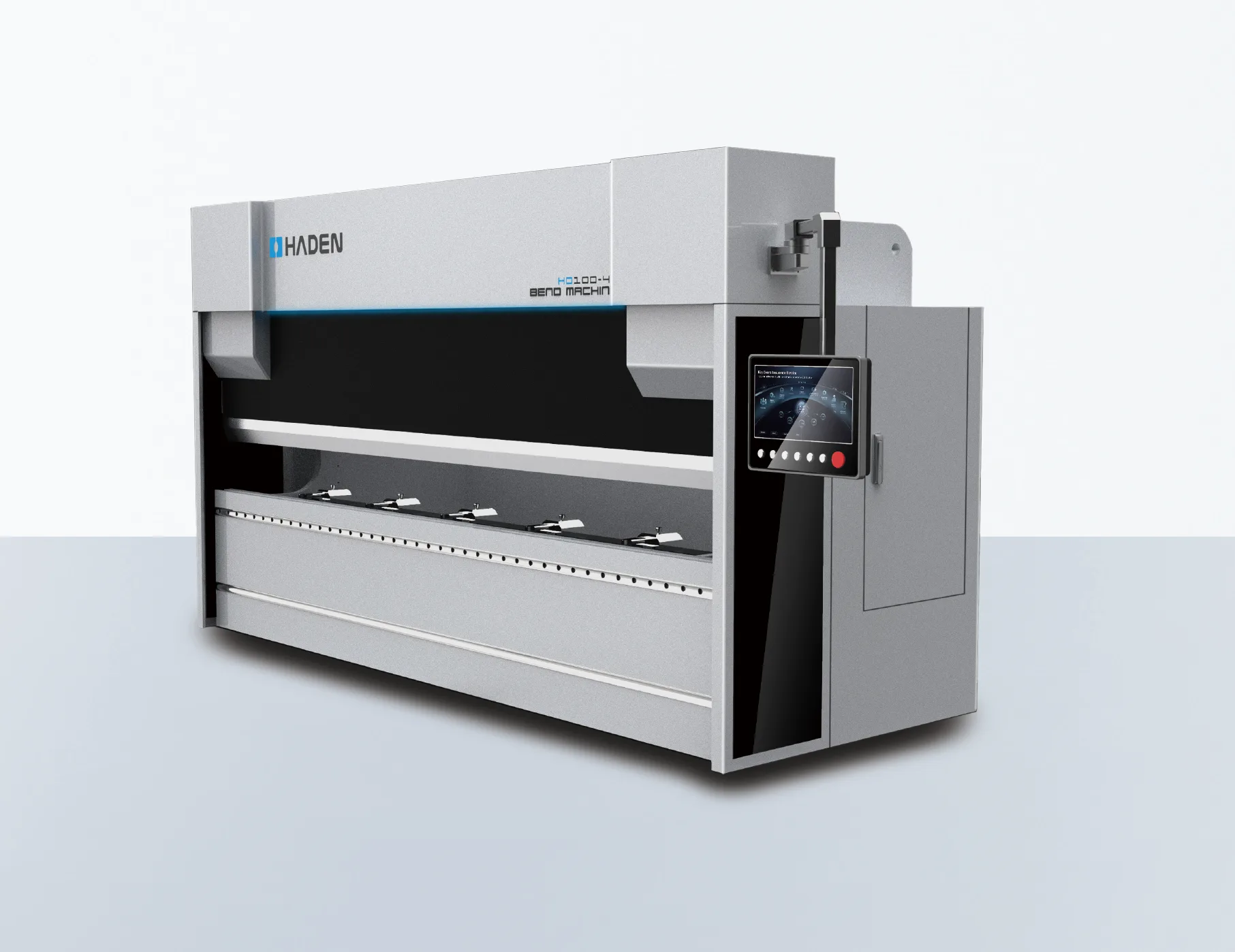
Our servo electric motor press brake lineup to bridge the gap between high-speed production cycles and micrometer-level forming precision. By replacing hydraulic cylinders with direct-drive dual AC servo motors and heavy-duty planetary roller screws, our machines deliver instant torque without the lag, fluid thermal expansion, or pressure drop-off common in conventional equipment.
Explore our full series of servo-electric press brakes designed for high-throughput sheet metal operations.
Standard Tonnage Models and Bed Length Matrix
Our standard manufacturing platform covers small, agile workshop footprint units up to medium-capacity industrial formers. Custom throat depths, extended daylight openings, and custom stroke travels are available directly from our production floor.
| Model Series | Nominal Tonnage (kN) | Bending Length (mm) | Usable Stroke (mm) | Throat Depth (mm) | Standard Axis Setup |
|---|---|---|---|---|---|
| SE-35/1000 | 350 kN (35 Ton) | 1,020 mm | 150 mm | 250 mm | Y1, Y2, X, R |
| SE-50/1600 | 500 kN (50 Ton) | 1,600 mm | 200 mm | 350 mm | Y1, Y2, X, R, Z1, Z2 |
| SE-80/2000 | 800 kN (80 Ton) | 2,050 mm | 215 mm | 410 mm | Y1, Y2, X, R, Z1, Z2 |
| SE-100/2500 | 1,000 kN (100 Ton) | 2,550 mm | 250 mm | 410 mm | Y1, Y2, X, R, Z1, Z2, V |
| SE-130/3200 | 1,300 kN (130 Ton) | 3,200 mm | 300 mm | 450 mm | Y1, Y2, X, R, Z1, Z2, V |
Kinematic Stroke Speeds, Ram Tolerances, and Backgauge Axes
High-precision electric bending depends heavily on rapid ram acceleration and exact positional feedback. We combine optical linear scales with responsive multi-axis drive electronics to maintain precise sheet alignment and fast production cycles.
-
- Ram Positioning Repeatability: ±0.001 mm (0.00004 in) across the Y1 and Y2 axes via dual closed-loop linear encoders.
- Approach Speed: Up to 200 mm/s for accelerated cycle transitions.
- Bending Speed: Micro-adjustable from 0.1 mm/s to 20 mm/s, allowing fine control during sensitive sheet tracking.
- Return Speed: Rapid ram retraction up to 200 mm/s to cut cycle idle times.
- Backgauge Velocity: 500 mm/s on the X-axis and 300 mm/s on the R-axis, driven by dual servo-actuated precision ball screws.
- Axis Capabilities: Standard 4-axis configuration (Y1, Y2, X, R) expandable up to 6-axis (adding independent CNC fingers Z1, Z2) and supplemental Delta-X tooling offset axes.
Electrical Supply and Shop Utility Requirements
Because an all-electric press brake operates purely on demand, utility hookups are simplified compared to traditional hydraulic units.
-
- Main Line Voltage: 3-Phase 380V / 415V / 480V (±10%), 50/60 Hz based on regional electrical grids.
- Connected Load: 7.5 kW to 22 kW maximum peak draw; zero kilowatt consumption while the ram is parked or waiting for parts.
- Pneumatic Requirements: Clean, dry compressed air line at 6 bar (87 psi) exclusively for rapid pneumatic tool clamping packages.
- Operating Footprint: Zero oil sump, zero environmental spill-containment trays, and no cooling water lines required.
For a comprehensive investment assessment covering initial capital expenditure versus operational energy savings, consult our electric press brake cost and price guide.
Core Subsystems and Machine Construction
Stress-Relieved, FEA-Optimized Heavy-Duty O-Frame
We construct each chassis from high-tensile structural steel plates, precision-welded and thermally stress-relieved before final machining.
-
- Closed O-Frame Geometry: Eliminates side-housing throat deflection common in conventional C-frame designs. The tooling remains aligned regardless of tonnage distribution across the bed.
- FEA Finite Element Analysis: Structural stress points are mapped and reinforced to ensure frame deformation remains under 0.02 mm at full load.
- Vibration Dampening: Dense structural mass absorbs dynamic shock loads, preserving ball screw and belt drive life during high-cycle operations.
High-Speed Multi-Axis Backgauge Configurations
Our electric CNC bending machine platforms use high-speed multi-axis backgauge systems driven by premium AC servomotors. Whether bending small brackets or wide panels cut on sheet and tube laser cutting machines, backgauge positioning is instantaneous.
| Axis | Drive Type | Positioning Speed | Stroke Range | Repeatability |
|---|---|---|---|---|
| X-Axis | High-pitch ball screw | Up to 1,000 mm/s | 600 mm – 1,000 mm | ±0.01 mm |
| R-Axis | Precision rack / screw | Up to 350 mm/s | 150 mm – 250 mm | ±0.02 mm |
| Z1 / Z2 | Independent timing belt | Up to 1,200 mm/s | Full bed length | ±0.05 mm |
| X-Prime (Optional) | Independent servo screw | Up to 500 mm/s | ±50 mm delta | ±0.01 mm |
Industrial CNC Control Systems and Software Integration
We equip every servo electric motor press brake with industry-standard graphical CNC controls (such as Delem DA-66S, DA-69S, or ESA S660W).
-
- Real-Time 3D Visualization: Operators visualize bend sequences, collision interference, and tool profiles directly at the 17-inch to 24-inch industrial touchscreens.
- Automatic Bend Sequencing: The controller automatically generates the optimal bend order and calculates correct backgauge positions, reducing setup scrap to zero.
- Factory Network Connectivity: Native support for Industry 4.0 shop floor networks via Ethernet, OPC-UA, and remote IoT diagnostic modules.
Quick-Clamp Tooling Systems and Dynamic Mechanical Crowning
Consistent angle consistency across the full bed length requires rigid tooling clamping and dynamic deflection compensation. As an experienced servo electric press brake supplier, we equip our machines with heavy-duty tooling interfaces designed for fast turnarounds:
-
- Pneumatic or Hydraulic Quick-Clamp Tooling: Supports European, Promecam, and Wila-Trumpf style punches and dies. Operators change punches in seconds via push-button actuation.
- Motorized Mechanical Crowning (V-Axis): A series of CNC-driven precision sliding wedges adjust bed camber dynamically across the bend length. It compensates for minute tool and bed deflections in real time, delivering consistent angles across every millimeter of the workpiece.
- All-Electric Press Brake Tooling Compatibility: Hardened sectional tool sets (42CrMo, 56–60 HRC) match high precision electric bending tolerances for scratch-free, repeatable production runs.
Workpiece Materials and Target Applications
When working with tight-tolerance materials, hydraulic drift is your worst enemy. Our all-electric drives eliminate pressure fluctuations, allowing you to hit exact angles across varied metallic alloys from the first hit to the ten-thousandth.
Precision Thin-to-Medium Sheet Metal Processing Capabilities
Our sheet metal bending solutions handle cold-rolled, hot-rolled, and sensitive surface materials with zero marring and micron-level punch depth control.
| Material Type | Typical Thickness Range | Processing Strengths with Servo Drive |
|---|---|---|
| Aluminum Alloys (5052, 6061) | 0.5 mm – 4.0 mm | Eliminates cracking along bend radiuses through precise ram speed control; leaves no tool marks on anodized faces. |
| Stainless Steel (304, 316) | 0.6 mm – 3.0 mm | Controls springback variation through dynamic dwell pressure and precise digital depth stops. |
| Mild & Galvanized Steel | 0.8 mm – 6.0 mm | Constant torque output delivers fast, uniform hems and sharp 90° bends across wide sheets. |
| Copper & Brass | 0.5 mm – 3.0 mm | Ultra-smooth ram acceleration prevents material stretching and uneven flange distortion on electrical busbars. |
-
- Zero Surface Scuffing: The smooth deceleration curve of our servo drive sheet metal brake reduces sheet whip on reverse bends, keeping pre-painted and polished surfaces flawless.
- Precise Springback Management: Real-time angle corrections let you adapt instantly to slight variations in tensile strength across different metal batches.
- Micro-Flange Bending: High backgauge precision allows you to run narrow, complex step bends down to 3 mm without sheet slip.
Key Industrial Sectors from Electronics to Aerospace Enclosures
As an experienced servo electric press brake manufacturer, we configure machines to meet the tight tolerances of high-spec fabrication:
-
- Electronics and Telecommunications: Server chassis, high-density server racks, heat sinks, and PCB shielding enclosures requiring bend accuracy within ±0.01 mm.
- Medical Equipment: Polished stainless steel surgical carts, diagnostic housings, and laboratory casework that cannot tolerate hydraulic oil contamination.
- Electrical Enclosures and Switchgear: Precision busbars, NEMA-rated junction boxes, and industrial control cabinets with multi-stage hem-and-fold designs.
- HVAC and Kitchen Equipment: Commercial food service counters, cleanroom panels, and acoustic duct baffles demanding long, dead-straight seams.
- Aerospace and Defense: Lightweight avionics boxes, bracketry, and interior airframe panels where repeatability and material traceability are critical.
Whether running standalone cells or tying directly into automated sheet metal production lines, this high precision electric bending setup guarantees your parts drop straight into downstream welding and assembly jigs without costly secondary rework.
Sourcing from a Servo Electric Press Brake China Factory
Direct factory sourcing eliminates trading markups and gives you complete engineering oversight. As a dedicated servo electric press brake manufacturer, we control every stage of fabrication under one roof—from raw steel cutting and heat treating to final kinematic calibration.
In-House 5-Axis Gantry Milling and Structural Machining
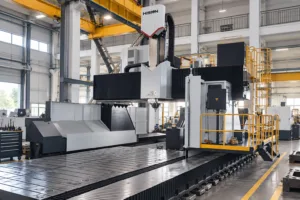
Machine accuracy starts with structural rigidity. We do not outsource our frame machining:
-
- Single-Setup Machining: Heavy O-frames and side housings are machined on our in-house 5-axis CNC gantry mills in a single setup, guaranteeing absolute parallelism across ram guides and bed surfaces.
- Thermal Stress Relieving: Every welded frame undergoes controlled vibratory or thermal stress-relief annealing before milling to prevent structural twisting or deflection over decades of high-cycle production.
- Tight Mechanical Tolerances: Mounting surfaces for roller screws, linear guides, and servo drives are cut within ±0.008 mm tolerances, providing the physical foundation for high precision electric bending.
| Production Step | In-House Standard | Benefit to Fabricator |
|---|---|---|
| Frame Milling | 5-axis single setup (<0.01 mm tolerance) | True axis parallelism, no binding |
| Stress Relief | Vibratory & thermal annealing cycles | Frame maintains zero drift over lifetime |
| Guide Assembly | Direct micrometer-aligned ground rails | Consistent ram repeatability (±0.001 mm) |
Renishaw Laser Interferometer Calibration and 24-Hour Test Runs
Building a dependable electric CNC bending machine requires strict quality gatekeeping. We verify every metric through rigorous quality and testing protocols before equipment leaves our shop floor:
-
- Laser Interferometer Alignment: We use Renishaw multi-axis laser interferometers to calibrate linear positioning, pitch, and yaw on both the Y1/Y2 ram axes and the multi-axis backgauges.
- Full-Stroke Dynamic Load Testing: Machines run non-stop for 24 hours under full dynamic load, tracking thermal drift, servo motor amperage draw, and ball screw kinematics.
- Repeatability Certification: We certify ±0.001 mm ram repositioning and ±0.01 mm backgauge accuracy across continuous 500-cycle dry runs.
OEM Customizations, Paint Schemes, and Robotic Cell Integrations
As an established China electric press brake supplier, we tailor machines directly to your brand requirements and automated workflows:
-
- Turnkey Robotic Integration: We configure dual-cabinet hardware, safety handshake interfaces, and customized communication protocols (EtherCAT, Profinet, or standard I/O) for KUKA, Fanuc, and Yaskawa bending robots.
- Custom OEM Finishes: We match custom RAL paint schemes, brand labeling, and specialized sheet metal enclosures for distributors and private-label partners.
- Application-Specific Tooling Packages: Machines can be outfitted with European, Wila-Trumpf, or custom clamping systems, paired with customized backgauge fingers for complex part geometries.
Total Cost of Ownership: Servo Electric vs. Hydraulic
When evaluating the actual operating expenses over a five-to-ten-year lifecycle, an all-electric press brake delivers clear financial advantages over traditional hydraulic systems. While conventional CNC hydraulic press brakes require constant motor operation and ongoing fluid maintenance, our servo electric motor press brake architecture operates purely on demand, drastically lowering overhead costs from day one.
Significant Reduction in Electric Power Usage
Traditional hydraulic units run their main pump motors continuously, drawing substantial power even while the ram sits completely idle between bends:
-
- On-Demand Power Delivery: The dual servo drive draws electricity only during actual ram movement, eliminating idle energy drain entirely.
- Up to 60% Energy Savings: Operating a pure electric CNC bending machine can cut facility power draw by over half compared to equivalent-tonnage hydraulic options.
- Low Thermal Output: Without hydraulic heat generation, shop air conditioning loads drop, yielding secondary utility savings across the factory floor.
Zero Oil Consumables, Filter Changes, and Valve Maintenance
Fluid-free operation eliminates the most frequent failure points and ongoing maintenance costs associated with sheet metal bending machinery:
-
- No Hydraulic Fluid Overhead: Eliminates recurring expenses for mineral oil refills, oil degradation testing, and hazardous waste disposal.
- Zero Hydraulic Leaks: No blown high-pressure hoses, failing proportional valves, or leaking piston seals to interrupt production.
- Clean Shop Environment: Ideal for cleanroom manufacturing, food equipment fabrication, and precision electronic chassis production.
Faster Cycle Times and High Ram Acceleration Rates
Direct-drive mechanics translate directly into higher parts-per-hour output through rapid positioning and zero valve lag:
-
- Instantaneous Acceleration: Servo motors instantly ramp to high travel speeds without the delay of hydraulic pressure build-up.
- Higher Positioning Speeds: Approach and return speeds operate significantly faster, cutting overall bend cycle times by 30% or more on complex multi-bend parts.
- Micron-Level Repeatability: Zero oil viscosity changes ensure morning parts match afternoon parts perfectly without thermal drift adjustments.
Operating Expense Comparison: 5-Year Outlook
| Operating Factor | Standard Hydraulic Press Brake | Servo Drive Sheet Metal Brake |
|---|---|---|
| Idle Power Consumption | Constant draw (pump motor idling) | Zero (standby current only) |
| Working Power Draw | High baseline continuous load | Dynamic, on-demand proportional draw |
| Hydraulic Oil & Filters | Annual replacement & waste disposal | None (100% oil-free) |
| Thermal Drift Impact | Requires warm-up and angle compensation | Zero warm-up time; stable all day |
| Ram Acceleration | Constrained by hydraulic flow rates | Instantaneous high-torque response |
As a direct servo electric press brake manufacturer, we design these machines to deliver measurable return on investment through reduced utility bills, zero fluid downtime, and maximum throughput per shift.
Safety Systems and International Certifications for Servo Electric Press Brakes
Optical Laser Guards and Physical Interlocks
Every servo electric motor press brake leaving our floor integrates multi-layered active and passive safety measures:
-
- Active Optical Protection: Front-mounted optical laser guards (such as DSP or Lazer Safe systems) continuously track the punch tip in real time. The dynamic muting function allows the upper beam to approach the sheet at rapid advance speeds, automatically slowing to bending speed just 2 mm above the workpiece.
- Rear and Side Physical Enclosures: Interlocked safety enclosures prevent lateral and rear access during machine operation. Opening any access panel triggers an immediate dual-circuit stop to the servo drives.
- Integrated Dual-Channel Safety PLCs: Ram position, drive speed, and foot pedal inputs are cross-checked via redundant safety relays to eliminate risks of uncommanded motion or overshoot.
Regulatory Compliance and Quality Standards
Operating globally requires verified compliance with international industrial safety mandates. We build, test, and document our machines under audited quality management protocols:
| Standard / Directive | Scope of Verification | Factory Implementation |
|---|---|---|
| CE Machinery Directive (2006/42/EC) | Mechanical safety, stopping time, and operator protection | Type-tested safety architecture, optical guard integration, and risk mitigation |
| EMC Directive (2014/30/EU) | Electromagnetic compatibility and line noise suppression | Industrial shielding, dedicated servo line reactors, and clean power filtration |
| ISO 9001:2015 Quality System | Manufacturing consistency, component traceability, and assembly | Documented quality checks spanning frame fabrication to final laser verification |
Our adherence to verified international certifications guarantees that our all-electric bending equipment integrates into production facilities worldwide while meeting local occupational safety regulations from day one.
Global Shipping and Manufacturer Support
As a premier servo electric press brake manufacturer, we build our shipping protocols to withstand rigorous ocean transport and back every machine with direct factory engineering support. We treat logistics with the same precision as our manufacturing floor, ensuring your machine lands ready to run.
Export Ocean Packaging and Rust Protection Standards
Long ocean voyages expose precision machinery to humidity, salt air, and shifting loads. We protect every servo electric motor press brake through strict multi-layer packaging before it leaves our bay:
-
- VCI Rust Inhibitor Barrier: All critical bare-metal surfaces—including precision ground ram guides, roller screws, and backgauge tracks—receive an industrial rust-preventative coat and heavy-duty VCI (Vapor Corrosion Inhibitor) film wrapping.
- Multi-Layer Vacuum Sealing: The entire machine is enclosed in thick, vacuum-sealed barrier film with integrated industrial desiccants to eliminate condensation.
- Reinforced Rigging: For Open-Top or Flat-Rack containers, we weld custom steel wheel chocks and use cross-braced turnbuckle lashing to fix the frame directly to the container floor, preventing transit movement.
- Solid Wooden Casing: Tooling, accessories, and CNC consoles travel in ISPM 15 heat-treated, fumigated plywood crates designed for overhead crane or heavy forklift handling.
Warranty Coverage, Remote IoT Diagnostics, and Spare Parts Supply
Buying directly from a servo electric press brake China factory comes with full accountability. We maintain a responsive global service network to maximize uptime across all shifts:
| Support Pillar | Factory Standard Specification |
|---|---|
| Standard Warranty | Comprehensive 24-month warranty covering structural components, servo motors, drives, and CNC controllers. |
| Remote IoT Diagnostics | Real-time secure Ethernet connection enables our engineers to analyze servo alarms, inspect PLC ladder logic, and tune bending parameters remotely. |
| Spare Parts Availability | Critical components—such as servo drive belts, encoder cables, and optical safety sensors—ship via expedited international air courier within 24 to 48 hours. |
| Field Service & Commissioning | Comprehensive remote commissioning support or on-site engineer dispatch for mechanical installation, tooling setup, and operator training. |
Every servo drive sheet metal brake ships with complete wiring schematics, detailed spare parts documentation, and lifetime access to our factory technical support team.
Frequently Asked Questions (FAQs)
What maximum sheet thickness can a servo electric press brake handle?
Pure electric systems excel at thin-to-medium gauges. Most of our production runs handle mild steel and aluminum from 0.5 mm up to 6.0 mm (0.020" to 0.236"), and stainless steel up to 4.0 mm. For thicker plate bending that requires extreme tonnages over 250 tons, we recommend looking into heavy-duty hybrid press brakes to handle the structural load without overworking electric ball screws.
Can an electric servo press brake perform bottoming and coining?
We design our all-electric machines primarily for precision air bending. While bottoming is possible within the rated machine tonnage, true coining requires 5 to 8 times more force than air bending and can cause mechanical shock to roller screws and belt drives. Air bending delivers repeatable tolerances within ±0.2° using our multi-axis CNC crowning, making high-tonnage bottoming unnecessary for modern tight-tolerance work.
How do we handle machine commissioning and training overseas?
As an experienced servo electric press brake manufacturer, we make international deployment seamless:
Pre-shipment video run-offs: We run your exact bending profiles and test parts before the unit leaves the floor.
Remote IoT commissioning: Our engineers connect directly to the CNC via Ethernet to assist your shop floor technicians during setup.
On-site dispatch: We send factory-trained technicians to your facility for anchoring, calibration, and complete operator training upon request.
What is the typical production lead time from your factory?
Standard tonnage configurations (35-ton to 100-ton models with 4-axis backgauges) carry a standard build window of 25 to 35 working days at our factory. Highly customized frames, specialized European quick-clamp tooling configurations, or non-standard bed lengths generally ship within 45 to 60 days.
Can this electric brake be paired with robotic bending cells?
Yes. Our pure electric sheet metal brake systems feature open architecture controllers that integrate directly with KUKA, FANUC, and Yaskawa robots using fieldbus industrial networks (EtherCAT, Profinet, or standard digital I/O). For automated part handling and continuous lights-out fabrication, we routinely supply complete robotic panel bending cells and automated brake configurations tailored for unmanned operation.