
4-Roll Plate Rolling Machines for Precision Plate Forming
Haden 4-roll plate rolling machines combine hydraulic clamping, controlled side-roll positioning, and CNC operation for efficient pre-bending and cylindrical or conical forming. Configure the machine around your plate thickness, working width, material strength, target diameter, and production requirements.
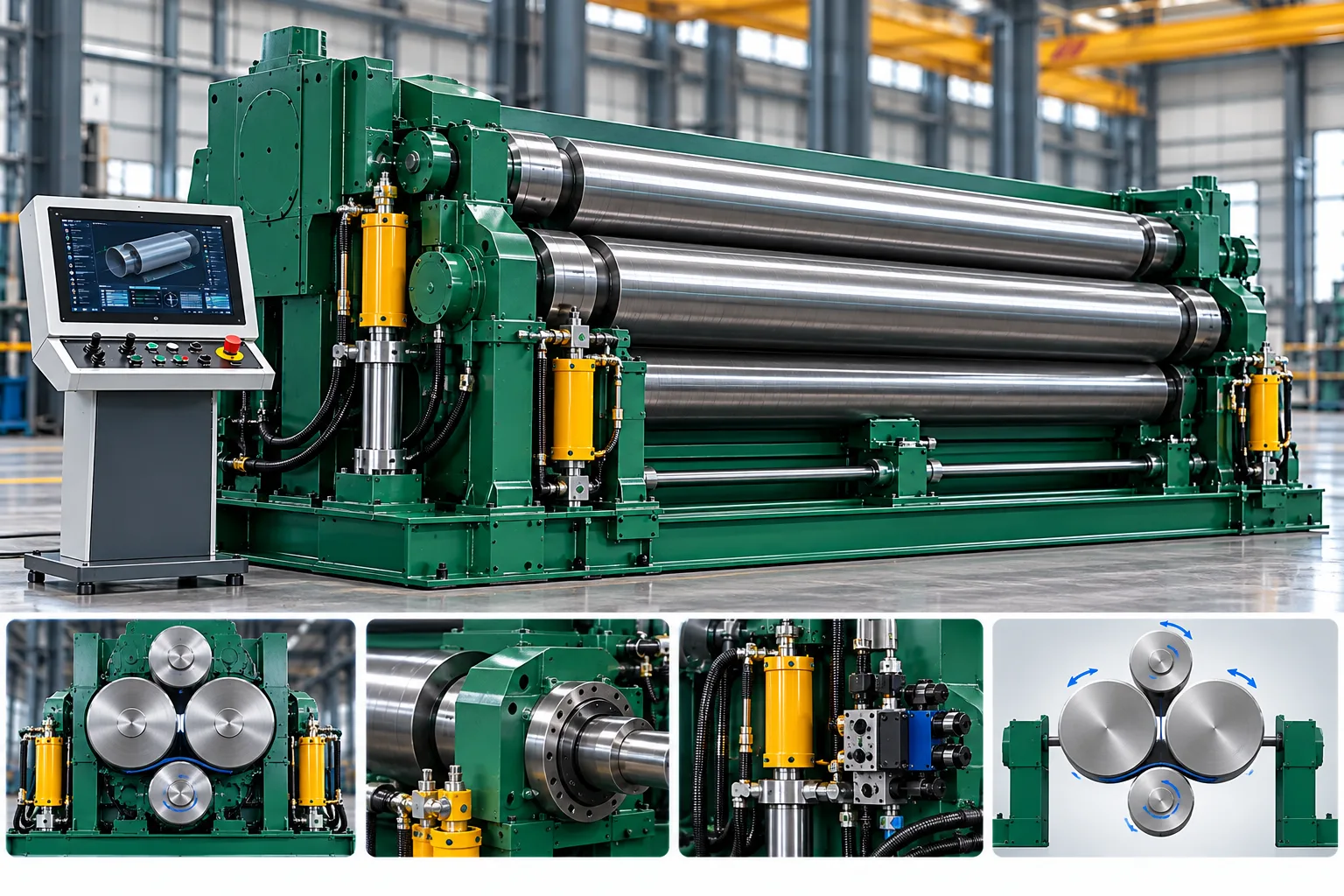
Hydraulic Pre-Bending, CNC Control & Flexible Plate Forming
Machine capacity and configuration depend on material strength, plate thickness, working width, forming diameter, and application requirements.
High-Speed Plate Rolling & Exceptional Precision
Haden 4-roll plate rolling machines adopt rigorous manufacturing standards to ensure every machine achieves industrial-grade, high-precision performance. For complete metal fabrication workflows, combine them with our advanced laser cutting machines, including high-precision sheet metal laser cutting machines and versatile tube laser cutting machines.
Minimal Flat Edge
Double pre-bending technology reduces unbent flat end remnants to 1.5–2× plate thickness for exact cylinder geometry.
High Speed Plate Rolling
Single-pass double pinch mechanism eliminates plate flipping, boosting overall rolling efficiency by up to 50% vs. 3-roll equipment.
Plate Bending Capacity
Heavy-duty plate bending capacity handles material thicknesses from 6mm to 150mm with working widths reaching 6,000mm.
Rolling Precision
Axial hydraulic synchronization control maintains ±0.05mm repeat positioning for unmatched multi-pass rolling precision.
How a Four-Roll Double-Pinch Plate Rolling Machine Works
Haden four-roll plate rolling machines combine a fixed driven top roll, a hydraulically elevated lower pinch roll, and two independently controlled side rolls. This arrangement keeps the plate securely clamped while both edges are pre-bent and the shell is rolled in one loading cycle.
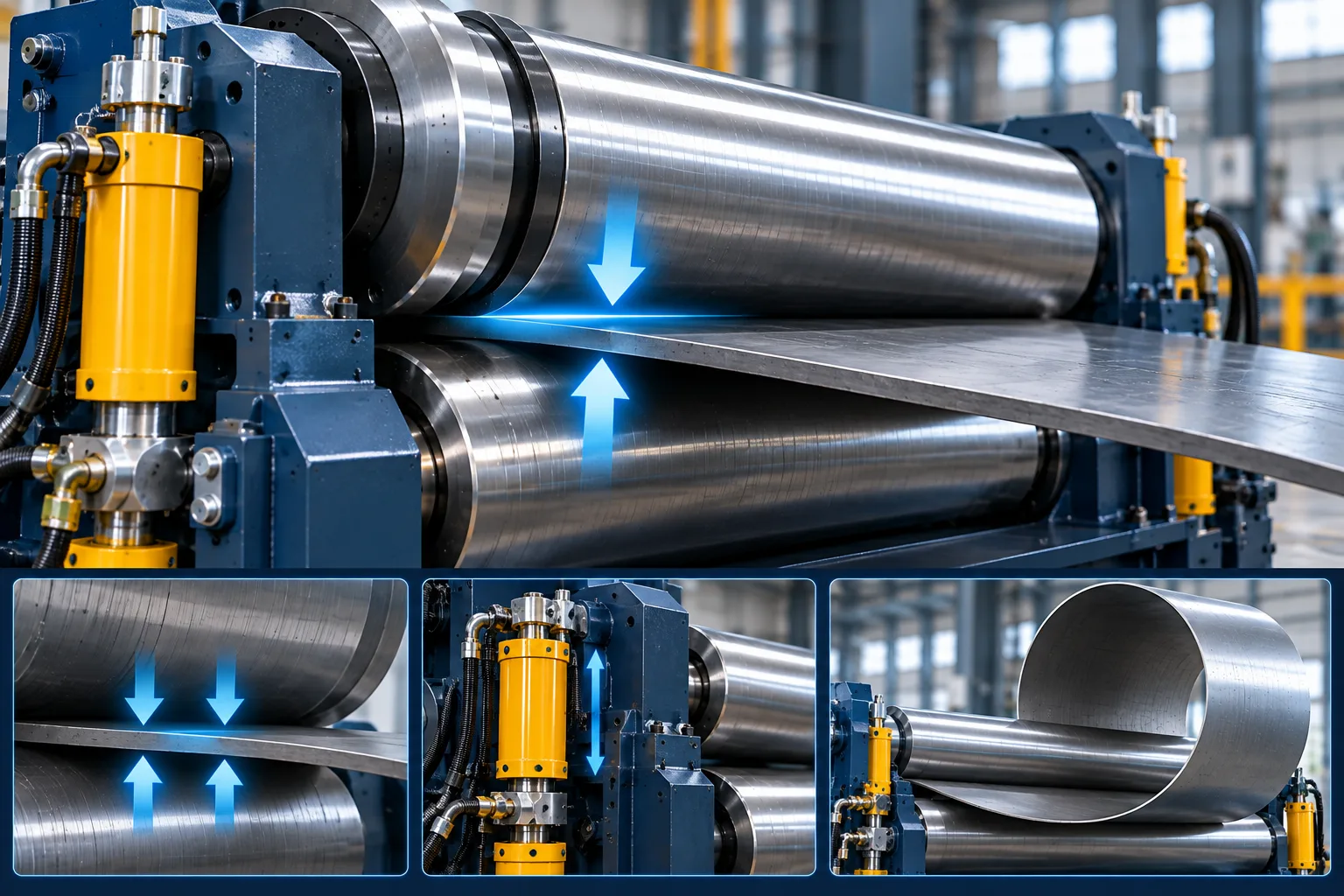
Secure Pinch Control Eliminates Plate Slippage
Continuous hydraulic pressure between the upper and lower rolls creates a controlled feeding point. The plate remains referenced throughout the cycle, improving rolling precision and reducing operator correction.
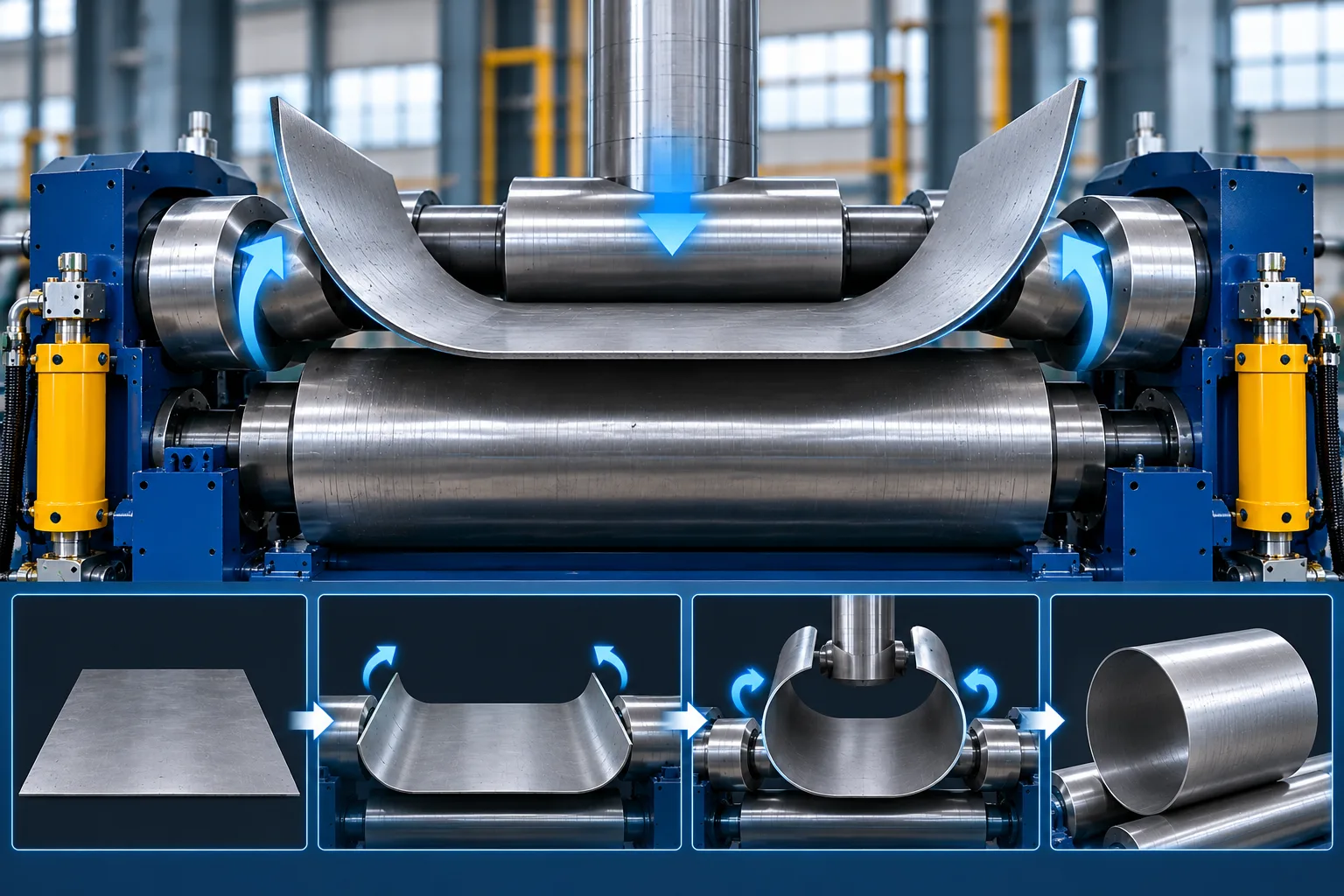
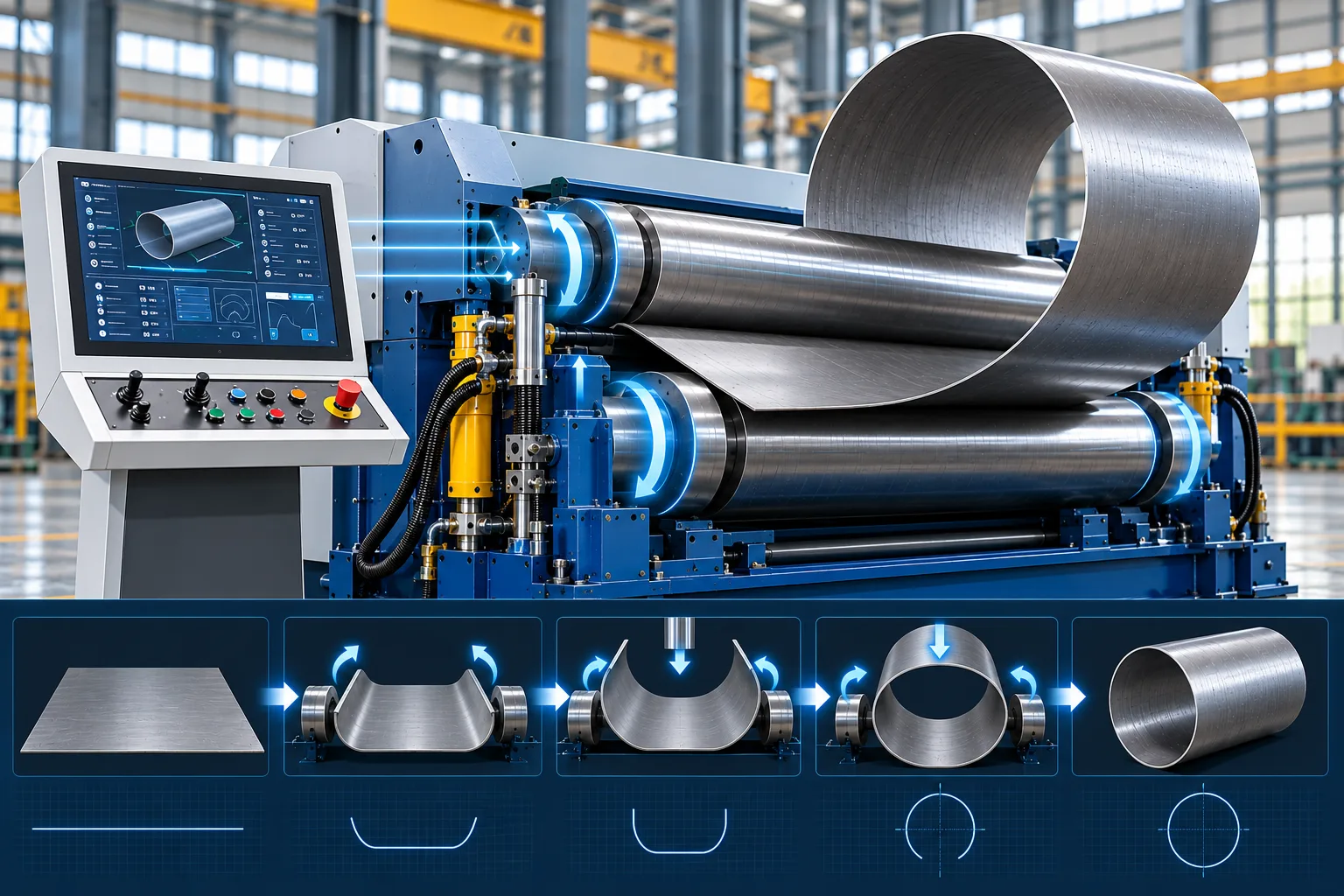
Single-Loading Cycle
Complete two-edge pre-bending and final rolling without turning the plate, improving safety and throughput.
Minimal Flat Ends
Controlled side-roll positioning reduces unbent straight edges and lowers secondary trimming requirements.
Automation Ready
Ideal for CNC recipes, cone rolling, overhead supports, side supports, and automated material handling cells.
Compare 3-Roll and 4-Roll Plate Rolling Methods
Send your plate grade, thickness, working width, target diameter, and production requirements. Haden engineers can help evaluate which roll configuration better fits your forming application.
Application-based configuration review
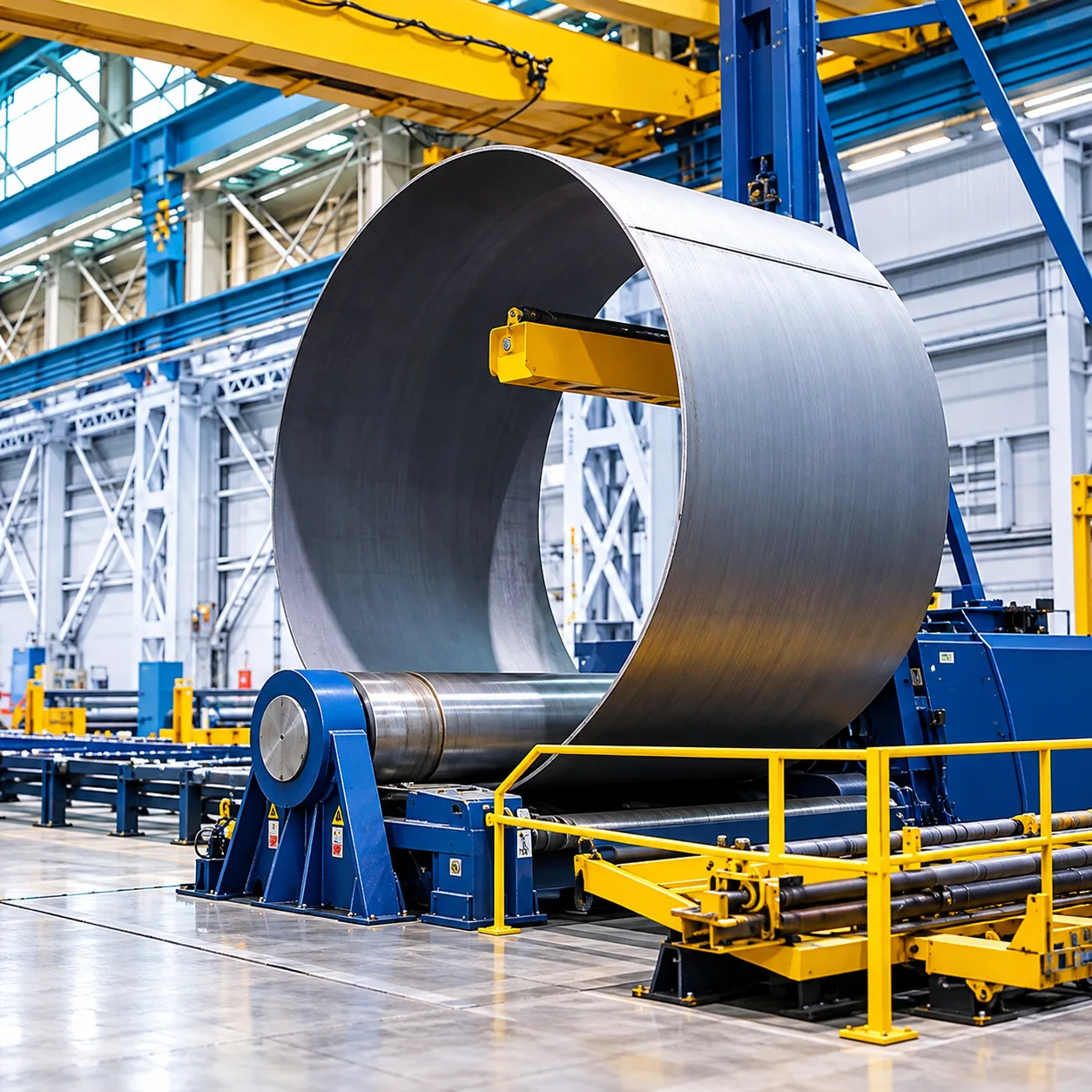
Industrial 4-Roll Plate Rolling Machine Lineup
Explore Haden 4-roll plate rolling configurations for light and medium plate forming, CNC-controlled production, and demanding heavy-duty applications. Machine selection can be matched to plate thickness, working width, material strength, target diameter, and production requirements. Explore our complete range of industrial fabrication machinery .
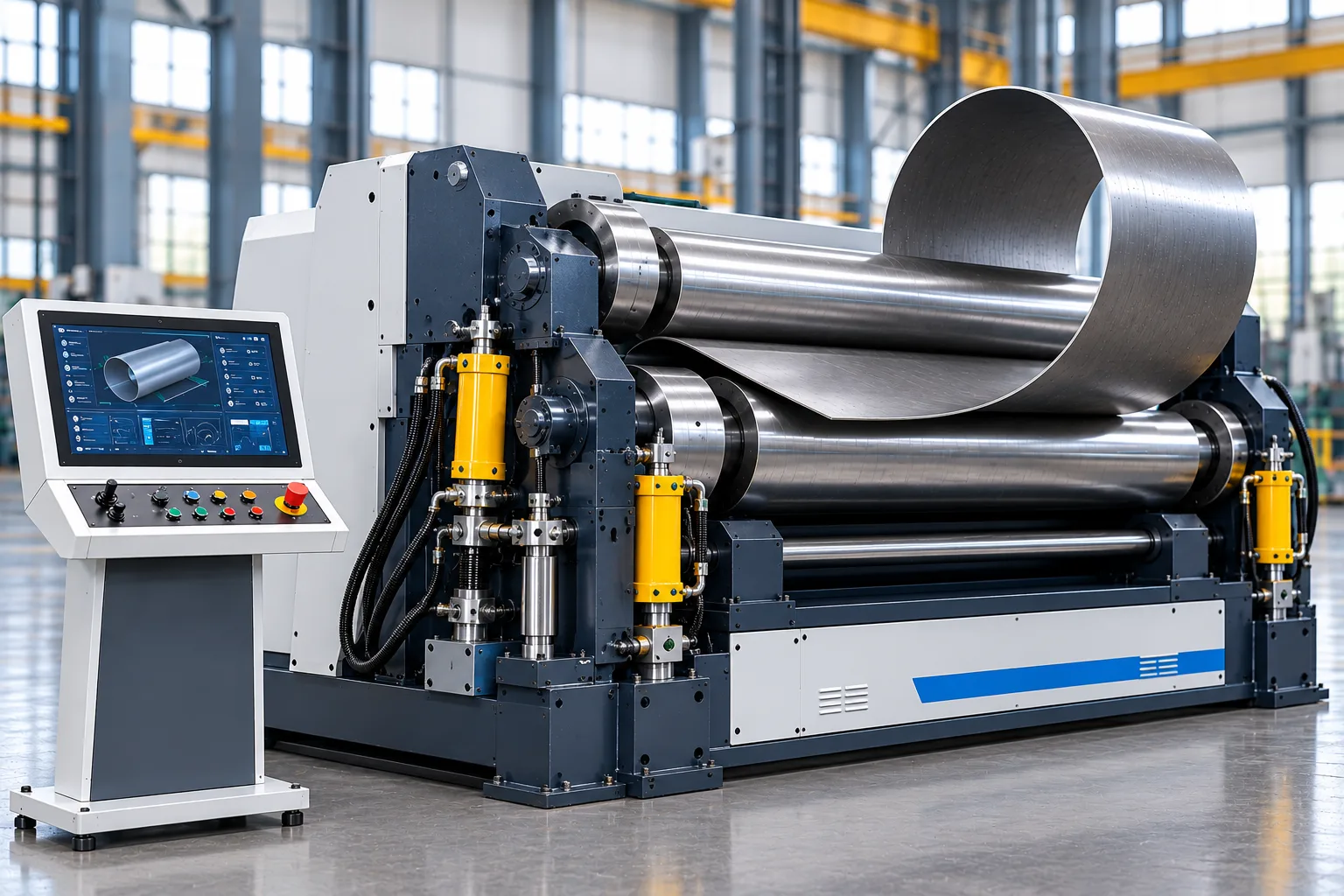 Light & Medium Duty
Compact High-Precision 4-Roll Plate Rolling Machine
Designed for thin and medium plate forming applications requiring controlled plate positioning, hydraulic clamping, and efficient pre-bending and rolling.
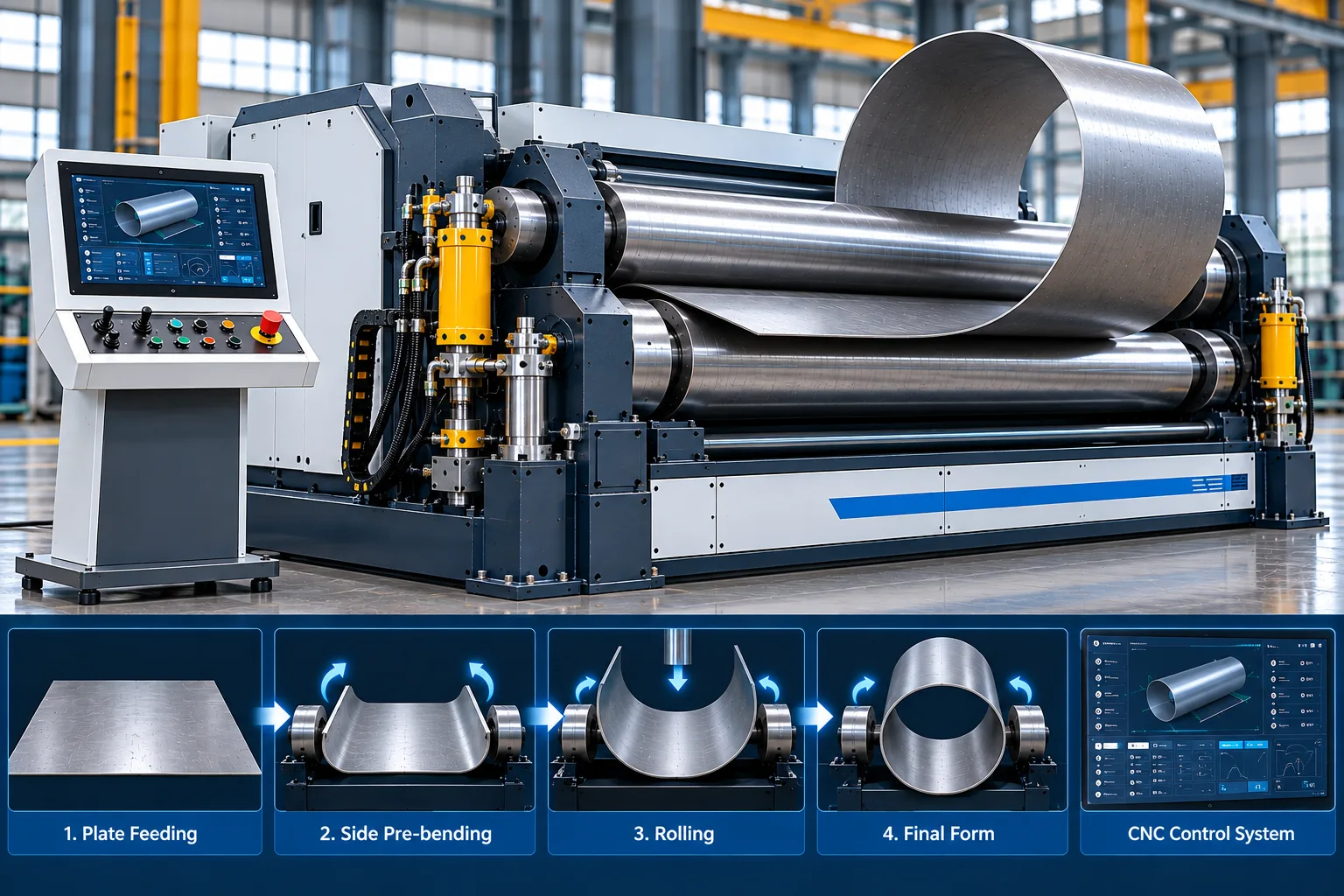 CNC Automatic
 4-Roll Plate Rolling Machine
CNC-controlled plate rolling configuration for applications requiring programmable roll positioning, repeatable forming sequences, and higher levels of production automation.
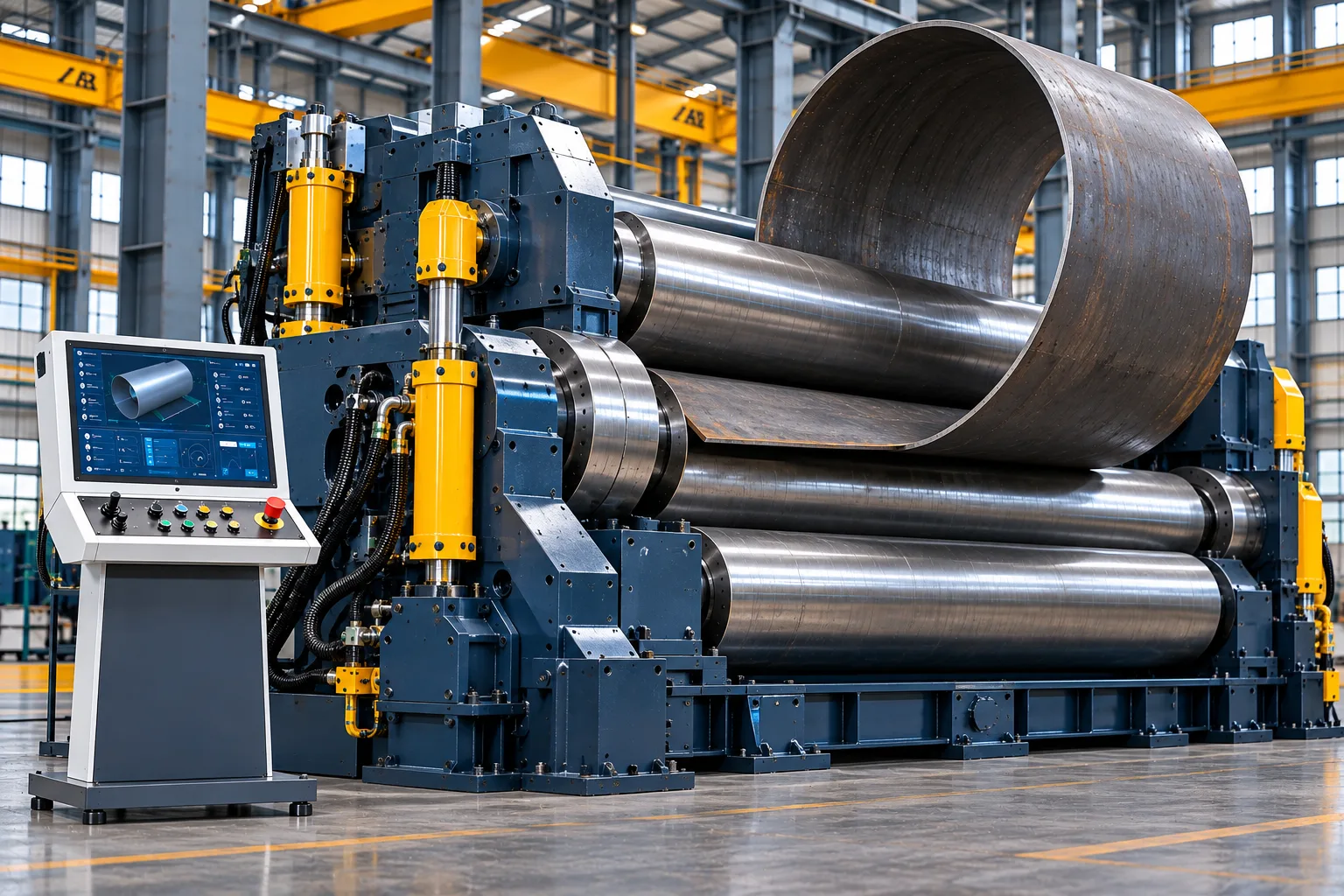 Heavy-Duty Series
Heavy-Duty CNC 4-Roll Plate Rolling Machine
Heavy-duty configuration for thick plate forming, pressure-vessel shells, large cylindrical sections, and other demanding industrial plate rolling applications.
Four Roll Plate Rolling Machine Specifications & Selection Matrix
Selecting the optimal plate rolling machine requires accurate evaluation of plate thickness, bending width, material yield strength, and minimum shell diameters. Haden provides this comprehensive specification guide and selection matrix to empower engineers, plant managers, and procurement specialists to select the ideal machine for demanding industrial fabrication. Complementing our bending line, we also offer high-precision laser cutting machines.
Essential Criteria for Plate Roller Selection
Choosing an industrial 4-roll plate bender involves more than analyzing maximum plate width and nominal thickness. Because a double pinch plate roll clamps the sheet firmly between the top and bottom rolls, side rolls can articulate upward to execute precise double-end pre-bending. This method practically eliminates flat ends on rolled cylinders and ensures superior roundness tolerances.
Max Pre-Bending Capacity
Pre-bending demands higher hydraulic tonnage than secondary rolling passes. Always select equipment based on maximum pre-bending plate thickness rather than maximum rolling limits.
Top Roll Diameter & Deflection
The top roll diameter dictates the smallest rollable cylinder diameter. Haden incorporates dynamic hydraulic deflection compensation to maintain strict parallelism across the full bed length.
Multi-Axis CNC Automation
Proportional hydraulic synchronization and multi-axis CNC systems enable single-pass automated rolling of complex geometries, cones, multi-radius arcs, and heavy pressure vessels. For pre-rolling sheet preparation, integrate our high-performance sheet metal laser cutting machines.
| Model Specification | Max Bending (mm) | Max Pre-Bending (mm) | Max Width (mm) | Top Roll Dia. (mm) | Motor Power (kW) | Control System |
|---|---|---|---|---|---|---|
| HPR4-0820 | 8 mm | 6 mm | 2,050 mm | 210 mm | 11 kW | 4-Axis CNC Auto |
| HPR4-1225 | 12 mm | 10 mm | 2,550 mm | 270 mm | 15 kW | 4-Axis CNC Auto |
| HPR4-1630 | 16 mm | 13 mm | 3,050 mm | 310 mm | 18.5 kW | Multi-Axis Touchscreen |
| HPR4-2030 | 20 mm | 16 mm | 3,050 mm | 360 mm | 22 kW | Multi-Axis Touchscreen |
Yield Strength Calculations & Bending Capacity Scaling
All capacity values listed in our 4 roll bending capacity table are calculated based on standard carbon steel with a yield strength of 245 MPa (36,000 PSI). When rolling higher-yield materials such as stainless steel (304/316L) or high-strength structural alloys (Q355B, Hardox), required bending torque and hydraulic clamping forces increase proportionally.
- Carbon Steel (Yield 245 MPa): 100% Rated Machine Capacity
- Stainless Steel (Yield 310 MPa): Reduce Max Plate Thickness by ~20%
- High-Yield Alloy (Yield 450+ MPa): Custom Hydraulic & Drive Sizing Required
- Cone Rolling Operations: Reduce Max Bending Thickness by ~30–50%
Heavy-Duty Architecture & Hydraulic Synchronization
Haden four roll plate rolling machine designs integrate world-class hydraulic and mechanical components to ensure long-term stability and minimal downtime during continuous heavy production. Precise hydraulic synchronization is critical for maintaining side roll parallelism and guaranteeing repeatable bending accuracy. For tubular structural components, consider our specialized tube laser cutting machines.
Hydraulics & Servo Valves
Powered by Rexroth or Vickers proportional valves and variable-displacement hydraulic pumps. Digital linear encoders maintain side roll parallelism within ±0.05 mm across full working length.
Intelligent CNC Control
The multi-axis CNC system automatically calculates optimal bending curves and multi-pass sequences based on material yield strength, plate thickness, and target diameter.
Micro-Adjustment Crowning
Integrated hydraulic roll crowning mechanisms actively counteract physical roll deflection under full clamping pressure, ensuring uniform cylinder contact and straight seam alignment.
Need Custom Plate Rolling Machine Specifications?
The Haden engineering team configures custom four-roll plate bending machines around material strength, plate thickness, working width, target diameter, forming geometry, and automation requirements.
Industrial Applications and Field-Proven Use Cases
Haden four roll plate rolling machines deliver exceptional precision and high-volume productivity across critical heavy industries worldwide. Engineered with advanced hydraulic double pinch geometry, our machinery seamlessly handles high-yield steel, aluminum, and specialized alloys to produce flawless cylindrical, conical, and complex curved workpieces.
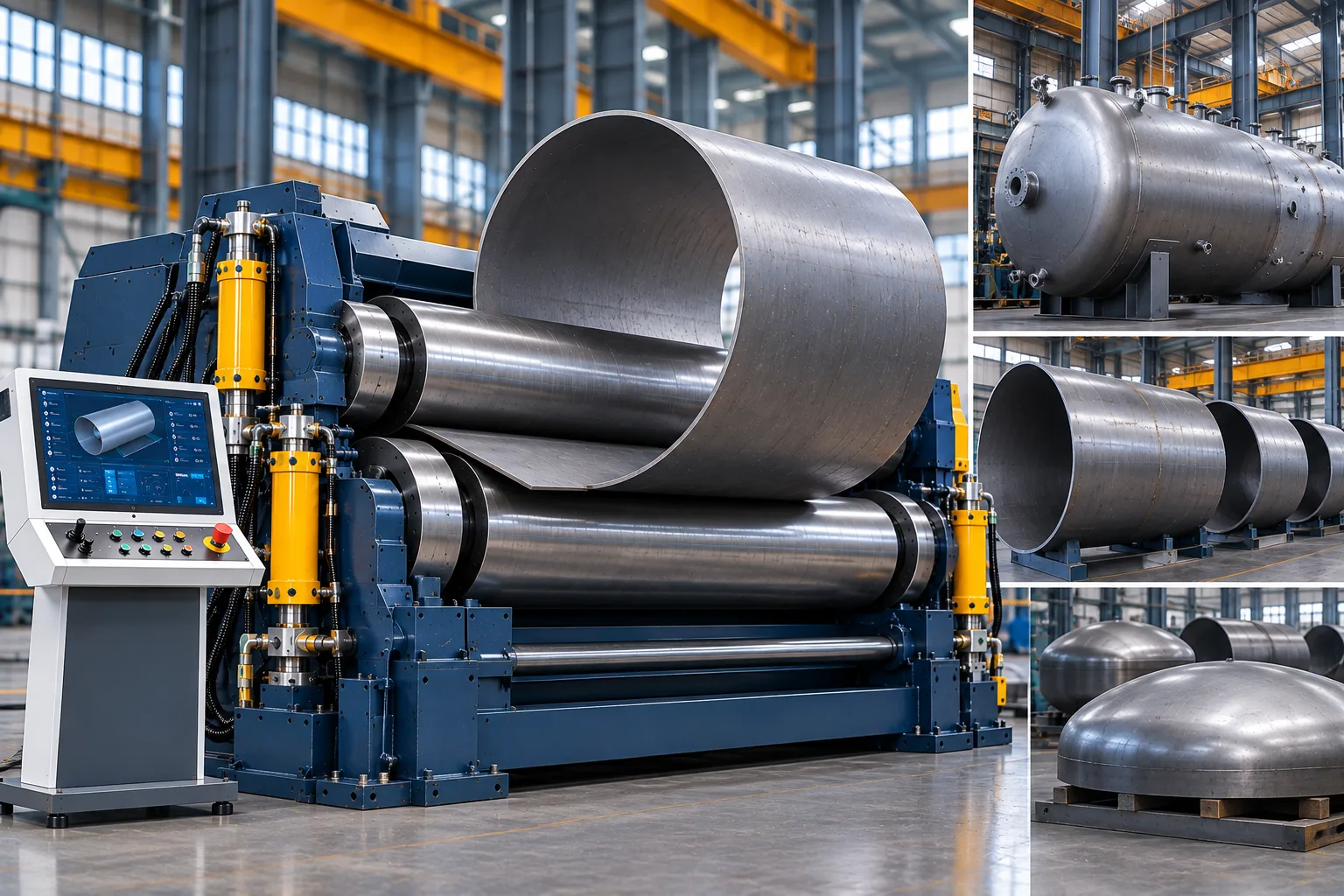
Pressure Vessel & Tank Fabrication
Achieve controlled roundness during pressure vessel cylinder forming. Four-roll hydraulic clamping and pre-bending support the production of tanks, vessel shells, boilers, and other cylindrical components.
- ✓ Pre-bending: Controlled forming of plate ends
- ✓ Cylindrical forming: Consistent shell geometry
- ✓ Application: Tanks and pressure vessel shells
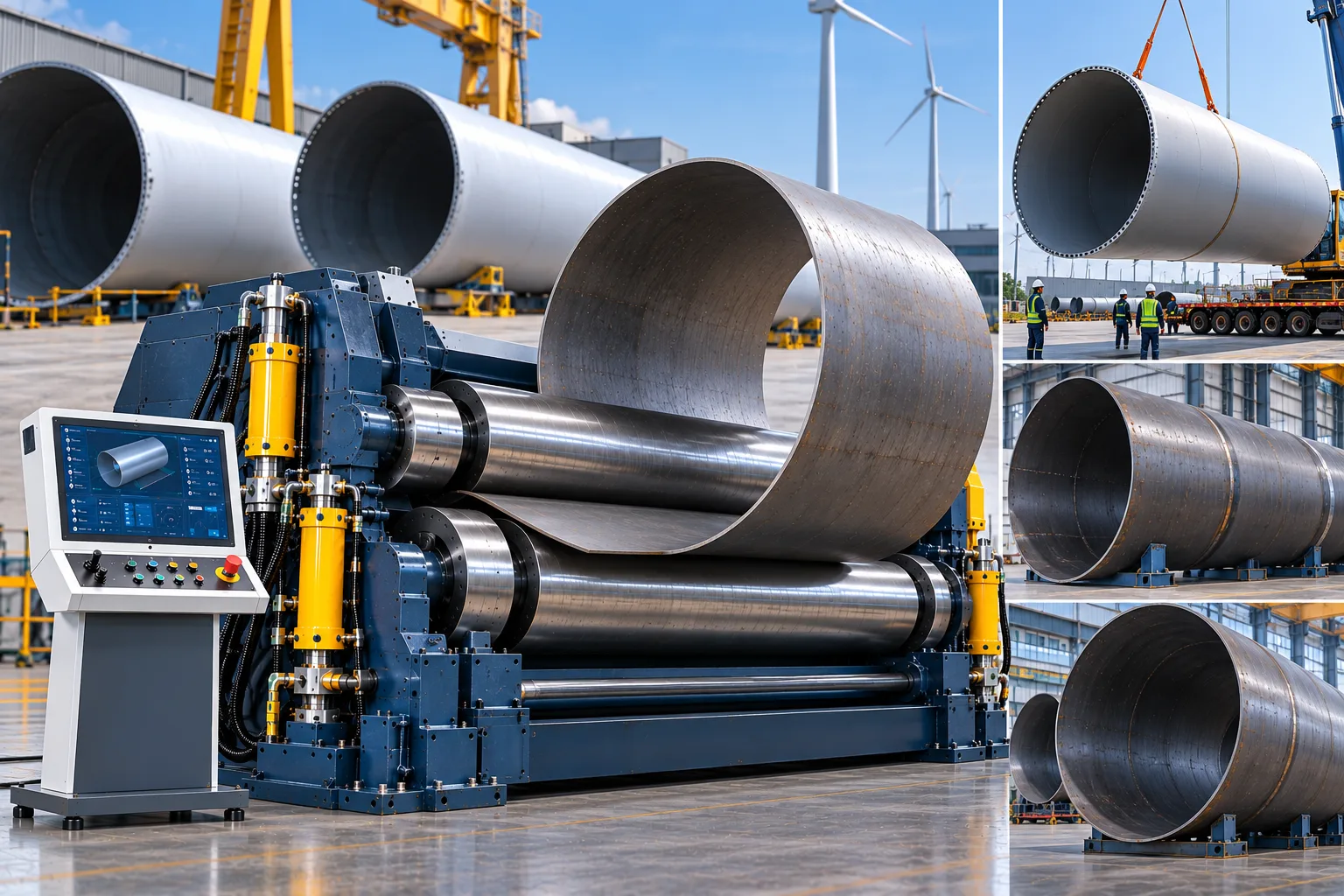
Wind Tower & Heavy Pipe Rolling
Configure heavy-duty plate rolling systems for wind tower sections, large-diameter shells, and thick-wall tubular components requiring controlled cylindrical or conical forming.
- ✓ Heavy-duty forming: Thick plate applications
- ✓ Conical bending: Adjustable side-roll positioning
- ✓ Large shells: Support for demanding fabrication
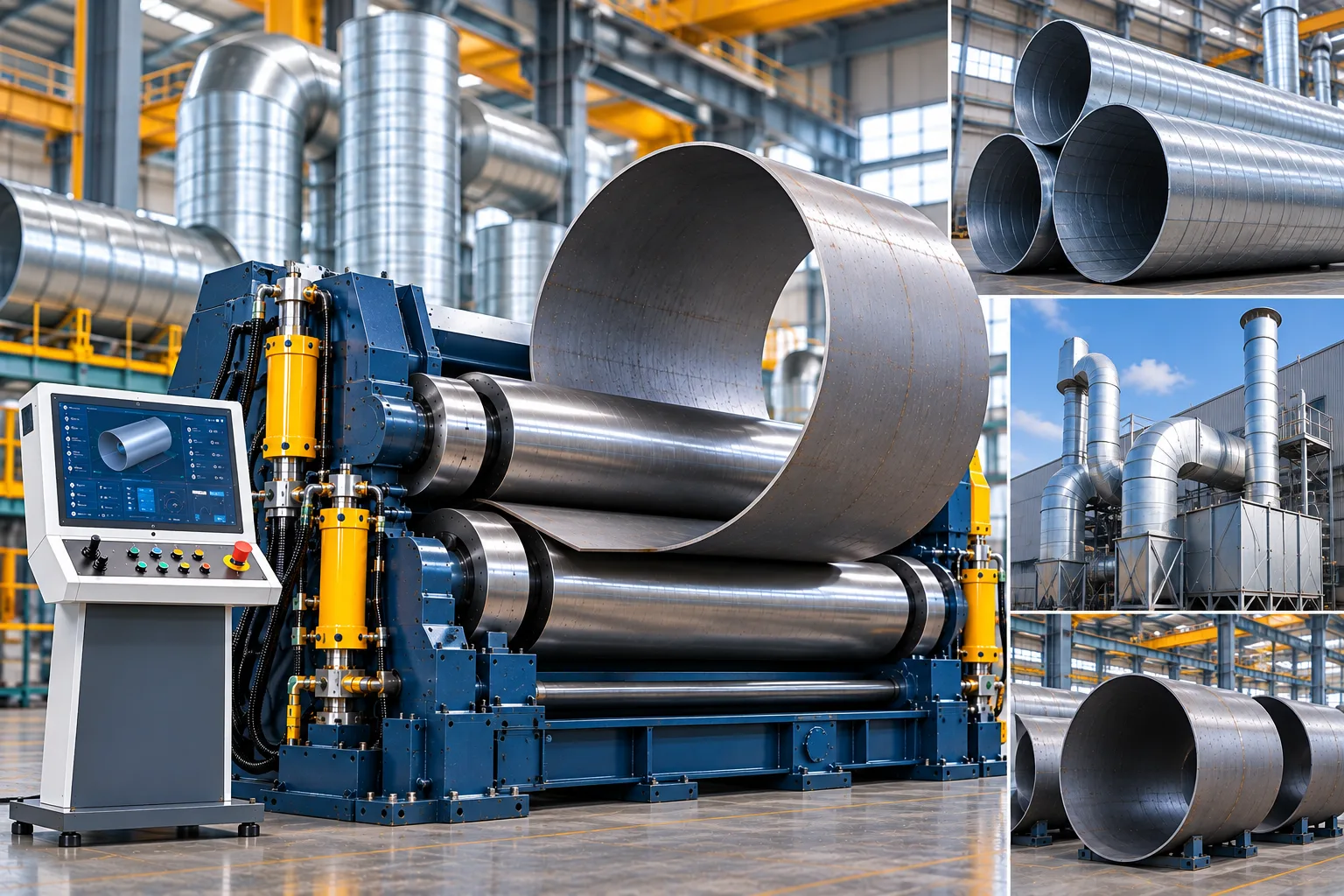
Pipeline & Duct Production
Support cylindrical fabrication for industrial ductwork, chimneys, utility piping, and related components with programmable plate rolling and repeatable forming workflows.
- ✓ Automated forming: Programmable rolling cycles
- ✓ Production workflow: Efficient plate handling
- ✓ CNC control: Repeatable roll positioning
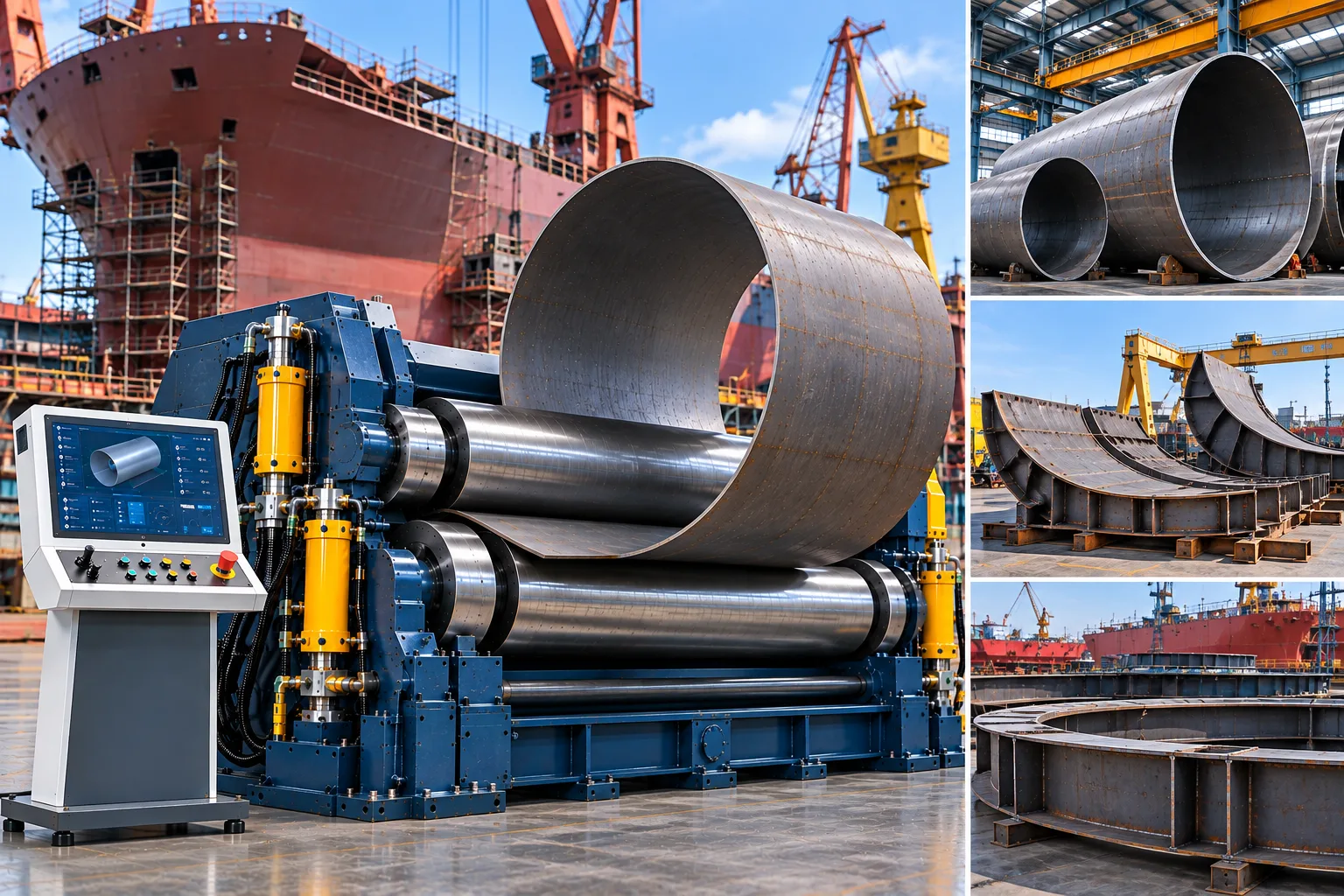
Marine & Heavy Structural Components
Form curved structural sections, large shells, and heavy plate components for marine and industrial fabrication with application-specific roll configurations and hydraulic control.
- ✓ Heavy plate: Application-based configuration
- ✓ Complex profiles: Cylindrical and curved forming
- ✓ Hydraulic control: Controlled roll positioning
Engineered for High Precision and Complex Metal Bending
Modern metal fabrication demands versatility. Traditional three-roll bending machinery often requires manual sheet flipping and leaves extended flat ends, leading to material waste and lengthy re-work. Haden four roll plate rolling machines utilize hydraulic double pinch mechanisms that securely clamp the plate between top and bottom rolls, maintaining consistent tension throughout the entire rolling sequence.
Whether your project requires wind tower plate rolling, high-volume pressure vessel cylinder bending, or multi-radius tank plate rolling machine operations, our automated systems reduce cycle times by up to 50 percent while guaranteeing tight tolerances.
Core Sector Performance Metrics Spec Sheet
Smart CNC Plate Roller Control Systems & Bending Cells
Haden 4-roll plate rolling machines feature proprietary CNC controls that automate complex bending sequences, eliminating operator skill dependency while ensuring sub-millimeter repeatable precision across our complete line of industrial machinery products.
Smart Compensation & Auto-Calculation
Input material thickness, plate width, and yield limit. The system instantly calculates the optimal rolling pass trajectory, lateral roll pressure, and springback compensation.
Automated Plate Bending Cell Expansion
Seamlessly integrates hydraulic top overhead supports, side material support arms, motorized feed tables, and robotic pick-and-place units for fully automated production alongside high-speed laser-cutting machines.
Industry 4.0 Network Connectivity
Supports real-time remote diagnostics, automated production telemetry logging, and direct OPC-UA/Ethernet interfacing with plant ERP and MES management systems, linking seamlessly with upstream sheet metal laser cutting machines.
Frequently Asked Questions About Four Roll Plate Rolling Machines
Navigating the engineering nuances of heavy plate bending equipment requires precise data and operational clarity. Below, Haden application specialists address key technical, structural, and performance questions regarding double-pinch 4-roll plate rolling technology to help you select the optimal configuration for your manufacturing facility.
1. What is the main difference between a 4-roll and a 3-roll plate rolling machine, and why is pre-bending superior?
The primary mechanical distinction lies in plate clamping security, processing speed, and pre-bending efficiency. On a 4-roll plate rolling machine, the material is securely clamped between the top and bottom rolls under controlled hydraulic pressure throughout the entire operation. This continuous pinch eliminates material slippage and allows both leading and trailing edges to be pre-bent in a single, continuous pass without removing, rotating, or re-aligning the plate.
In contrast, conventional 3-roll machines require operators to feed the sheet, pre-bend one end, unload, rotate the heavy plate 180 degrees via crane, reload, and pre-bend the opposite edge. This extra handling significantly increases cycle times, raises labor risks, and introduces potential angular misalignment.
| Operational Metric | Haden 4-Roll Plate Roller | Conventional 3-Roll Machine |
|---|---|---|
| Plate Clamping | Continuous hydraulic pinch (Top & Bottom rolls) | Manual position or friction clamping |
| Pre-Bending Process | Both edges completed in 1 single pass | Requires 2 passes & 180° plate rotation |
| Flat Edge Remnant | Minimal (< 1.5 to 2x plate thickness) | Substantial (2.5 to 3.5x plate thickness) |
| CNC Automation Compatibility | 100% full-cycle CNC automatic rolling | Limited; frequent manual correction required |
| Rolling Throughput | Up to 50% faster output for shells & cones | Baseline standard productivity |
By reducing the unbent flat edge to a negligible minimum, Haden 4-roll machines virtually eliminate costly secondary edge trimming or pre-forming press operations, significantly improving material yield for vessel, tank, and tower fabricators utilizing high-precision laser cutting machines.
2. Can a 4-roll plate rolling machine roll conical shells, and what special attachments are required?
Yes, 4-roll plate bending machines are exceptionally well suited for rolling conical shells, multi-radius arcs, and elliptical shapes. Because both lateral side rolls move independently on hydraulic linear guides, they can be inclined at precise asymmetrical angles relative to the top roll. This controlled tilt creates proportional rotational speed differentials across the plate width, forming accurate conical geometries without manual repositioning.
Essential Attachments for Precise Cone Bending:
- Hardened Cone Rolling Device (Thrust Guide): A heavy-duty guide roller mounted on the machine frame that contacts the minor radius edge of the blank, ensuring constant axial alignment and preventing lateral drift during rotation.
- Hydraulic Side & Overhead Supports: Crucial for large-diameter or thin-walled cones to prevent shell deformation and overhead collapse before final seam tack welding.
- Multi-Axis CNC Motion Control: Haden CNC controllers include dedicated conical algorithms that automatically calculate synchronized roll inclination, hydraulic pinch pressure, and feeding velocity based on taper angle and material parameters.
Engineering Note: When sizing a 4-roll bender for conical applications, remember that cone bending requires substantially higher bending force. As a rule of thumb, nominal bending capacity is reduced by approximately 50% when rolling medium-to-steep taper cones compared to standard cylindrical bending.
3. How does equipment selection change when working with higher yield strength materials?
Standard plate roller capacity charts are benchmarked against carbon structural steel with a yield strength of 235 MPa (such as ASTM A36 or Q235B). When forming high-yield structural alloys (e.g., Q355B, Q460, S690), stainless steel grades (304, 316, 2205 Duplex), or wear-resistant plate cut by industrial sheet metal laser cutting machines, required bending force increases exponentially alongside greater material springback.
Capacity Conversion Factor
To achieve identical target diameters in material with yield strengths of 355 MPa to 460+ MPa, the machine must supply up to 1.5x to 2.0x higher hydraulic force compared to standard mild steel calculations.
Springback Management
Higher yield alloys demand deeper side-roll penetration to overcome elastic recovery. Haden CNC control systems feature dynamic springback compensation profiles to automatically adjust roll positioning during the bending pass.
Additionally, high-strength and stainless steel materials exert extreme surface pressure during rolling. Haden recommends specifying induction-hardened forged alloy steel rolls (HRC 52 to 58) and high-torque planetary hydraulic drives to prevent roll surface scarring and maintain dimensional precision over high-volume production cycles.
4. What post-sale installation, operator training, and warranty services does Haden offer globally?
As an industry-leading manufacturer of heavy metal forming equipment, Haden delivers end-to-end lifecycle support across our full machinery portfolio, including plate rollers and tube laser cutting machines, to ensure maximum uptime, operational safety, and optimum machine efficiency from day one.
Turnkey Commissioning
On-site foundation inspection, machine leveling, hydraulic calibration, and electrical integration conducted by certified field service engineers.
Operator Certification
Comprehensive hands-on training covering CNC programming, safety interlocks, cone rolling setups, and routine maintenance protocols.
Global Technical Support
Industry 4.0 remote diagnostic connectivity, 24/7 technical hotline access, multi-year structural warranty, and worldwide rapid spare parts dispatch.
Configure the Right 4-Roll Plate Rolling Machine for Your Forming Requirements
Send us your material grade, plate thickness, working width, target diameter, and production requirements. Haden engineers can review your application and recommend a suitable 4-roll plate rolling configuration for your forming process.
Request a Custom Plate Rolling Quote
Connect directly with a Haden senior application engineer.